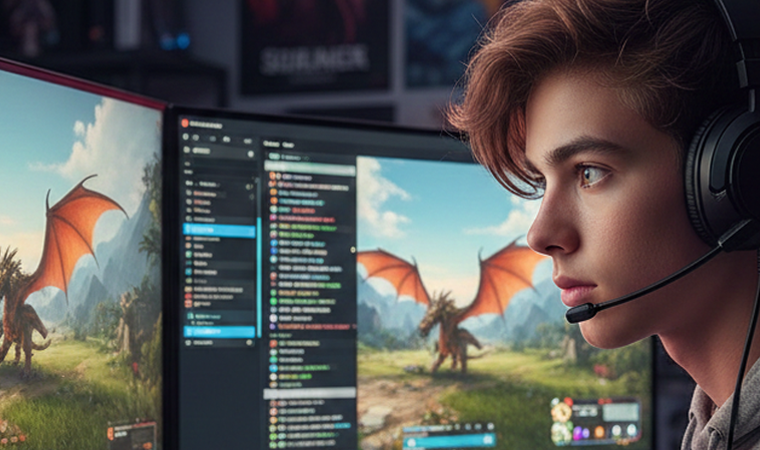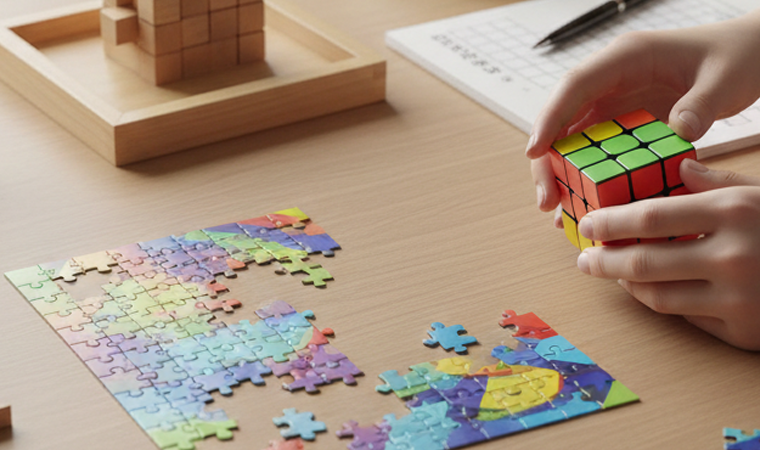
Let’s be real — we’ve all been told at some point to “exercise our brain.” But who said that had to be boring? The truth is, some of the most effective brain workouts come wrapped in the form of puzzle games. Whether you’re sliding tiles, connecting dots, or navigating a maze, your brain is quietly getting a serious workout. And the best part? You’re having too much fun to notice.
In this article, we’re diving deep into the world of puzzle games, brain games, and logic games that don’t just kill time — they make you smarter. Buckle up, because your brain is about to thank you.
Why Puzzle Games Are More Than Just Fun
Here’s a question worth asking — when was the last time you did something that was both entertaining AND made you genuinely smarter? That’s the magic of puzzle games. They sit at the unique intersection of entertainment and education, giving your mind the kind of stimulation it craves without feeling like homework.
Unlike mindless scrolling or passive TV watching, puzzle games demand your attention. They require you to think ahead, recognize patterns, test hypotheses, and adapt when things don’t go as planned. That’s not just gaming — that’s critical thinking in disguise.
Think of puzzle games like a gym for your brain. Just as lifting weights builds muscle memory, consistently engaging in logic games builds cognitive resilience. And just like physical fitness, the more you train, the stronger and more agile your mind becomes.
The Science Behind Brain Games and Cognitive Growth
You don’t have to take our word for it. Science has a lot to say about the relationship between puzzle games and brain health.
How Logic Games Strengthen Neural Pathways
Every time you solve a puzzle, your brain forms and reinforces neural connections. These pathways are like highways in your mind — the more you use them, the wider and faster they become. Logic games, in particular, activate the prefrontal cortex, the part of the brain responsible for decision-making, planning, and complex thinking.
Playing puzzle games regularly essentially “rewires” your brain to be more efficient at problem-solving. It’s like updating your mental software — same hardware, better performance.
What Researchers Say About Puzzle Games
Multiple studies have shown that people who regularly engage in brain games demonstrate improved working memory, faster processing speeds, and better attention spans. Some research even suggests that consistent engagement with logic games may help delay cognitive decline in older adults.
This isn’t to say puzzle games are a magic pill, but they’re certainly a powerful addition to a brain-healthy lifestyle. Combined with good sleep, nutrition, and exercise, brain games can be a genuine cognitive booster.
Top Puzzle Games That Train Your Brain
Now let’s get to the good stuff. Here are the best puzzle games, brain games, and logic games that actually train your mind — ranked by how engaging and cognitively demanding they are.
1. Chess — The Timeless Logic Game
If there’s one logic game that has stood the test of time, it’s chess. This centuries-old game is essentially a masterclass in strategic thinking. Every move you make requires you to anticipate your opponent’s next three to five moves, weigh risks, and adapt your entire strategy on the fly.
Chess develops foresight, patience, and abstract reasoning. It’s been used in schools around the world to improve students’ mathematical and reading abilities. If you haven’t played chess recently, it might be time to dust off that board — or download one of the many free chess apps available today.
2. Sudoku — Numbers That Sharpen Your Mind
Don’t be fooled — Sudoku isn’t really about math. It’s about logic and pattern recognition. The goal is simple: fill a 9×9 grid so that every row, column, and 3×3 box contains the numbers 1 through 9 without repetition.
What makes Sudoku such an effective brain game is that it forces you to hold multiple possibilities in your head simultaneously while systematically eliminating options. It’s a workout for your working memory and concentration. And since it scales in difficulty, beginners and experts alike can find their sweet spot.
3. Tetris — The Classic Spatial Puzzle Game
Tetris might be the most studied video game in history — and for good reason. Research has shown that playing Tetris can thicken the cerebral cortex, improve spatial reasoning, and even help reduce intrusive thoughts after traumatic events.
The game requires you to rotate and place falling blocks in real time, demanding rapid decision-making and spatial awareness. It’s fast, it’s fun, and it’s genuinely one of the most cognitively demanding puzzle games ever created.
4. Portal 2 — Think With Portals, Think With Your Brain
Portal 2 is a first-person puzzle game where you use a portal gun to solve increasingly complex spatial challenges. What sets it apart is how it forces players to think in three dimensions, manipulate physics, and approach problems from completely unconventional angles.
A study by Florida State University found that Portal 2 outperformed Lumosity (a dedicated brain training platform) in improving problem-solving, spatial skills, and persistence. That’s a remarkable finding for a game that’s also wildly entertaining.
5. Lumosity — The Digital Brain Training Platform
Speaking of Lumosity, this app deserves its spot on the list. Lumosity offers a suite of mini brain games designed by neuroscientists to target specific cognitive areas including memory, attention, flexibility, speed, and problem-solving.
While it’s not a traditional puzzle game, it functions as a structured brain training program. If you prefer guided, measurable brain improvement with daily challenges, Lumosity is a solid choice. Just remember — consistency is key.
6. The Witness — A Visual Logic Masterpiece
The Witness is a first-person exploration puzzle game set on a mysterious island filled with hundreds of logic puzzles. What makes it unique is that all the puzzles are interconnected — solving one often gives you insight into solving others.
The game rewards patience, observation, and lateral thinking. It’s the kind of puzzle game that stays with you long after you’ve put down the controller, because your brain keeps working on the unsolved challenges in the background. That’s deep cognitive engagement.
7. Monument Valley — Geometry Meets Storytelling
Monument Valley is a beautifully designed mobile puzzle game that plays with impossible architecture and optical illusions inspired by M.C. Escher. Players guide a silent princess through mind-bending geometric structures.
While it’s gentler than some of the other entries on this list, Monument Valley still exercises spatial reasoning and creative thinking. It’s proof that brain games don’t have to be stressful to be effective. Sometimes a calm, meditative puzzle experience is exactly what your brain needs.
8. Brain Age — Nintendo’s Brain Training Classic
Brain Age, developed for the Nintendo DS and later the Nintendo Switch, became a cultural phenomenon when it launched. Designed with input from neuroscientist Dr. Ryuta Kawashima, the game includes arithmetic challenges, Stroop tests, reading exercises, and memory tasks.
The concept of calculating your “Brain Age” and working to lower it proved irresistible to millions of players. While some critics debate the long-term effectiveness of the specific tasks, Brain Age unquestionably brought mainstream attention to the idea of daily cognitive training through games.
Puzzle Games for Kids vs. Adults
Not all brain games are created equal, and what works for a ten-year-old isn’t necessarily the best fit for a forty-five-year-old professional. Here’s how puzzle games differ across age groups.
Brain Games Designed for Young Minds
For kids, puzzle games should build foundational skills: pattern recognition, basic logic, spatial awareness, and language. Games like Rush Hour Jr., Zingo, and Osmo are fantastic because they make learning feel like play. Even simple jigsaw puzzles do wonders for developing fine motor skills and visual-spatial reasoning in children.
Puzzle Games Built for Adult Cognitive Challenges
Adults benefit more from games that simulate real-world complexity. Chess, logic grid puzzles, escape room apps, and strategy-based puzzle games like The Witness or Stephen’s Sausage Roll offer the kind of layered, demanding cognitive challenges that adult brains need to stay sharp and flexible.
Mobile Puzzle Games Worth Downloading Today
Can’t always sit down at a desk or console? No problem. The mobile gaming market is overflowing with excellent puzzle games you can play anywhere. Some standout recommendations include Threes!, a deceptively simple number-merging game; Elevate, a language and math training app; Peak, another strong brain training platform; and 2048, a grid-based logic game that’s deeply addictive and surprisingly cognitively demanding.
These games prove you don’t need fancy equipment to give your brain a solid workout. A smartphone and five minutes of downtime is all it takes.
How Often Should You Play Brain Games?
Here’s a question many people overlook: how much is enough? Experts generally suggest that 15 to 20 minutes of focused brain game play per day is sufficient to see cognitive benefits over time. More isn’t always better — quality of engagement matters more than quantity.
Think of it like strength training. You wouldn’t spend six hours lifting weights every day. You’d overtrain and see diminishing returns. The same principle applies to logic games and puzzle games. Short, focused sessions with a variety of challenges tend to produce the best results.
Logic Games That Improve Problem-Solving at Work
Here’s something your boss might not expect: playing logic games outside of work can make you better at your job. Problem-solving, critical thinking, and creative reasoning are skills that transfer directly from the puzzle game world to the professional world.
Companies like Google and Apple have long recognized the value of gamified thinking. Whether you’re in data analysis, marketing, engineering, or management, the structured thinking that logic games develop is universally valuable. So next time someone catches you playing Sudoku on your lunch break, tell them it’s professional development.
Are Free Brain Games as Effective as Paid Ones?
This is a fair question, and the answer might surprise you. Many free puzzle games are just as cognitively stimulating as paid platforms. Chess apps, Sudoku generators, and mobile logic games cost nothing and deliver genuine brain benefits.
That said, paid platforms like Lumosity and Elevate Pro offer more structured progression, performance tracking, and scientifically designed challenge curves. If you’re serious about measurable cognitive improvement, a paid platform might be worth the investment. But if you just want to keep your brain engaged and entertained, free puzzle games are more than enough.
Tips to Get the Most Out of Puzzle Games
To really maximize the brain-training benefits of puzzle games, keep a few principles in mind. First, always challenge yourself — once a game becomes too easy, your brain stops growing. Seek out harder difficulty levels or new types of puzzles. Second, variety matters. Don’t just play one type of brain game. Mix spatial puzzles with logic games, word challenges with number problems. Third, be consistent. A daily habit, even a short one, beats occasional marathon sessions. Fourth, reflect on your mistakes. The most growth happens not when you get things right, but when you figure out why you got them wrong.
Conclusion
Puzzle games, brain games, and logic games are genuinely powerful tools for cognitive development — and they’re a whole lot of fun at the same time. From the timeless strategy of chess to the trippy geometry of Monument Valley, there’s a brain-training game out there for every personality and every schedule.
The key takeaway? Your brain is like a muscle. It needs regular, varied, and progressively challenging stimulation to grow stronger. And with the incredible variety of puzzle games available today — on consoles, computers, and smartphones — there’s really no excuse not to give it the workout it deserves.
So go ahead, pick a game, and start playing. Your future self will be sharper, quicker, and maybe just a little bit smarter for it.
FAQs
1. Do puzzle games really make you smarter? Research suggests that regular engagement with puzzle games can improve working memory, processing speed, and problem-solving skills. While they won’t raise your IQ overnight, consistent play over time does contribute to measurable cognitive improvements.
2. What is the best puzzle game for brain training? It depends on your goals. Chess is excellent for strategic thinking, Sudoku for logical reasoning, Tetris for spatial awareness, and platforms like Lumosity for structured, well-rounded brain training.
3. How long should I play brain games each day? Most cognitive experts recommend 15 to 20 minutes of focused brain game play per day. Consistency matters more than duration — short daily sessions are more effective than occasional long ones.
4. Are mobile puzzle games worth playing? Absolutely. Games like Threes!, Peak, and Elevate offer genuine cognitive benefits and are convenient enough to fit into any daily routine. Many are free or very affordable.
5. At what age should kids start playing puzzle games? Children as young as two or three can benefit from simple puzzles. As they grow, the complexity can increase. Starting early helps build foundational cognitive skills that support academic performance and lifelong learning.