The Humble Beginning of Video Game History
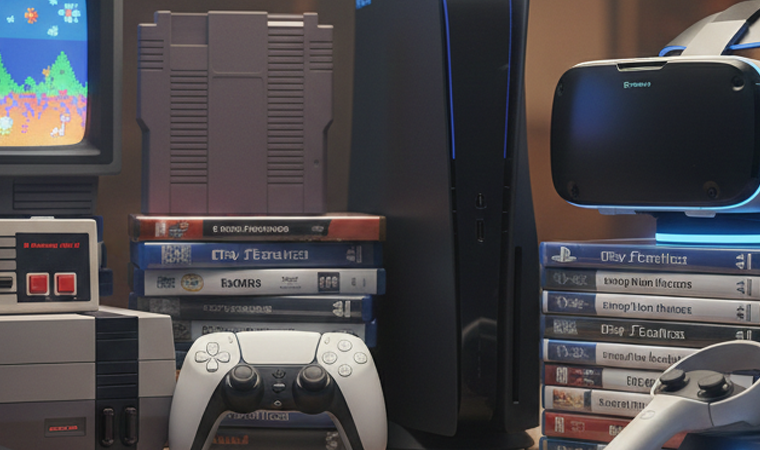
Remember when video games were just bleeps, bloops, and blocky pixels? Yeah, we’ve come a long way from that. The video game history we’re living through right now is absolutely wild—we’ve gone from moving a square paddle to hit a square ball, to strapping virtual reality headsets on our faces and stepping into completely immersive worlds. It’s like comparing cave paintings to 4K cinema, except this entire evolution happened in just about 50 years.
The gaming evolution isn’t just about better graphics or more realistic explosions (though let’s be honest, those explosions are pretty sweet). It’s about how gaming transformed from a novelty at arcades into a multi-billion dollar industry that rivals Hollywood. It’s about how games went from simple entertainment to complex storytelling mediums that make us laugh, cry, and question our existence. And it’s about how technology keeps pushing boundaries we didn’t even know existed.
What makes this journey fascinating is that many of us have lived through significant chunks of it. Maybe you remember blowing into cartridges to make them work, or the mind-blowing moment when games first went 3D, or the first time you tried VR gaming and nearly fell over trying to dodge a virtual object. Each era of gaming brought something revolutionary, and somehow, we keep saying “it can’t possibly get better than this”—and then it does.
Pong and the Birth of an Industry
In 1972, Atari released Pong in arcades, and honestly? It was just two rectangles and a square bouncing between them. But people lost their minds over it. Why? Because for the first time, you could interact with what was on the TV screen. You weren’t just watching—you were controlling it. That simple concept sparked an entire industry.
Pong wasn’t actually the first video game (that honor belongs to earlier experiments like Tennis for Two and Spacewar!), but it was the first commercially successful one. It proved that video games could be a viable business, leading to the explosion of arcade culture throughout the 1970s. Suddenly, shopping malls and pizza parlors had these magical machines that ate quarters and spit out entertainment.
The Arcade Golden Age
The late 70s and early 80s were arcade heaven. Games like Space Invaders (1978), Pac-Man (1980), Donkey Kong (1981), and countless others defined this era. These weren’t just games—they were cultural phenomena. Pac-Man had a hit song about him. Space Invaders caused a yen shortage in Japan because everyone was using coins to play it. Gaming had become mainstream.
Arcades were social spaces before social media existed. You’d gather around the best player watching them demolish high scores. You’d learn patterns and strategies from other players. The cabinet art was gorgeous, the sounds were distinctive, and the competition was fierce. This golden age established gaming as more than a fad—it was here to stay.
The 8-Bit Revolution
Nintendo Entertainment System Changes Everything
Super Mario Bros. and Gaming Icons
The video game crash of 1983 nearly killed the entire industry. Oversaturation, poor quality games, and failed consoles made people think video gaming was done. Then Nintendo showed up in North America in 1985 with the NES, and everything changed. Super Mario Bros. didn’t just save the industry—it defined what video games could be.
Mario became more iconic than Mickey Mouse for an entire generation. The tight controls, creative level design, and addictive gameplay created a template that games still follow today. Suddenly, games weren’t just about high scores—they were about exploration, secrets, and completing objectives. The industry was reborn, and Nintendo led the charge.
The Console Wars Begin
Nintendo dominated the late 80s, but they wouldn’t be alone for long. The first real console war was brewing, and it would define gaming for the next decade. Retro games from this era still hold up today because the limitations forced creativity. Developers couldn’t rely on flashy graphics, so they focused on tight gameplay mechanics and memorable characters.
Sega Genesis and 16-Bit Graphics
Sega burst onto the scene in 1989 with the Genesis, bringing 16-bit graphics and “blast processing” (which was mostly marketing hype, but it sounded cool). Sonic the Hedgehog arrived in 1991 as Sega’s answer to Mario, and he was everything Mario wasn’t—fast, edgy, and cool.
The Nintendo vs. Sega rivalry was intense. Schoolyard arguments about which console was better were serious business. This competition pushed both companies to innovate, resulting in some of the greatest games ever made. Streets of Rage, Sonic 2, Mortal Kombat, Street Fighter II—the 16-bit era was absolutely packed with classics that defined gaming for millions.
The 3D Gaming Revolution
PlayStation and the CD-ROM Era
Sony entering the gaming market in 1994 with the PlayStation changed everything. CDs replaced cartridges, allowing for massive games with full-motion video, voice acting, and expansive worlds. Final Fantasy VII (1997) showed what this new technology could do—a sprawling RPG with stunning pre-rendered backgrounds and an emotional story that made grown men cry.
The PlayStation appealed to an older audience. Gaming wasn’t just for kids anymore. Games like Metal Gear Solid, Resident Evil, and Gran Turismo pushed boundaries in storytelling, horror, and realism. The industry matured, and so did its audience.
Nintendo 64 and True 3D Worlds
Nintendo countered with the N64 in 1996, bringing true 3D gameplay with an analog stick. Super Mario 64 revolutionized 3D platforming, creating a blueprint that games still follow. The Legend of Zelda: Ocarina of Time (1998) is still considered one of the greatest games ever made, pioneering the Z-targeting system and environmental storytelling.
The N64 struggled against PlayStation’s CD format—cartridges were expensive and limited storage meant fewer third-party games. But first-party Nintendo titles were so exceptional that the console still holds a special place in gaming history.
PC Gaming Rises
While consoles battled, PC gaming carved its own path. Games like Doom (1993), Quake (1996), StarCraft (1998), and Half-Life (1998) showed that PCs could deliver experiences consoles couldn’t match. The mouse and keyboard enabled precise shooting. Better hardware allowed more complex games. Online multiplayer through services like Battle.net connected players globally.
PC gaming also fostered modding communities that extended game lifespans and created entirely new experiences. Counter-Strike started as a Half-Life mod and became one of the most influential shooters ever made. This creative freedom differentiated PC gaming from the more controlled console environment.
Gaming Evolution Through Console Generations
The Sixth Generation (PS2, Xbox, GameCube)
Online Gaming Becomes Mainstream
The sixth generation (2000-2006) brought online gaming to consoles. The PlayStation 2, Xbox, and GameCube each pushed gaming forward, but Microsoft’s Xbox Live service (2002) changed everything. Suddenly console gamers could easily play with friends online, chat through headsets, and download content. Gaming became a connected, social experience.
The PS2 became the best-selling console of all time with its massive library and DVD player functionality. Grand Theft Auto III (2001) and its sequels defined open-world gaming. The Xbox brought PC-quality graphics and Halo, which revolutionized console shooters. The GameCube offered Nintendo charm with games like Wind Waker and Metroid Prime.
Graphics Reach New Heights
This generation brought graphics that finally approached photorealism. Character models had fingers! Facial expressions! Realistic textures! Games like Metal Gear Solid 2, Final Fantasy X, and Resident Evil 4 showcased what modern gaming could achieve visually.
HD Gaming Era (Xbox 360, PS3)
The seventh generation (2005-2013) brought HD graphics, achievement systems, and digital distribution. Xbox 360 launched first with Xbox Live integration making online gaming seamless. PlayStation 3 struggled initially with its high price and complex architecture but eventually found its footing with exclusives like The Last of Us and Uncharted.
This era saw gaming truly go mainstream. The Xbox 360 made gaming more social through party chat and achievements. Trophy/Achievement systems added meta-game collecting that kept players engaged. Digital distribution through services like Steam, PlayStation Network, and Xbox Live Marketplace changed how we buy games.
Current Generation (PS5, Xbox Series X)
The current generation brings ray tracing, 4K resolution, 60-120fps gameplay, and near-instant loading through SSD technology. Modern gaming in 2026 delivers experiences that would’ve seemed like science fiction just a decade ago. Games like Horizon Forbidden West, Elden Ring, and God of War Ragnarök showcase technical and artistic achievements that represent gaming’s current peak.
The Rise of Mobile Gaming
iPhone Changes Everything
When the iPhone launched in 2007, nobody expected it to revolutionize gaming. But the App Store (2008) brought gaming to everyone’s pocket. Suddenly your mom was playing Angry Birds. Your grandpa was crushing candy. Mobile gaming democratized the medium.
Early iPhone games were simple—Angry Birds, Fruit Ninja, Doodle Jump—but they proved gaming didn’t need dedicated hardware to reach massive audiences. The touch interface enabled new gameplay styles impossible on traditional controllers.
Free-to-Play Revolution
Mobile gaming pioneered free-to-play business models that eventually influenced console and PC gaming. Games became free to download but monetized through in-app purchases, ads, or subscription services. This model was controversial but undeniably successful, generating billions in revenue.
The freemium model changed player expectations. Why pay $60 upfront when you can try games free? This shift influenced the entire industry, with even console games adopting free-to-play models (Fortnite, Apex Legends, Warframe).
Mobile Gaming in 2026
Mobile gaming now rivals console gaming in revenue and complexity. Games like Genshin Impact and Diablo Immortal deliver console-quality experiences on phones. Cloud gaming services let you stream console games to mobile devices. The distinction between mobile and traditional gaming continues blurring.
Retro Games and Nostalgia Culture
Why Retro Gaming Matters
Retro games aren’t just nostalgia—they represent gaming’s foundation. The constraints of early hardware forced developers to focus on pure gameplay over flashy graphics. Many retro games remain more playable and fun than modern releases despite their age.
The retro gaming community keeps these classics alive through preservation, speedrunning, and modding. Websites archive old games. Fans create patches fixing bugs or adding modern features. This preservation matters because gaming history deserves protection like any other art form.
Remasters and Remakes
The gaming industry recognizes retro appeal through constant remasters and remakes. Final Fantasy VII Remake, Resident Evil remakes, Crash Bandicoot N. Sane Trilogy, Tony Hawk’s Pro Skater 1+2—developers rebuild classics with modern technology while preserving what made them special.
These aren’t just cash grabs (okay, some are). The best remakes introduce classic games to new generations while satisfying nostalgic older players. They’re bridges between gaming’s past and present.
Indie Games Embracing Pixel Art
Modern indie developers deliberately choose retro aesthetics. Games like Celeste, Shovel Knight, and Stardew Valley use pixel art not from laziness but as deliberate artistic choices. These games prove that gameplay and creativity matter more than photorealistic graphics.
The indie scene keeps the spirit of retro games alive while innovating mechanically. They remind us that bigger budgets don’t automatically mean better games.
Modern Gaming Technology
Ray Tracing and Photorealism
Ray tracing simulates how light actually behaves—reflecting, refracting, and creating realistic shadows and reflections. This technology existed in CGI for years but required too much processing power for real-time gaming. Modern GPUs finally make it possible, creating graphics that approach photorealism.
Games like Cyberpunk 2077 and Spider-Man: Miles Morales showcase ray tracing’s potential. Reflections in puddles show actual environments. Light bounces realistically off surfaces. These subtle improvements add up to graphics that feel genuinely real.
SSD Technology and Load Times
Solid state drives in modern consoles eliminated the loading screens that plagued gaming for decades. Fast travel is actually fast now. Dying and respawning is instant. Games can stream assets in real-time, creating seamless worlds impossible with old hard drive technology.
This might seem minor, but it fundamentally improves gaming experiences. No more staring at loading screens. No more artificial corridors masking loading. Just uninterrupted gameplay.
AI in Game Development
Artificial intelligence is revolutionizing game development. AI helps create realistic NPC behaviors, generates procedural content, and even assists with animation and voice acting. Future games might use AI to create unique content for each player, personalized experiences that traditional development can’t match.
AI also threatens jobs in game development, raising ethical questions the industry must address. The technology is powerful but must be used responsibly.
VR Gaming: The New Frontier
Early VR Attempts and Failures
Virtual Boy and Why It Failed
Nintendo’s Virtual Boy (1995) was VR before VR was ready. The headset displayed only red graphics, caused headaches, required players to look down into a stand (no head tracking), and had almost no good games. It failed spectacularly, making companies wary of VR for years.
The technology simply wasn’t ready. VR requires high resolution displays, precise motion tracking, and powerful graphics hardware—none of which existed in the mid-90s. Virtual Boy taught the industry that VR needed to wait for technology to catch up.
Second Wave VR Success
Modern VR succeeded where Virtual Boy failed. Oculus Rift, HTC Vive, PlayStation VR, and others launched in 2016 with technology finally capable of delivering compelling VR experiences. Proper head tracking, room-scale movement, and powerful graphics created immersion impossible before.
VR gaming grew slowly but steadily. The high cost of entry and required space limited adoption, but those who tried VR often became passionate advocates.
Modern VR Headsets
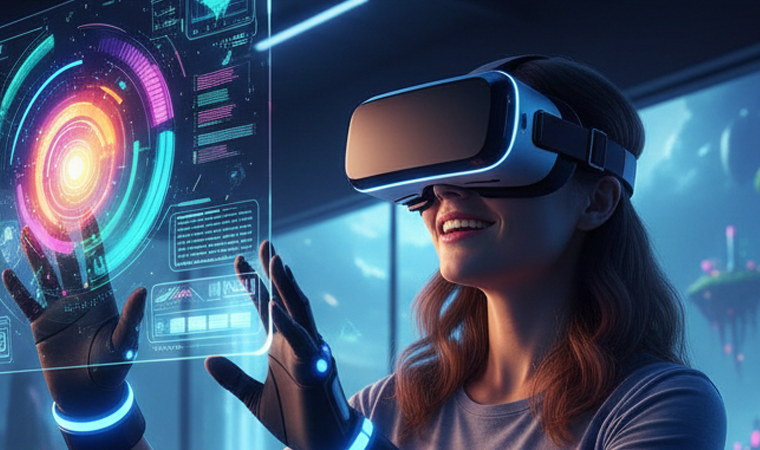
VR headsets in 2026 are lighter, cheaper, and more powerful than early models. Meta Quest 3, PlayStation VR2, and Apple Vision Pro represent VR’s maturation. Standalone headsets require no PC or console. Improved resolution reduces screen-door effect. Better controllers provide intuitive interactions.
The technology still faces challenges—comfort during extended sessions, motion sickness for some users, and content libraries smaller than traditional gaming. But VR has proven it’s not a gimmick—it’s a legitimate gaming platform with unique capabilities.
VR Gaming Experiences in 2026
VR gaming now includes full-length games (Resident Evil Village VR, Half-Life: Alyx), fitness applications (Beat Saber, Supernatural), social experiences (VRChat, Horizon Worlds), and simulation games (racing, flying, sports).
The best VR games use the medium’s unique capabilities rather than just porting traditional games. Beat Saber wouldn’t work without VR. Half-Life: Alyx’s gravity gloves and manual reloading create gameplay impossible with controllers. VR enables entirely new game design possibilities.
The Social Evolution of Gaming
From Single Player to Multiplayer
Gaming started as solitary or local multiplayer experiences. You played alone or with people physically present. The internet changed everything, enabling global multiplayer competition and cooperation. MMOs like World of Warcraft created persistent worlds with millions of players. Battle royales like Fortnite brought 100 players together for chaotic competition.
Multiplayer became so dominant that some publishers questioned whether single-player games had a future. Thankfully, games like God of War, The Last of Us, and Elden Ring proved single-player experiences still matter. The industry now supports both—multiplayer for social connection, single-player for focused storytelling.
Streaming and Content Creation
Streaming transformed gaming from private entertainment to public performance. Platforms like Twitch and YouTube Gaming created careers around playing video games. Streamers became celebrities, influencing what games succeed and how developers market titles.
This fundamentally changed gaming culture. Games now must be watchable, not just playable. Developers consider how games look to audiences, not just players. This has both positive effects (more accessible games) and negative ones (games designed for viral moments over depth).
Esports and Competitive Gaming
Competitive gaming evolved from arcade leaderboards to sold-out stadiums and multi-million dollar prize pools. Games like League of Legends, Dota 2, Counter-Strike, and Valorant support professional leagues with team organizations, coaches, and salaries.
Esports legitimized gaming as a career path and spectator sport. It’s not “just playing games” anymore—it’s professional athletics requiring practice, strategy, and dedication. Whether esports ever fully matches traditional sports’ cultural impact remains to be seen, but it’s undeniably mainstream entertainment.
How Graphics and Audio Have Evolved
From Beeps to Orchestral Scores
Early games used simple beeps and boops generated by primitive sound chips. Composers worked within severe limitations, creating memorable melodies with just a few channels of audio. The Super Mario Bros. theme and Tetris music are still instantly recognizable despite their simplicity.
As technology improved, games incorporated CD-quality audio, voice acting, and full orchestral scores. Games like Final Fantasy, The Elder Scrolls, and Halo feature music that stands alongside film scores in quality and emotional impact.
Voice Acting Revolution
Voice acting transformed gaming from reading text boxes to experiencing performances. Early voice acting was often terrible (hello, original Resident Evil), but standards quickly improved. Today, games feature performances from Hollywood actors and dedicated voice talent creating memorable characters.
Games like The Last of Us, Red Dead Redemption 2, and God of War feature acting that rivals film and television. Troy Baker, Ashley Johnson, Nolan North, and Laura Bailey are as important to their games as Robert Downey Jr. is to Iron Man.
Photorealistic Graphics
Graphics have progressed from blocky pixels to photorealistic rendering approaching CGI film quality. Modern games use physically-based rendering, motion capture, advanced lighting, and meticulous detail creating visuals that sometimes blur the line between game and reality.
Yet photorealism isn’t always the goal. Stylized graphics in games like Borderlands, The Legend of Zelda: Breath of the Wild, and Cuphead prove that artistic direction matters more than raw polygon counts.
Gaming Business Models Evolution
From Cartridges to Digital Downloads
Gaming distribution evolved from cartridges to CDs to digital downloads. Physical media dominated for decades, but digital distribution through Steam, PlayStation Network, and Xbox Live changed everything. Now you can buy games instantly without leaving home, though you also can’t resell or share them.
Digital distribution enabled indie developers to reach audiences without publisher support. It reduced prices through sales and eliminated manufacturing costs. But it also raised questions about ownership—do you own your digital games, or just licenses to play them?
DLC and Season Passes
Downloadable content extends game lifespans through additional campaigns, characters, and features. DLC can be excellent (The Witcher 3’s expansions) or exploitative (charging for content that should’ve been included). Season passes promise future content at discounted prices but ask players to pay before knowing what they’re getting.
The industry still debates appropriate DLC practices. Cosmetics-only purchases feel fair. Cutting content from complete games to sell separately feels greedy. Finding ethical monetization remains an ongoing challenge.
Subscription Services (Game Pass, PS Plus)
Subscription services like Xbox Game Pass and PlayStation Plus Premium offer game libraries for monthly fees—Netflix for gaming. This model provides incredible value for players while guaranteeing developers revenue even if individual game sales are low.
These services might define gaming’s future. Why buy individual games when subscriptions provide hundreds? The model shifts from ownership to access, with unknown long-term implications for game preservation and player rights.
The Future of Gaming Beyond VR
Cloud Gaming Potential
Cloud gaming streams games from remote servers to any device—no console or PC required. Services like Xbox Cloud Gaming and GeForce NOW promise high-end gaming on phones, tablets, and low-end computers. The technology works but faces challenges: latency, bandwidth requirements, and input lag that makes competitive gaming difficult.
Cloud gaming could democratize access to expensive gaming experiences, but it also requires gaming to always-online models and depends on corporate servers staying operational.
AR Gaming Possibilities
Augmented reality overlays digital content onto the real world. Pokémon GO proved AR gaming’s potential, getting millions walking around catching virtual creatures. Future AR gaming might blend virtual and physical spaces more seamlessly, creating experiences impossible in traditional gaming or pure VR.
Brain-Computer Interfaces
This sounds like science fiction, but companies are researching brain-computer interfaces for gaming. Imagine controlling games with thoughts or experiencing feedback directly in your nervous system. This technology is years away but could represent gaming’s ultimate evolution—eliminating controllers entirely.
Cultural Impact of Gaming Evolution
Gaming as Mainstream Entertainment
Gaming grew from niche hobby to mainstream entertainment rivaling film and television. More people play games than watch movies. Game releases generate more revenue than blockbuster films. Gaming is no longer just for “gamers”—it’s for everyone.
This mainstream acceptance changed how society views gaming. Parents who grew up gaming now share the hobby with their children. Governments recognize esports. Universities offer game design degrees. Gaming is culture, not subculture.
Games as Art
The “are games art?” debate feels settled now. Games like Journey, The Last of Us, Bioshock, and Shadow of the Colossus are clearly artistic expressions exploring themes, emotions, and ideas like any other art form.
Museums exhibit games. Critics analyze games academically. Developers are recognized as auteurs. Gaming achieved cultural legitimacy as an artistic medium capable of profound expression.
Educational Gaming
Gaming’s evolution includes educational applications. Games teach languages, history, problem-solving, and critical thinking. Minecraft Education Edition brings creativity to classrooms. Medical students practice procedures in VR simulations. Gaming’s interactive nature makes it powerful for education beyond entertainment.
Conclusion
The evolution of video games from simple 8-bit sprites to immersive VR experiences represents one of technology’s most remarkable transformations. We’ve witnessed video game history unfold in real-time—from the arcade golden age through the console wars, from 3D revolution to online connectivity, from mobile gaming explosion to VR’s emergence. Each era of gaming evolution brought innovations that seemed impossible just years prior, yet somehow the industry keeps pushing forward, discovering new ways to engage, challenge, and move us.
What makes modern gaming special isn’t just the photorealistic graphics or sophisticated technology—it’s how gaming matured as a medium. Retro games taught us that solid gameplay trumps flashy presentation. The transition to 3D proved gaming could create worlds worth exploring. Online connectivity made gaming social. VR gaming promises experiences that blur reality and fiction entirely. Each advancement built upon previous foundations, creating the rich, diverse gaming landscape we enjoy today.
Looking forward, gaming’s evolution shows no signs of slowing. Cloud gaming promises to eliminate hardware barriers. AI will create dynamic, personalized experiences. AR and brain-computer interfaces suggest futures we can barely imagine. But regardless of technological advances, gaming’s core remains unchanged—creating interactive experiences that entertain, challenge, and connect us. From Pong’s simple joy to VR’s complex immersion, gaming continues evolving, and honestly? We can’t wait to see what comes next.
FAQs
1. How have video games evolved from 8-bit to modern graphics?
Video game graphics evolved through distinct technological generations. 8-bit era (1980s) used simple pixel art with limited colors and resolution—think Super Mario Bros. and Mega Man. 16-bit era (early 1990s) doubled processing power, enabling more detailed sprites and richer colors in games like Sonic and Street Fighter II. 32/64-bit era (mid-1990s) brought 3D graphics with games like Super Mario 64 and Final Fantasy VII pioneering polygonal 3D worlds, though textures were blurry and models were blocky. 128-bit and beyond (2000s) introduced realistic textures, lighting, and character models approaching photorealism. Modern gaming (2010s-present) features physically-based rendering, ray tracing, 4K resolution, and 60-120fps performance creating graphics that sometimes blur the line between game and reality. Each generation represented exponential improvements in processing power, allowing developers to create increasingly immersive visual experiences while also using stylized art directions that prove graphics quality isn’t just about realism.
2. What were the most important milestones in gaming evolution?
Critical milestones include: Pong (1972) commercializing video games, Space Invaders (1978) creating arcade culture, Nintendo NES (1985) reviving the industry post-crash, Super Mario Bros. (1985) establishing platformer formula, Sega Genesis (1989) starting console wars driving innovation, PlayStation (1994) bringing CD-ROMs and mature gaming, Super Mario 64/Ocarina of Time (1996-1998) perfecting 3D gameplay, Xbox Live (2002) making console online gaming mainstream, iPhone (2007) democratizing mobile gaming, Minecraft (2011) proving indie games’ viability, Oculus Rift (2016) launching modern VR, and Nintendo Switch (2017) blending portable and home console gaming. Each milestone fundamentally changed how games were made, played, or distributed, with ripple effects throughout the industry shaping gaming’s current state.
3. Why is retro gaming still popular despite modern gaming advances?
Retro games remain popular for several reasons: Nostalgia creates emotional connections to games people played growing up. Gameplay focus—without photorealistic graphics to rely on, retro games emphasized tight mechanics and creative design that remain fun decades later. Accessibility—retro games are often easier to learn with straightforward controls and objectives compared to complex modern titles. Preservation—communities keep gaming history alive through emulation, speedrunning, and discussion. Artistic value—pixel art and chiptune music have aesthetic appeal beyond nostalgia. Challenge—many retro games are genuinely difficult, appealing to players wanting tests of skill rather than cinematic experiences. Modern indie developers deliberately use retro aesthetics because they recognize that good game design is timeless. The best retro games (Super Mario Bros., Tetris, Chrono Trigger) remain playable because quality gameplay transcends graphical limitations. Retro gaming isn’t just about looking backward—it’s appreciating gaming’s foundations while modern gaming pushes technical boundaries.
4. How has VR gaming changed the gaming industry?
VR gaming introduced genuinely new gameplay possibilities rather than just improving existing formulas. Immersion—VR creates presence impossible in traditional gaming; you’re not watching a character explore—you’re exploring yourself. Motion controls enable natural interactions like manually reloading guns or physically dodging attacks. Unique game design emerged (Beat Saber, Half-Life: Alyx, Resident Evil VR) leveraging VR’s capabilities rather than porting traditional games. However, VR’s impact remains limited by adoption barriers: high cost, space requirements, motion sickness, and comfort issues during extended play. VR proved itself as a legitimate gaming platform, not a gimmick, but it exists alongside traditional gaming rather than replacing it. The technology continues improving—lighter headsets, better resolution, more content—suggesting VR will become increasingly mainstream. VR’s long-term importance may be proving that gaming can evolve into fundamentally different experiences, not just incremental improvements to existing formulas.
5. What’s next for gaming evolution after VR?
Beyond VR, gaming’s future likely includes: Cloud gaming eliminating hardware requirements, letting you play high-end games on any device via streaming (though latency and bandwidth challenges remain). AR gaming blending virtual and physical worlds more seamlessly than Pokémon GO’s early attempts. AI-generated content creating infinite, personalized experiences adapting to individual players. Advanced haptics providing physical feedback beyond controller rumble, potentially full-body suits transmitting sensations. Brain-computer interfaces allowing direct thought control and potentially bypassing visual/audio inputs entirely (still years away). Metaverse integration connecting gaming with social spaces, work, and commerce (though current implementations are underwhelming). Realistically, gaming will continue evolving incrementally—better graphics, faster load times, more sophisticated AI—rather than single revolutionary changes. The pattern throughout video game history shows technology enabling new experiences developers then creatively exploit. Whatever comes next, it’ll likely surprise us just as VR, online gaming, and 3D graphics surprised previous generations.