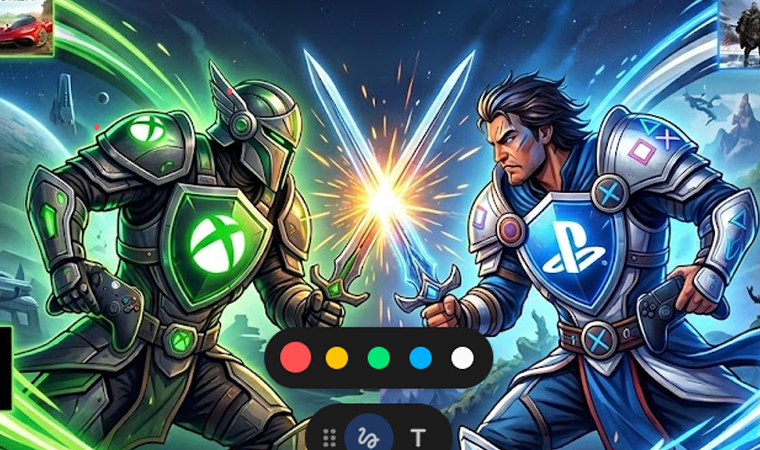
The Subscription Battleground: Why It Matters More Than Ever
Gaming subscriptions have become the battlefield that used to be reserved for exclusive titles and console specs. Think of it like the streaming wars between Netflix and Disney+, except instead of binge-watching dramas, we’re debating whether to download the next blockbuster on day one or patiently wait six months for it to roll into a curated catalog. The stakes couldn’t be higher — monthly subscription fees, your gaming habits, and your loyalty to a specific ecosystem all hang in the balance. And in 2026, this war between Xbox Game Pass and PlayStation Plus has never been more interesting, more complicated, or more consequential for your wallet.
Both services have evolved significantly heading into 2026, now offering cloud gaming, day-one releases, exclusive benefits, and libraries that number in the hundreds of games — making the choice far from simple. VICE What used to be a relatively easy decision — “Are you an Xbox fan or a PlayStation fan?” — has transformed into a nuanced calculation involving price tiers, catalog depth, cloud gaming performance, and the value of day-one access. Gaming subscription revenue in the US has been climbing sharply, with spending on game subscriptions rising 19% higher in the first half of 2025 compared to the same period the prior year, The Game Business which tells you everything about how seriously gamers are taking these decisions. So let’s break it all down, tier by tier, feature by feature, and figure out which service deserves your money right now.
Breaking Down the Tiers: How Each Service Is Structured
Xbox Game Pass Tiers in 2026
If you haven’t checked in on Game Pass lately, brace yourself — things have changed dramatically. Xbox Game Pass underwent its most dramatic overhaul in years on October 1, 2025, renaming tiers, adding bundled services, and hiking prices sharply, with Ultimate jumping 50% to $29.99/month. The service now operates across four tiers: Essential ($9.99), Premium ($14.99), PC Game Pass ($16.49), and Ultimate ($29.99). Two Average Gamers That’s a radical departure from what most players were used to, and it has fundamentally changed the calculus of what you’re actually paying for.
Xbox Game Pass Essential at $9.99 per month is the entry-level tier, covering online console multiplayer, around 50 games on console and PC, Xbox Cloud Gaming access, and member discounts in the Microsoft Store — though day-one titles, EA Play, Ubisoft+ Classics, and Call of Duty are not included. Xbox Game Pass Premium at $14.99 per month steps things up with 200+ games across console, PC, and cloud, with Xbox-published titles joining the library within 12 months of launch. Xbox Game Pass Ultimate at $29.99 per month is where you get the full package: 400+ games, day-one first-party releases including Call of Duty, EA Play, Ubisoft+ Classics, Fortnite Crew, and Xbox Cloud Gaming at up to 1440p with priority queue access. Windows Report And for the PC-only crowd, PC Game Pass at $16.49 includes day-one Call of Duty access, making it a surprisingly strong value for Windows-only gamers at roughly half the cost of Ultimate. Two Average Gamers
PS Plus Tiers in 2026
Sony’s PlayStation Plus, by contrast, has maintained a more stable three-tier structure that feels a little less chaotic to navigate. The PS Plus Essential plan includes online multiplayer, two to three monthly PS4/PS5 games, cloud saves, and exclusive discounts. The Extra tier adds a downloadable catalog of PS4 and PS5 titles — similar in concept to Game Pass. The Premium membership includes all Extra benefits plus time-limited trials for new releases, cloud streaming of select games, and a classics catalog spanning remastered PS1, PS2, PSP, and PS3 titles. Alibaba Sony hasn’t dramatically upended its pricing structure the way Microsoft has, which is either a sign of stability or a lack of innovation depending on your perspective. In 2026, Sony added over 150 new titles to the PS Plus catalog, including some PS3 classics remastered, Onoff which shows a continued investment in building out the library even without a structural overhaul.
Pricing Face-Off: Where Does Your Money Go?
Here’s the thing about pricing comparisons — raw numbers only tell part of the story. You also have to consider what those numbers actually buy you. At the entry level, both services come in around $9.99/month, which sounds like an even playing field. But the moment you start moving up the tiers, the gap between what Microsoft and Sony are asking you to pay — and what you get in return — starts to widen significantly. The question is whether the value justifies the price climb.
The sharpest observation about the Game Pass restructuring is the emerging two-class system: Ultimate and PC Game Pass subscribers get the full experience including day-one Call of Duty, while Premium subscribers at $14.99 are explicitly excluded from the franchise that drives Xbox’s biggest engagement numbers. Two Average Gamers That’s a bold move by Microsoft — essentially making their most popular content a $29.99/month proposition rather than a $14.99 one. On the PlayStation side, PS Plus Premium comes in at $17.99/month, and while the prices between it and the old Game Pass Ultimate were nearly identical, what you get from each diverges sharply. Alibaba
The Direct Pricing Comparison Table
| Tier | Xbox Game Pass | PS Plus | Key Differentiator |
|---|---|---|---|
| Entry | Essential – $9.99/mo | Essential – $9.99/mo | Both include multiplayer & small game catalog |
| Mid | Premium – $14.99/mo | Extra – $14.99/mo | GP Premium: 200+ games; PS Extra: 400+ games |
| PC Only | PC Game Pass – $16.49/mo | N/A | Day-one access on PC |
| Top | Ultimate – $29.99/mo | Premium – $17.99/mo | GP Ultimate: day-one + EA Play + Ubisoft+; PS Premium: retro classics |
What jumps out immediately from this comparison is that PlayStation Premium costs nearly $12 less per month than Xbox Game Pass Ultimate. That’s a $144 difference annually — enough to buy two new AAA games. The counterargument, of course, is that Game Pass Ultimate bundles in EA Play, Ubisoft+ Classics, Fortnite Crew, and day-one access to some of the biggest franchises in gaming. When you consider that Fortnite Crew and Ubisoft+ would cost nearly $20 a month if purchased separately, the Ultimate bundle starts to look more defensible despite the sticker shock. The Game Business
The Game Libraries: Quantity, Quality, and the Day-One Question
Xbox Game Pass: The Day-One King
The single most discussed feature of Xbox Game Pass has always been day-one access to first-party titles, and that remains true in 2026 — though now it’s locked behind the $29.99 Ultimate tier. Microsoft has committed to over 75 day-one releases per year for Ultimate subscribers, including some of the most anticipated upcoming games like Call of Duty: Black Ops 7, Ninja Gaiden 4, and The Outer Worlds 2. Xbox Wire Think about what that means in practical terms: if a single AAA game costs $70 at launch, and you play more than two or three per year through Game Pass, you’ve already theoretically “paid back” your subscription. That’s the value proposition Microsoft is banking on, and for the right kind of gamer, it’s an incredibly compelling one.
Game Pass Ultimate subscribers have access to 500+ games, with the library described as strong in AAA day-one releases, RPGs, shooters, and indie gems — though it features a rotating catalog where games leave every month. Onoff That last part is worth paying attention to. Unlike owning a game outright, your Game Pass library is essentially a rental arrangement. Games come, games go, and if you don’t finish something before it leaves the catalog, you’re out of luck unless you purchase it separately. It’s the streaming model applied to gaming, and it comes with all the same pros and cons you’d expect from any streaming service.
PS Plus: The Quality Vault
PlayStation Plus takes a fundamentally different philosophical approach to its game library, and honestly, it’s one that a lot of gamers deeply appreciate. Rather than flooding the catalog with everything it can get its hands on, Sony focuses on curating a collection of titles that are known quantities — games that have already proven their worth. Being a PS Plus Premium member gives you access to monthly game downloads plus a large listing of titles ranging from recent releases to classics across PlayStation’s history — including God of War: Ragnarök, Ghost of Tsushima, and classic PlayStation titles from PS1, PS2, and PS3 that get added periodically. XDA Developers
Titles like God of War, Spider-Man, Horizon, The Last of Us, and Gran Turismo come to PS Plus Extra roughly 6–12 months after release — not day-one, but the quality of Sony’s exclusives is undeniably top-tier. The PS Plus catalog also offers 900+ games at the Extra and Premium levels, with a more stable catalog that sees fewer game removals than Game Pass. Onoff The stability point is significant. When you invest hours into a game on PS Plus, you’re less likely to suddenly find it’s been pulled from the service. That reliability has real value, especially for gamers who play at a slower, more deliberate pace.
Which Library Actually Wins?
Honestly? It depends on how you game. If you want to play many games and enjoy multiple experiences, Game Pass will suit you better. If you’d rather play a few games that are redefining video games as exemplary titles, go with PlayStation Plus — it becomes a question of quantity versus quality. TheGamer If you’re the type who wants to jump on every new release the moment it drops, Game Pass Ultimate is your answer. If you’re someone who plays through one masterpiece at a time and genuinely savors each experience, the PS Plus catalog — especially at the Extra and Premium levels — might actually be more satisfying. Neither answer is wrong; they’re just different gaming philosophies made tangible.
Cloud Gaming: The Future Is Now
Xbox Cloud Gaming vs. PS Plus Cloud Streaming
Cloud gaming has shifted from a novelty to a genuine feature worth evaluating, and both services now have skin in the game. But they are decidedly not equal in this arena. Xbox Cloud Gaming has officially exited “Beta” as part of Microsoft’s commitment to make gameplay smoother and more responsive, with Ultimate subscribers exclusively enjoying the best quality streaming and shortest wait times — with streaming quality up to 1440p. Xbox Wire The infrastructure behind this is Microsoft’s Azure cloud network, which spans dozens of data centers globally and gives Xbox a meaningful technical advantage in terms of latency and consistency.
PS Cloud Streaming is limited to select markets and has faced criticism for inconsistent controller support on mobile — and Xbox’s global Azure infrastructure generally delivers lower latency than Sony’s network. Alibaba That’s a real differentiator for anyone who wants to game away from their main setup — whether that’s on a phone during a commute, on a laptop at a coffee shop, or on a TV that doesn’t have a console plugged in. If you travel frequently or want to play high-end games on low-end hardware, Game Pass Ultimate’s cloud functionality provides unmatched convenience compared to PS Plus. Alibaba Sony has been improving its streaming offering, but Microsoft is ahead in this specific race, and it’s not particularly close right now.
Exclusive Content and First-Party Games
Microsoft’s Approach: Instant Access
Microsoft’s strategy with first-party exclusives has been bold and disruptive: every Xbox Game Studios title goes straight into Game Pass on day one for Ultimate subscribers. That means franchises like Halo, Forza, Fable, Gears of War, and the vast Activision Blizzard and Bethesda catalogs — think Starfield, Elder Scrolls, and Call of Duty — are available to Ultimate subscribers the moment they launch. One of the biggest benefits of Xbox Game Pass — and among the most significant differences between it and PS Plus — is that all first-party games launch into Game Pass on day one. GameSpot For Microsoft, this isn’t just a subscription perk; it’s the entire reason to own an Xbox in the first place. The hardware almost becomes secondary to the subscription.
Sony’s Approach: Patience Rewarded
Sony plays a longer game, quite literally. PlayStation’s biggest exclusives — the God of War series, Spider-Man, Horizon, The Last of Us, Ghost of Tsushima — are cultural events when they launch. Sony sells millions of copies at full price before those titles ever touch the PS Plus catalog. When they do eventually arrive, typically six months to a year after launch, they arrive polished, patched, and often bundled with all their DLC. There are genuine benefits to exploring big games later — including updates, patches, and a wealth of community knowledge — even if you’re not always part of the day-one hype wave. XDA Developers It’s a different kind of value, one that rewards patience rather than immediacy, and it lets Sony maintain the commercial viability of its biggest IP without devaluing them through day-one subscription availability.
Retro Gaming and Backward Compatibility
One underrated battlefield in the subscription wars is the question of gaming history — specifically, how well each service lets you revisit the classics. This is where PlayStation has carved out a genuinely unique niche that Xbox simply cannot match. PS Plus Premium includes cloud streaming of remastered classics from PS1, PS2, and PSP, along with full downloads of select PS3 titles via streaming — a curated nostalgia experience that appeals strongly to longtime PlayStation fans and is unmatched by Microsoft’s relatively sparse backward compatibility approach. Alibaba
Xbox maintains superior backward compatibility in terms of the breadth of its Xbox One, Xbox 360, and original Xbox titles enhanced for modern systems — but PlayStation’s backward compatibility is limited to PS4 and PS5, with older PS1, PS2, and PSP games in Premium available as emulated ports. Alibaba What Sony lacks in raw backward compatibility depth, it compensates for with curation. The PS1, PS2, and PSP classics available in Premium aren’t just random ROMs thrown onto a server — they’re selected titles that hold up, often enhanced for modern displays and controllers. If you grew up on PlayStation and want to revisit classics like Ape Escape, Tekken 2, Shadow of the Colossus, or Ridge Racer, PS Plus Premium offers something genuinely special.
Which Service Respects Your Gaming History More?
The honest answer is that it depends on which gaming history is yours. If you’re an Xbox loyalist with fond memories of the original Halo, Fable, or Jade Empire, Xbox’s backward compatibility built into the hardware is excellent — and much of that catalog is accessible through Game Pass. But for sheer volume of retro content accessible through a subscription, PlayStation Premium’s multi-generational library is unmatched in the console subscription space. It’s a legitimate differentiator that shouldn’t be overlooked when making your decision.
Perks, Rewards, and Add-On Value
Beyond the game libraries themselves, both services layer in additional perks that can meaningfully increase their value. Xbox has been particularly aggressive here. Ultimate subscribers now get access to Fortnite Crew — an $11.99/month value on its own — which includes the Fortnite Battle Pass, 1,000 V-Bucks each month, and more. Ubisoft+ Classics, valued at $7.99/month per platform, is also included in Ultimate, offering access to games like Tom Clancy’s Ghost Recon Breakpoint, Prince of Persia: The Lost Crown, and Assassin’s Creed IV: Black Flag. Xbox Wire Add in EA Play — which brings a library of 70+ Electronic Arts titles including Battlefield, FIFA, and Star Wars Jedi games — and Game Pass Ultimate is starting to look less like a gaming subscription and more like a bundled entertainment platform.
On the PlayStation side, PlayStation previously ran the PlayStation Stars program that rewarded players with coins for completing challenges, redeemable for digital display items and gift cards — but unfortunately, the service came to an end for users in May 2025, with a complete shutdown planned for November 2026. XDA Developers That’s a genuine loss for PS Plus subscribers, especially those who used the rewards to offset their subscription costs or buy new games. PlayStation Plus still offers monthly game downloads, store discounts, and cloud saves, but in the perks-and-rewards category, Xbox currently has the upper hand — and it’s not subtle. Ultimate subscribers can now earn up to $100 per year in Store rewards just by playing games, Xbox Wire which is a compelling incentive for heavy users.
Who Should Choose Which Service?
So who actually wins this war? The real answer is that there’s no single victor — there are just different winners for different types of gamers. Let’s be honest with ourselves about what we actually want from a gaming subscription before swiping a credit card. Here’s a practical breakdown based on your gaming profile and platform preferences.
If you’re someone who plays across both console and PC, craves day-one access to major releases, values cloud gaming for flexibility, and likes the idea of bundled perks like EA Play and Fortnite Crew, then Xbox Game Pass Ultimate at $29.99/month is built for you. Yes, it’s expensive — $360 a year is real money — but when you consider that the average Game Pass Ultimate subscriber would spend around $550 just to buy all the games they play in a year, The Game Business the math starts to work out in your favor if you’re an active, variety-hungry gamer.
If, on the other hand, you’re a PlayStation loyalist who cares deeply about cinematic, narrative-driven exclusives, who doesn’t mind waiting a few months to play the latest Sony blockbusters, and who values catalog stability — knowing your games won’t disappear next month — then PS Plus Extra at $14.99/month is arguably the sweetest spot in gaming subscriptions right now. You get 900+ games, Sony’s legendary exclusives once they cycle in, and a monthly dose of free games, all for less than the price of a single new release every three months. If you have both a PS5 and an Xbox or PC, you can combine Game Pass Ultimate with PS Plus Essential for around $40/month and get truly the best of both worlds. Onoff For the most dedicated gaming households, this hybrid approach might just be the ultimate answer.
Conclusion
The Subscription Wars of 2026 have produced two genuinely excellent, genuinely different services. Xbox Game Pass, following its dramatic October 2025 overhaul, is now a premium entertainment bundle that delivers unprecedented day-one value — if you’re willing to pay $29.99/month for the Ultimate tier. PlayStation Plus, meanwhile, remains the more affordable and more stable option for Sony ecosystem fans, with a world-class library of curated exclusives and growing retro content that no competitor can match. Microsoft excels in value proposition thanks to day-one releases and cloud gaming, while Sony excels in quality of exclusives and catalog stability — and the real answer depends on which console you use, whether you want day-one access to new games, and whether you prefer Xbox/Bethesda titles or Sony’s first-party library. Onoff Neither service is objectively better. Both are better than paying $70 for a game you’ll finish in a weekend and never touch again. The winner of the subscription war is ultimately whichever service aligns with how you actually game.
FAQs
1. Is Xbox Game Pass Ultimate worth $29.99/month in 2026? It depends on your gaming habits. If you play more than three or four AAA games per year and use the bundled EA Play, Ubisoft+ Classics, and Fortnite Crew regularly, the math likely works in your favor. Heavy, variety-seeking gamers will get their money’s worth. Casual players who stick to one or two games might find the lower-tier options more appropriate.
2. Does PS Plus include day-one game releases? No — this is one of the key distinctions between PS Plus and Xbox Game Pass. Sony’s first-party exclusives typically arrive in the PS Plus Extra and Premium catalogs roughly 6–12 months after their initial release date. If day-one access is your priority, Xbox Game Pass Ultimate is the better choice.
3. Which service has better cloud gaming in 2026? Xbox Cloud Gaming is currently the stronger offering, backed by Microsoft’s Azure infrastructure, higher streaming quality (up to 1440p for Ultimate subscribers), and broader device support. PS Plus cloud streaming has improved but remains limited to select markets and has faced performance inconsistencies.
4. Can I play retro PlayStation games on PS Plus? Yes — PS Plus Premium includes a classics catalog featuring games from PS1, PS2, PSP, and PS3. Some are available for download while others are cloud-streamed. It’s one of the strongest arguments for choosing PS Plus Premium over rival services if retro gaming matters to you.
5. What’s the best gaming subscription for someone with both a PC and a PS5? PC Game Pass at $16.49/month paired with PS Plus Essential at $9.99/month is arguably the most cost-efficient combo. You get day-one Xbox and Bethesda titles on PC, full PlayStation online multiplayer and monthly free games on PS5, and the total comes to less than $27/month — under the cost of Xbox Game Pass Ultimate alone.