Why Crafting Systems Are the Heart of Modern Gaming
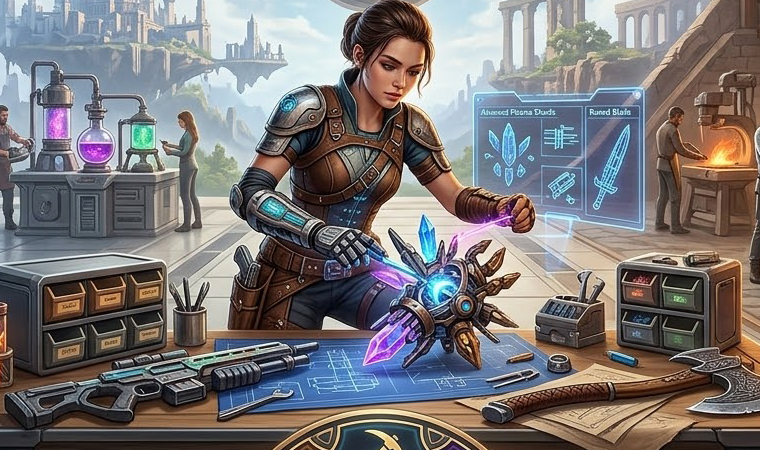
Think about the last time a game genuinely made you feel proud of something you built. That is the invisible magic behind crafting systems, and it is why they have become one of gaming’s most beloved mechanics. A well-designed crafting loop taps into something primal — the satisfaction of taking raw, scattered materials and forging them into something purposeful and powerful. It is not unlike building a house with your own hands; every nail and plank represents effort, strategy, and vision. The gaming world has recognized this emotional hook, and crafting games have exploded in both quality and variety, especially heading into 2025 and 2026.
The genre’s growth has been staggering. Gaming has evolved far beyond simple base building or fighting to stay alive — today, survival crafting titles offer a powerful sense of progression, ownership, and creative freedom that makes every hour genuinely rewarding. MobbiTech Players no longer just want to collect loot; they want to understand it, break it down, and rebuild it into something better. Whether you are converting raw iron ore into plate armor or assembling an underwater research station from alien minerals, crafting creates a feedback loop that keeps you hooked for dozens — sometimes hundreds — of hours. And with major new titles launching alongside beloved franchises expanding in 2025, this is quite possibly the best time in history to be a fan of crafting games.
What is especially exciting is how diverse the genre has become. Survival crafting used to mean punching trees in Minecraft and cobbling together a shelter before nightfall. Now it means managing clone psychology in The Alters, building mobile train-based settlements, or directing a workforce of creatures in Palworld. The genre has grown to embrace RPG depth, factory automation, underwater horror, and cozy life simulation all at once. If you have not explored what modern crafting games have to offer, you are genuinely missing out on some of the most innovative and engaging gameplay loops available on any platform today.
What Makes a Great Crafting System?
Depth vs. Accessibility
This is the central tension in every crafting game ever made: how do you create a system deep enough to reward hundreds of hours of play without burying newcomers under an avalanche of complexity? The best games in this list solve it elegantly. Minecraft, for example, starts you with a simple 2×2 crafting grid in your inventory — something any player can grasp within minutes. Yet that grid opens a door to an enormous world of recipes, from basic wooden planks all the way to Redstone-powered computers. The game never lectures you; it invites you to experiment and discover. That is the gold standard of accessibility paired with depth, and it is why Minecraft has sold over 170 million copies and remains a titan of the building games space.
On the other side of the dial, you have games like SCUM and Factorio, which wear their complexity as a badge of honor. In SCUM, every item depends on your skills and the quality of the components used — a poorly crafted blade wears down faster, and a badly protected shelter attracts unwanted attention. Allkeyshop That level of simulation is not for everyone, but for the right player, it is deeply satisfying. Great crafting systems, regardless of where they fall on the accessibility spectrum, share a common trait: every decision feels meaningful. Crafting should never feel like busywork. It should feel like progress.
Progression and Unlockable Recipes
One of the things that separates good crafting from great crafting is how the system evolves over your playtime. Static recipe lists become stale quickly — you learn them once, then execute them mindlessly. But crafting systems tied to exploration, boss defeats, or skill growth keep things exciting for the long haul. No Man’s Sky uses blueprints that players unlock by finding them in abandoned buildings, purchasing them from vendors, or earning them as quest rewards, with many crafted items existing only to support further crafting — forming long chains where simple resources turn into advanced technology. Game Rant That chain-based progression, where today’s output becomes tomorrow’s ingredient, is a hallmark of truly deep crafting games. It gives players a constant horizon to chase.
The All-Time Greats — Classic Crafting Games You Must Play
Minecraft — The Game That Defined the Genre
No list of crafting games begins anywhere else. Minecraft is quite simply the reason the entire genre exists in its modern form, and it is still — after more than fifteen years — one of the finest examples of what crafting can be. With over 170 million copies sold, Minecraft is a crafting game for everyone: the only violence you find here is the fantasy kind, and it is simply the best game to create something of your own — if you can think it, you can build it. GamesRadar+ The 2025 Minecraft movie became a massive pop culture hit, which has brought an entirely new generation of players to the game, and it shows no signs of slowing down. Whether you are a veteran redstone engineer or a first-timer building your debut house out of dirt, Minecraft meets you exactly where you are.
What makes Minecraft’s crafting so timeless is its elegant scalability. The simplest form of crafting happens directly in the player’s inventory using a 2×2 grid, but the crafting table expands the crafting space to a 3×3 grid and opens the door to almost every major recipe in the game. Game Rant That single mechanical expansion — from four slots to nine — unlocks hundreds of items and sets players on a journey of discovery that can genuinely last a lifetime. Add modding communities that extend the game’s capabilities beyond imagination, enchanting systems, potion-brewing, and the ever-expanding official update cycle, and you have not just a game but a platform for human creativity. Calling Minecraft the building game that defined a genre is an understatement — it is arguably the most impactful crafting experience in the history of interactive entertainment.
Terraria — Deceptively Deep 2D Crafting
At a glance, Terraria looks like a 2D knockoff of Minecraft. Spend an hour with it and that misconception evaporates completely. On the surface it appears to be a 2D version of Minecraft, but look closer and you will find complex gameplay progression systems, layered crafting trees, and chaotic combat that brings to mind Castlevania. Rocketbrush What makes Terraria genuinely special is the way its crafting system is woven into exploration and boss combat — you do not just unlock new recipes because you leveled up; you unlock them because you went somewhere dangerous, defeated something terrifying, and came back with rare materials that open entirely new crafting branches. That sense of risk and reward is central to why Terraria has maintained a devoted fanbase for well over a decade.
The crafting tree in Terraria is staggeringly large. Every material has a use, and the system always feels one step deeper than you expect. The balance between freedom — building constructions in the sky or running dark, mysterious dungeons, growing gorgeous gardens or triggering a blood moon invasion — and the constant pull of progression is what makes it timeless. Rocketbrush Extensive boss fights unlock new crafting stations and materials, meaning combat and crafting are not separate systems but deeply intertwined pillars of the experience. If you have written off Terraria as a lesser alternative to Minecraft, you owe it to yourself to give it a real chance — it stands as one of the most complete crafting games ever made in its own right.
Subnautica — Underwater Survival Crafting at Its Best
Subnautica is one of those rare games that uses its crafting system to tell a story. Its masterful blend of exploration and isolation makes it a standout among the best single-player crafting games — crafting here serves the storytelling, with every scanner room and prawn suit upgrade revealing more of the vast ocean’s secrets. Rocketbrush You crash-land on an alien water world with nothing, and every item you craft — from a basic knife to a full submarine — feels like a genuine survival milestone. There is a progression here that mirrors the stages of grief and triumph in a way most games never achieve. When you finally build your first underwater base, it feels personal.
What truly distinguishes Subnautica from other survival crafting experiences is its atmosphere. The ocean is gorgeous and terrifying in equal measure, and the crafting system never lets you forget that you are an alien intruder in someone else’s home. Resources are scattered across biomes of increasing depth and danger, meaning every crafting push forward requires you to venture deeper into waters you may genuinely not feel ready for. From building laser cutters to propulsion rifles and even vehicles and full bases, Subnautica has a massive variety of crafting, and with the scale of the open ocean to gather resources from, there is almost no limit to how much you can create. Game Rant It is a masterclass in making crafting feel meaningful on both a mechanical and an emotional level.
Best Survival Crafting Games Right Now
Valheim — Norse Mythology Meets Deep Crafting
If you want a survival crafting game that feels epic in scope but intimate in execution, Valheim is your answer. Valheim delivers the perfect blend of Norse mythology, survival logic, and crafting innovation, pushing players to unlock new crafting trees as they defeat bosses and explore beautifully generated worlds — with breakthroughs like shipbuilding, cooking, and cooperative base defense making crafting feel truly rewarding. MobbiTech The genius of Valheim’s design is that each biome and its associated boss acts as a gate that unlocks entirely new tiers of crafting. Defeat the first boss and you unlock basic smelting. Push into the swamp biome and iron metallurgy becomes available. Each progression feels like a civilizational leap forward, and that sensation of ascending through ages of technological development is endlessly compelling.
Valheim also deserves special praise for how naturally it integrates crafting into its cooperative play. Building a Viking longhouse with friends, dividing up resource-gathering roles, and then pooling materials to tackle a new forge upgrade together creates one of the most organic cooperative gaming experiences available today. The game’s procedurally generated worlds ensure that every server has a unique geography to explore, and the crafting system scales perfectly to whether you are playing alone or with a full crew of five. For anyone looking for a building game with deep Scandinavian soul and genuinely satisfying progression, Valheim belongs near the top of your list.
Rust — Hardcore Survival, Maximum Reward
Rust is not a gentle game. It strips you of every comfort and forces you to earn your survival one crafted component at a time, and that is precisely what makes it one of the most compelling crafting games ever made. You start out with a rock and your underwear, and you’ll need to craft your way to survival fast — finding food, building shelter, and eventually putting together weapons and traps to defend yourself from other players. Esports The world of Rust is populated by real players who may raid your base, steal your crafted gear, and leave you with nothing — a reality that makes every item you craft feel genuinely precious in a way that AI-driven games rarely replicate.
Crafting in Rust has real depth, with blueprints, research tables, and an upkeep system that forces you to constantly maintain your structures. Esports You cannot simply craft everything from the start — you must find or research blueprints, which means that early-game interactions with other players (both hostile and cooperative) shape what you can build. The meta-crafting loop, in which you raid for better components to craft better gear to enable better raids, creates a dynamic economy of violence and ingenuity that is unlike anything else in survival crafting. It is brutal, it is punishing, and for many players, it is the most addictive game they have ever played.
7 Days to Die — Crafting Against the Apocalypse
7 Days to Die has one of the most clever structural uses of crafting in the entire genre. Every seven days, a massive zombie horde descends on your base, and the entire game between those events is essentially a crafting race against the clock. You gather scrap metal, wood, cement, and electronic parts to craft weapons, ammunition, motorized tools, and armor, then upgrade everything through workbenches and specialized stations. Allkeyshop The genius is in the pressure — you always know exactly how long you have, and that countdown transforms every crafting decision from abstract to urgent. Do you spend your remaining time reinforcing the base walls or do you try to craft a new turret? These decisions create genuine tension that most survival crafting games struggle to generate.
The crafting system in 7 Days to Die extends well beyond basic survival tools. Players can construct and upgrade entire fortresses, lay electrical wiring for traps and lighting, craft vehicles, and specialize in different crafting disciplines through a skill tree system. The depth here is considerable, and the satisfaction of watching your increasingly sophisticated base withstand a Blood Moon horde is hard to match. For fans of building games who also want combat stakes and a ticking clock, 7 Days to Die is an essential experience that has maintained a strong community for years.
Green Hell — The Most Grounded Survival Crafter
Green Hell takes survival crafting in a direction that feels genuinely different from most of its peers — it is rooted in real-world jungle survival logic, and it expects players to learn. The crafting system relies on observation and experimentation: you learn by testing combinations, discovering blueprints, and analyzing your notebook — from lighting a safe fire and building a stable structure to setting traps and preparing remedies against infections and parasites. Allkeyshop There are no floating UI prompts guiding you to the right recipe; instead, you experiment with materials you find, take notes in an in-game journal, and gradually build a personal library of survival knowledge. It is slower than other games on this list, but for players who love immersion and verisimilitude, it is absolutely unmatched.
The game is set in the Amazon rainforest and every crafting system reflects that environment authentically. You build shelters from bamboo, vines, and palm leaves; you craft primitive weapons from sticks and stones; you cook meals over open fires to avoid illness. The physical world around you is both your greatest resource and your greatest threat, and the crafting system acts as the bridge between those two realities. Green Hell stands as proof that survival crafting can be cerebral as well as action-packed, rewarding patience and observation as richly as speed and combat prowess.
Best Building Games With Crafting Systems
No Man’s Sky — Crafting Across the Galaxy
No Man’s Sky had one of the most dramatic redemption arcs in gaming history, and today it stands as one of the richest building games available on any platform. Almost every action — from traveling to upgrading equipment, building bases, and repairing damage — depends on crafted items, and crafting evolves from basic survival gear all the way to advanced systems like farms. Game Rant The scale of crafting in No Man’s Sky is genuinely staggering; you can build planetary outposts, upgrade starships, construct multitools, create farming operations, and establish trade routes across an effectively infinite procedurally generated universe. Few games give you this breadth of creative agency.
What truly elevates No Man’s Sky above many other crafting games is how its crafting chains create a sense of technological civilization-building. Basic minerals are refined into alloys, alloys power ship upgrades, ship upgrades enable deeper planetary exploration, and deeper exploration yields rarer materials that unlock even more advanced crafting possibilities. It is a loop that could occupy you for a thousand hours without ever feeling repetitive. Hello Games has continued updating the game aggressively, adding new content, mechanics, and systems that keep the crafting ecosystem fresh years after launch.
Palworld — Automation and Creature Crafting
Palworld took the gaming world by storm with a crafting concept that nobody had tried quite this way before — using tameable creatures as an integrated part of your production system. Assign Pals to resource gathering, building, farming, and production lines, and the sprawling environments, wild gunfights, and deep crafting tech blend to make Palworld’s systems endlessly replayable. MobbiTech This creature-labor mechanic transforms the traditional survival crafting loop in a fascinating way; rather than doing everything yourself, you are designing and managing a living factory floor staffed by fantastical animals with different skills and work speeds. It adds an entire layer of strategy that feels fresh and inventive.
Crafting in Palworld scales from basic tools and shelters all the way to sophisticated weapon factories and automated assembly lines. The game rewards players who think systematically, designing efficient workflows where different Pals handle different production stages. This automation angle bridges the gap between pure survival crafting and factory-builder games like Factorio, making Palworld appeal to a broader audience than most genre titles. The fact that it wraps all of this in an accessible, action-driven package with multiplayer support explains why it became one of the fastest-selling games in Steam history.
Grounded 2 — Backyard Survival Reinvented
Grounded 2 launched into early access in mid-2025 and has already earned a reputation as one of the most creative crafting games of its generation. It has already surpassed expectations and even manages to beat out its predecessor when it comes to crafting mechanics — you play as teens shrunk down in size who must stay alive in a dangerous park filled with insects looking to attack at every turn. GamesRadar+ The tiny-scale setting turns the ordinary backyard into a wilderness of epic proportions, and the crafting system leverages that environment brilliantly. You harvest grass to build walls, gather sap for glue, and craft armor out of beetle shells — creative, colorful, and surprisingly strategic. Esports
What sets Grounded 2 apart from its already-excellent predecessor is the expanded scope and refined systems. Bases can be built in smarter configurations, the material variety is significantly broader, and co-op play has been deeply integrated into the crafting loop. Obsidian Entertainment and Eidos-Montréal have clearly listened to everything the community wanted from the first game and delivered an evolution rather than a mere sequel. For fans of building games who want something lighter in tone but no less deep in mechanics, Grounded 2 is an absolute gem.
Hidden Gems and Underrated Crafting Games
The Alters — Crafting With Emotional Consequences
The Alters is unlike anything else on this list, and it deserves far more attention than it typically receives in conversations about crafting games. Survival in The Alters is not just about staying alive — it is about managing fractured versions of yourself: clones with alternate life paths and personalities, where crafting centers on managing and upgrading your base, building stations for research, production, food, and power — all while managing the psychological toll of leadership. Rocketbrush It transforms the standard survival crafting loop into something emotionally resonant and morally complex, asking you to make decisions about your clones that genuinely weigh on you. This is crafting as character drama, and it is masterfully executed.
The game comes from the creators of This War of Mine, and that pedigree is evident in every design choice. Resources matter, but so do morale, trust, and personal history. The crafting systems feed into a larger narrative engine that changes based on the decisions you make about which versions of yourself to nurture and which to sacrifice. It is not a relaxing game, but it is a profoundly interesting one — and for players who want their survival crafting experience to have genuine emotional stakes alongside its mechanical depth, The Alters is an essential recommendation.
SCUM — The Most Realistic Crafting Simulation
If maximum realism is what you are after in a crafting game, SCUM is in a category of its own. SCUM is a ruthless survival simulation where you are not just putting together a few basic tools — you assemble improvised weapons from scavenged materials, craft climate-adapted clothing, build storage chests, traps, fortifications, and fully defensive bases. Allkeyshop The attention to detail here is extraordinary; crafting outcomes depend on your character’s actual skill stats, meaning that two players attempting to build the same item can get very different results based on how they have developed their characters over time. That skill-dependency layer adds a RPG dimension to the survival crafting formula that feels genuinely innovative.
SCUM also models physical needs with a level of granularity that no other game approaches. Your character’s metabolism, hydration, vitamins, and caloric intake all affect performance, meaning that the food and medicine you craft are not just survival bonuses but active management tools. This holistic integration of crafting into every aspect of character simulation is what earns SCUM its reputation as the deepest realistic crafting experience in gaming. It is not for casual players, but for those who want the most immersive possible take on survival crafting, it is unmatched.
Upcoming Crafting Games to Watch in 2026
Subnautica 2
The long-awaited sequel to one of the greatest survival crafting games ever made is expected to arrive in some form in 2026, though its development has been turbulent. Subnautica 2 looks to expand its alien ocean setting with larger biomes, advanced base modules, and four-player cooperative play, with players able to engineer sprawling underwater facilities requiring constant management of power and oxygen systems — and far fewer limits on how massive bases can become. Game Rant The addition of four-player co-op to the Subnautica formula could transform it from an intimate solo journey into one of the defining cooperative building games of the generation. Fans are watching closely despite the development challenges.
Light No Fire
From Hello Games — the studio that turned No Man’s Sky into a benchmark of live-service excellence — comes Light No Fire, a fantasy survival crafting game played on a planet-sized procedurally generated world. Crafting in Light No Fire extends beyond buildings into roads, farms, and fortifications, with players turning plain locations into large settlements that can house both players and creatures from the land. Game Rant The sheer ambition of the project is staggering, and given Hello Games’ track record of transforming rough launches into beloved experiences, Light No Fire is one of the most anticipated crafting games on the 2026 horizon. Watch this one closely.
Quick Comparison: Best Crafting Games at a Glance
| Game | Platform | Crafting Depth | Best For | Multiplayer |
|---|---|---|---|---|
| Minecraft | All | Moderate–Deep | Everyone | Yes |
| Terraria | All | Very Deep | RPG/Exploration fans | Yes |
| Subnautica | PC/Console | Deep | Solo players | No |
| Valheim | PC/Xbox | Deep | Co-op groups | Yes |
| Rust | PC/Console | Very Deep | Hardcore PvP | Yes |
| 7 Days to Die | PC/Console | Deep | Base defense fans | Yes |
| No Man’s Sky | All | Very Deep | Exploration fans | Yes |
| Palworld | PC/Xbox | Deep | Automation fans | Yes |
| Grounded 2 | PC/Xbox | Moderate–Deep | Co-op friends | Yes |
| The Alters | PC | Moderate | Narrative fans | No |
| SCUM | PC | Extreme | Simulation fans | Yes |
| Green Hell | PC/Console | Moderate | Immersion seekers | Yes |
Conclusion
Crafting games are not just a genre — they are a philosophy. They believe that players are more engaged, more invested, and more satisfied when they earn their progress rather than simply receive it. From Minecraft’s iconic 3×3 grid to SCUM’s meticulous simulation, from Subnautica‘s emotional ocean depths to Palworld‘s creature-powered assembly lines, the best crafting games of 2025 and 2026 represent an extraordinary range of creative visions all united by that single core truth. No two crafting experiences on this list feel the same, yet every one of them delivers that irreplaceable rush when a plan comes together and something new exists in the world because of your effort and imagination.
Whether you are a veteran of the genre hunting for something fresh or a newcomer who has never built their first shelter, this is the best possible time to dive in. The survival crafting space is thriving, building games are more ambitious than ever, and with titles like Subnautica 2 and Light No Fire on the horizon, the future looks brighter still. Pick any game on this list, invest a few hours, and discover for yourself why crafting has become the backbone of some of the most beloved gaming experiences of the modern era.
FAQs
1. What is the best crafting game for beginners in 2025? Minecraft remains the gold standard for newcomers. Its simple 2×2 crafting grid eases you in gently, while the depth available through enchanting, redstone, and mods ensures you will never run out of things to learn or build. It is endlessly forgiving while still being endlessly expandable.
2. Which survival crafting game has the deepest mechanics? For sheer simulation depth, SCUM is in a league of its own — every crafting outcome depends on your character’s skill stats, and the physical simulation of your character’s body is extraordinarily detailed. For players who want maximum realism and complexity, it is the definitive answer.
3. Are there good co-op crafting games to play with friends? Absolutely. Valheim, Palworld, 7 Days to Die, Rust, and Grounded 2 all shine in cooperative multiplayer. Valheim in particular is frequently cited as one of the best co-op experiences in gaming, not just in the crafting genre.
4. What upcoming crafting games should I watch in 2026? Subnautica 2 and Light No Fire from Hello Games are the two biggest ones on the horizon. Both promise to push the building games space forward significantly in terms of scope, cooperative play, and crafting depth.
5. Is No Man’s Sky still worth playing in 2025–2026? Absolutely. Hello Games has transformed it into one of the richest crafting games available, with ongoing free updates adding new mechanics, biomes, and crafting systems regularly. It offers hundreds of hours of exploration and base-building that remain compelling years after its initial launch.