
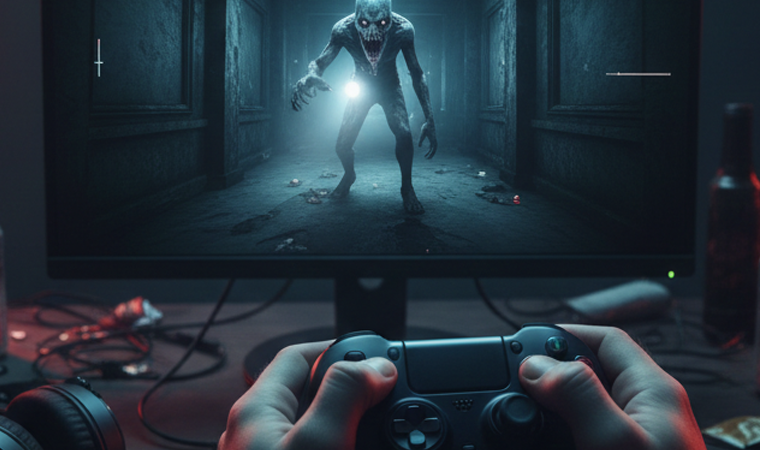
Let’s be real — there’s something deliciously twisted about voluntarily choosing to be terrified. Horror games are unique in that way. Unlike watching a scary movie where you’re just a passive observer, horror games drag you right into the nightmare. You’re the one holding the flashlight. You’re the one making the wrong turn. And you’re definitely the one screaming at 2 a.m. when something crawls out of the darkness.
Whether you’re a seasoned horror veteran or someone who just dipped their toes into the genre, this guide is your ultimate companion to the best horror games that will genuinely scare you — not just make you jump once and move on, but keep you unsettled long after you’ve put the controller down.
Why Horror Games Hit Different Than Horror Movies
Think about the last time a horror movie really scared you. Now think about the last time a horror game made your hands shake. There’s a good chance the game left a deeper impression, and that’s not a coincidence.
Horror games work on a fundamentally different psychological level. When you’re playing, you have agency — you choose to open that door, you decide to walk down that corridor. And that agency flips the fear on its head. Because now, whatever happens? That’s kind of on you. The guilt, the dread, the anticipation — it’s all amplified a hundredfold when you are the one walking into danger.
Interactivity breeds immersion, and immersion breeds genuine fear. It’s why horror games have become one of the most psychologically rich genres in all of gaming.
What Makes a Horror Game Actually Scary?
Not every game with monsters qualifies as scary. Some are just action games with a spooky coat of paint. So what separates a truly terrifying horror experience from something that’s just mildly creepy?
Atmosphere and Sound Design
Sound is everything. Seriously — close your eyes in a horror game and tell me that dripping water, those distant footsteps, or that faint whisper doesn’t make your skin crawl. The best horror games use audio as a weapon. A sudden silence can be more terrifying than a jump scare because it signals that something is about to happen.
Visuals matter too, of course — dark corridors, flickering lights, grotesque creature design. But it’s the marriage of sound and visuals that creates an atmosphere thick enough to cut with a knife.
Unpredictability and Loss of Control
Horror thrives on uncertainty. When you don’t know where the monster is, when you’re not sure if that noise was scripted or a genuine threat — that’s when the real fear kicks in. The best scary games take away your power. No ammo. No map. No safe room. Just you, your racing heart, and whatever’s lurking in the dark.
The Classics That Started It All
Before we get to the modern titans of terror, let’s pay respect to the games that built the foundation.
Resident Evil – The Birth of Survival Horror
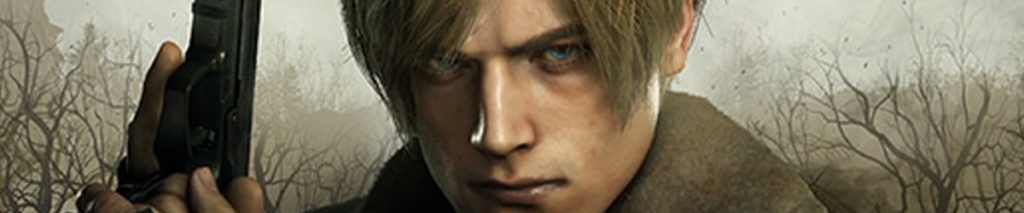
When Resident Evil dropped in 1996, it essentially invented the survival horror genre as we know it. You were stuck in a mansion full of zombies, and you had just enough ammo to either be careful or be dead. The tension of resource management mixed with horrifying enemy designs created something truly special.
The more recent remakes — particularly Resident Evil 2 and 4 — have brought that legacy roaring back to life with modern graphics and refined mechanics. Mr. X, the relentless pursuer in RE2’s remake, became an icon of pure, relentless dread.
Silent Hill 2 – Psychological Horror at Its Finest
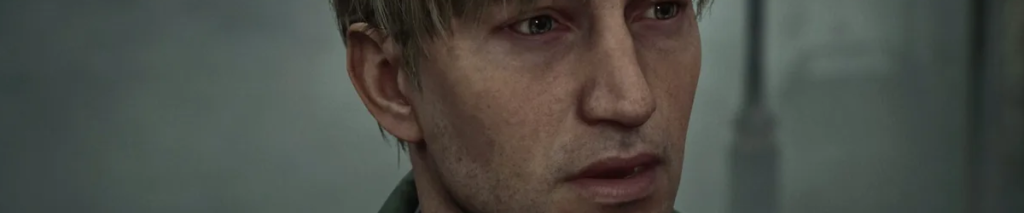
If Resident Evil is about fighting your way through horror, Silent Hill 2 is about drowning in it. This 2001 masterpiece follows James Sunderland, a man who receives a letter from his dead wife asking him to meet her in the fog-drenched town of Silent Hill. What follows is one of gaming’s most haunting explorations of guilt, grief, and denial.
Pyramid Head — possibly the most terrifying video game enemy ever conceived — is not just a monster. He’s a manifestation of James’s own psychological torment. That layer of meaning is what makes Silent Hill 2 not just a scary game, but a profound one.
Modern Horror Games That Redefined Fear
Outlast – No Weapons, Just Run

Released in 2013, Outlast stripped away any sense of power you might feel as a player. You are a journalist investigating a psychiatric hospital, armed with nothing but a camcorder with night vision. You cannot fight. You can only hide and run.
The asylum is populated with genuinely disturbing characters, and the darkness is your constant companion. Outlast proved that the scariest horror games aren’t about facing danger — they’re about evading it while completely helpless.
Amnesia: The Dark Descent – Helplessness Is Terror
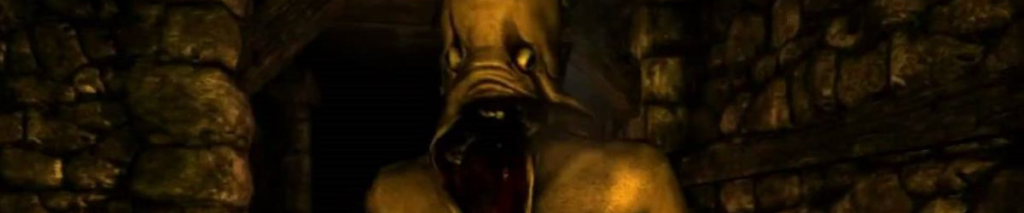
Before Outlast, there was Amnesia. This 2010 indie horror gem from Frictional Games introduced a mechanic that was brilliantly cruel: looking at the monster drains your sanity. You literally cannot face your fears — you have to look away and hide. The Grunt, the game’s main creature, doesn’t need much screen time to become lodged permanently in your nightmares.
Amnesia didn’t just scare players — it broke them. It’s widely credited with popularizing the “no combat” subgenre of survival horror.
Psychological Horror Games That Mess With Your Mind
Some horror games skip the monsters entirely and go straight for your brain.
SOMA – Horror With an Existential Twist
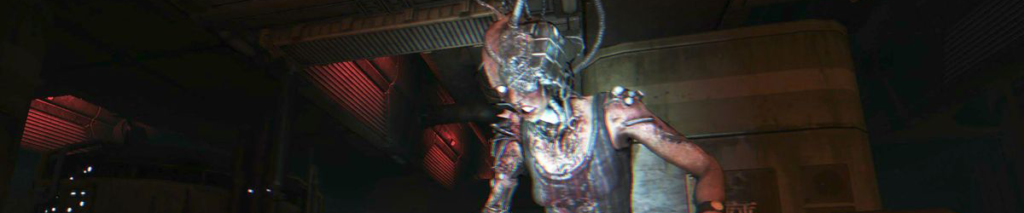
Also from Frictional Games, SOMA is set in an underwater research facility in the distant future. The monsters are terrifying, sure, but the real horror is philosophical. Questions about consciousness, identity, and what it means to be human will haunt you far longer than any creature encounter.
SOMA is the kind of horror game that makes you stop mid-session and just stare at the wall, quietly questioning your own existence. That’s a special kind of scary.
Hellblade: Senua’s Sacrifice – Mental Horror Done Right
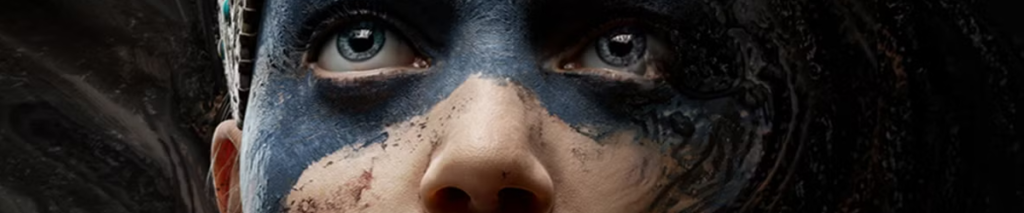
Hellblade puts you inside the mind of Senua, a Celtic warrior experiencing psychosis. The game uses binaural audio to simulate the voices in her head, and the result is genuinely distressing. It’s an unflinching portrayal of mental illness wrapped in a stunning mythological horror narrative.
This isn’t just a game — it’s an experience that will fundamentally change how you think about psychological horror in interactive media.
Supernatural and Ghost Horror Games
Phasmophobia – Fear in Co-Op
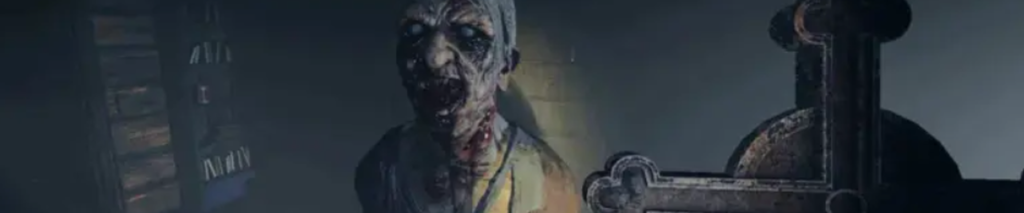
Who said horror had to be lonely? Phasmophobia threw that idea out the window and proved that ghost hunting with friends can be just as terrifying — if not more so — than solo scares. You and your team investigate haunted locations, trying to identify the type of ghost before it hunts you down.
The brilliance of Phasmophobia is in the communication. When your friend’s voice cuts out and you realize they’re gone — that’s a special kind of horror that no single-player game can replicate.
Fatal Frame Series – Ghost Hunting Nightmares
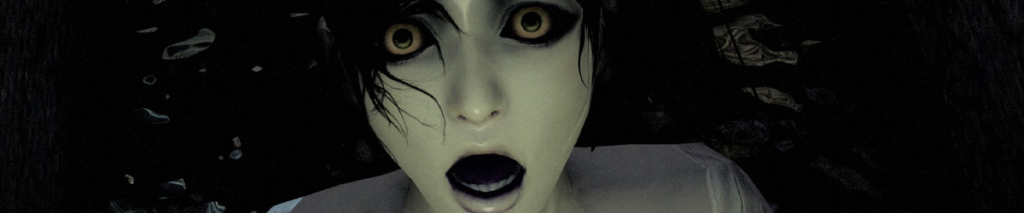
The Fatal Frame series deserves far more mainstream recognition than it gets. Armed only with the Camera Obscura — a device that exorcises ghosts by photographing them — you explore haunted Japanese locations filled with some of the most disturbing spectral entities in gaming history.
The closer you let a ghost get before you snap the photo, the more damage you deal. It’s a mechanic that forces you to stare into the face of pure terror, finger trembling on the shutter button.
Indie Horror Games Punching Above Their Weight
You don’t need a AAA budget to scare someone senseless.
Visage – The Spiritual Successor to P.T.

When Konami cancelled Silent Hills and deleted the legendary playable teaser P.T. from the PlayStation store, the gaming world mourned. Then Visage arrived and picked up that torch. Set in a house with a deeply violent history, Visage unravels multiple stories of tragedy and suffering across different eras.
It is slow, deliberate, and absolutely suffocating in its dread. This is the kind of horror that doesn’t jump out at you — it creeps up behind you and breathes on your neck.
Doki Doki Literature Club – Not What It Seems
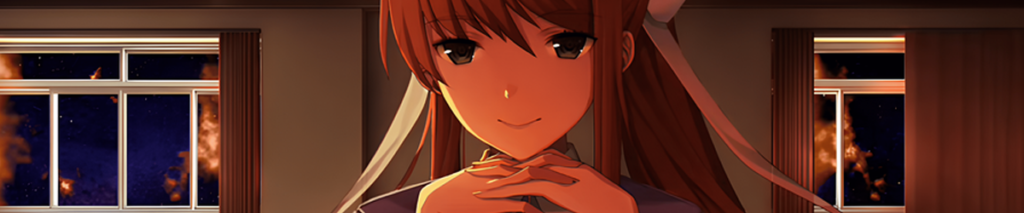
Starting as a cheerful anime visual novel, Doki Doki Literature Club pulls one of the most gut-punching bait-and-switches in gaming history. Without spoiling anything: play it, trust the process, and prepare for your perception of reality in the game to completely shatter.
It’s a masterclass in psychological horror that uses the medium of gaming itself as a tool of terror.
Survival Horror With Action Elements
Dead Space – Terror in Space
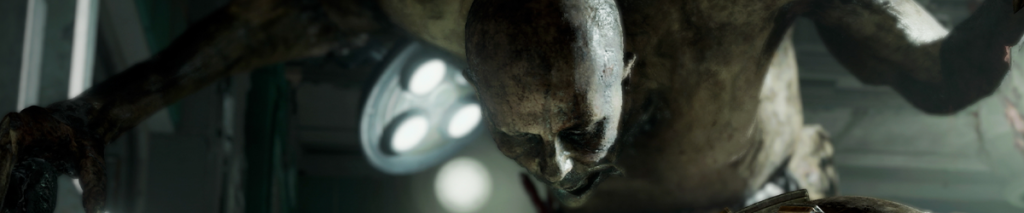
Set aboard the derelict USG Ishimura, Dead Space blends intense action with survival horror in a way few games have matched. The Necromorphs — twisted, reanimated corpses — cannot simply be shot in the head. You have to dismember them limb by limb, which creates a uniquely gruesome and desperate combat experience.
The sound design is phenomenal, the zero-gravity sections are disorienting in the best way, and the claustrophobic corridors of the ship never stop feeling oppressive. Dead Space is a horror masterpiece, full stop.
The Evil Within – A Twisted Nightmare
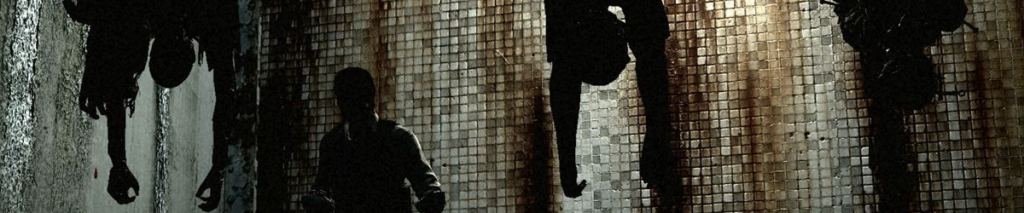
From the creator of Resident Evil himself, Shinji Mikami, The Evil Within delivers a relentlessly surreal and brutal horror experience. The world constantly shifts and mutates around you, enemies are grotesque and punishing, and resources are always painfully scarce.
It’s the kind of game where you’re never comfortable, never safe, and never quite sure what’s real — which is precisely what makes it so effective.
How to Choose the Right Horror Game for You
Not all horror games are built the same, and not all scares are for everyone. Here’s a quick way to think about it. If you love the idea of resource management and fighting back, go for survival horror classics like Resident Evil or Dead Space. If you want to feel completely powerless and just want to survive, Outlast and Amnesia are your best friends.
If you want something that disturbs you on a deeper, philosophical level, SOMA and Doki Doki Literature Club will stay with you for weeks. And if you want scares with friends, Phasmophobia is the obvious pick.
Tips for Maximizing Your Horror Game Experience
Want to get the absolute most out of your horror game? Play in the dark. Use headphones — always headphones. Turn your phone off or at least face-down. And play alone, at night, when the house is quiet.
It sounds obvious, but so many people undercut their own horror experience by playing in a bright room with the TV on in the background. Immersion is everything. The more you commit to the experience, the deeper the fear goes.
The Future of Horror Games
The horror genre is in an incredibly exciting place right now. VR horror is pushing the boundaries of immersion in ways that are almost irresponsible — games like Resident Evil 7 in VR become almost unplayably scary. AI-driven enemies that adapt to player behavior are making horror encounters less predictable and far more personal.
We’re also seeing a renaissance of psychological and narrative-driven horror, as developers realize that the scariest stories are often the ones that hold up a mirror to real human fears — loneliness, loss, guilt, and the unknown. The future of scary games looks terrifying, and we can’t wait.
Conclusion
Horror games are unlike any other entertainment experience. They demand your participation, your vulnerability, and your willingness to be genuinely afraid. From the survival horror pioneered by Resident Evil to the mind-bending psychological terror of SOMA and Doki Doki Literature Club, the genre has evolved into something incredibly diverse and deeply impactful.
Whether you’re looking for monsters to fight, creatures to hide from, or existential dread to sit with, there’s a horror game out there with your name on it. So dim the lights, put your headphones on, and remember — whatever you do, don’t look behind you.
FAQs
1. What is the scariest horror game ever made? This is subjective, but games like Amnesia: The Dark Descent, Outlast, and Silent Hill 2 consistently top lists for genuinely terrifying experiences due to their atmosphere, design, and psychological depth.
2. Are psychological horror games scarier than monster-based ones? For many players, yes. Psychological horror games tap into deeper fears — identity, loss, guilt — that stay with you far longer than a jump scare ever could.
3. Can horror games cause anxiety? They can, particularly in players who are sensitive to suspense and fear. It’s always a good idea to take breaks and know your limits when playing intense horror games.
4. What’s the best horror game for beginners? Resident Evil 2 Remake is a great entry point — it’s polished, not overly punishing, and offers a perfect blend of action and horror without being completely overwhelming.
5. Are there horror games that are scary without being gory? Absolutely. SOMA, Hellblade: Senua’s Sacrifice, Phasmophobia, and Doki Doki Literature Club all deliver powerful horror experiences without relying on excessive gore.
1 Comment
bd4499bat
If you are looking for a stable platform with great odds then this is it. I am really happy with the overall experience at bd4499bat.