
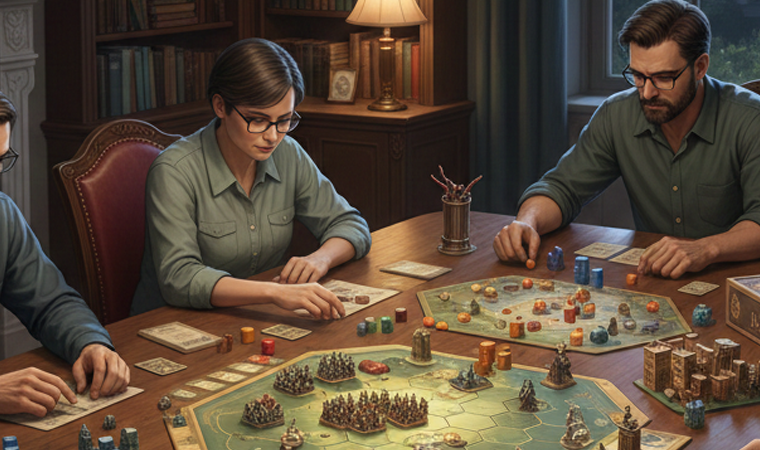
Why Strategy Games Are Brain Food
Ever felt that rush when your carefully crafted plan unfolds perfectly? When you’ve predicted your opponent’s moves three turns ahead and positioned yourself for victory? That’s the magic of strategy games—they turn your brain into a battlefield where intellect trumps reflexes. Unlike action games that test your twitch reactions or RPGs that rely on grinding stats, strategy games demand something different: they want you to think, adapt, and outsmart.
Strategy games are chess on steroids. They’re the digital equivalent of commanding armies, building empires, or navigating complex political landscapes from the comfort of your gaming chair. In 2026, the genre has never been more diverse or sophisticated. We’ve got everything from quick tactical puzzles you can solve in an hour to grand strategy epics that consume hundreds of hours. The best tactical video games challenge your mind in ways few other entertainment mediums can match.
This comprehensive guide explores the top strategy games 2026 has to offer, covering turn-based tactics, real-time strategy, grand strategy epics, and mind-challenging games for PC that’ll make your brain work overtime in the best possible way. Whether you’re a veteran strategist or someone curious about testing their mental mettle, we’ll help you find games that match your thinking style and skill level.
Cognitive Benefits of Strategic Thinking
Playing strategy games isn’t just entertainment—it’s mental exercise disguised as fun. Research shows that strategic gaming improves problem-solving skills, enhances working memory, develops planning abilities, and increases cognitive flexibility. When you’re managing resources, predicting outcomes, and adapting to changing situations, you’re literally training your brain to think more strategically in real life.
Think of strategy games as crossword puzzles with explosions, or Sudoku with medieval warfare. The mental challenge keeps your brain engaged and growing, which is why strategy gaming appeals to people who love intellectual stimulation. You’re not just passing time—you’re sharpening your mind.
The Satisfaction of Outsmarting Opponents
There’s a unique satisfaction in strategy gaming that action games can’t replicate. When you win a shooter, you proved your reflexes were faster. When you win a strategy game, you proved your mind was sharper. You outwitted, outplanned, and outmaneuvered your opponent. That victory feels earned in a different way—intellectual rather than physical.
This is why strategy games attract thinkers, planners, and people who enjoy mental challenges. If you’re someone who finds satisfaction in solving complex problems, optimizing systems, or executing elaborate plans, strategy games are your natural gaming home.
Understanding Different Types of Strategy Games
Turn-Based vs. Real-Time Strategy
Turn-based strategy games let you think at your own pace. You make your moves, then your opponent makes theirs. There’s no time pressure, just pure strategic thinking. Games like Civilization, XCOM, and Into the Breach exemplify this—take your time, consider options, then commit.
Real-time strategy (RTS) adds time pressure. You’re managing resources, building armies, and executing tactics while your opponent does the same simultaneously. StarCraft II and Age of Empires test not just strategy but also multitasking and quick decision-making under pressure.
The difference is like comparing chess to speed chess. Both are strategic, but one adds urgency to the equation.
4X Games (Explore, Expand, Exploit, Exterminate)
4X games are the epic empire builders. You start with a single city or planet and gradually build a civilization spanning continents or galaxies. Civilization is the genre’s poster child, but games like Stellaris, Endless Legend, and Humankind offer variations on the formula.
These games are marathons, not sprints. A single playthrough might take 20-40 hours. They reward long-term planning, careful resource management, and strategic thinking across dozens or hundreds of turns.
Grand Strategy and Simulation
Grand strategy games like Hearts of Iron, Europa Universalis, and Crusader Kings simulate running nations across centuries. They’re incredibly complex, managing diplomacy, economics, military, and politics simultaneously. The learning curves are steep, but mastery is deeply rewarding.
These games appeal to history buffs and people who love systems management. You’re not controlling individual units—you’re shaping the course of history through policy decisions and strategic planning.
Tactical Combat Games
Tactical games zoom in on individual battles rather than entire wars or civilizations. XCOM, Jagged Alliance, and Battletech focus on squad-level combat where positioning, cover, and individual character abilities determine outcomes.
These games are tense, often featuring permadeath (when your soldiers die, they’re gone permanently), creating emotional attachment to your squad and making every decision feel weighty.
Top Strategy Games 2026: The Essential List
Civilization VII – The Empire Builder’s Dream
What Makes Civ VII Special
Civilization VII represents Firaxis’s evolution of the legendary franchise. The “one more turn” addiction is stronger than ever, with refined systems making empire management more intuitive while adding strategic depth. The new dynamic leaders system lets historical figures age and change personalities throughout the game, affecting diplomacy and playstyle.
The game introduces climate consequences that actually matter—pollution in industrial eras affects global temperatures, causing sea level rise and natural disasters. Managing this adds an entirely new strategic layer. Do you industrialize rapidly and deal with consequences later, or develop sustainably and risk falling behind competitors?
Strategic Depth and Replayability
With 24 civilizations at launch (each with unique abilities, units, and buildings), multiple victory conditions, and randomly generated maps, no two Civ VII games play the same. The AI has been significantly improved, providing genuine challenge even for veterans. Multiplayer supports both simultaneous turns for faster games and classic turn-based for those who want time to think.
For newcomers, Civilization VII is the perfect entry point to 4X strategy. For veterans, it’s the deepest and most polished Civ game yet.
Total War: Pharaoh Dynasties
Creative Assembly’s expansion to Total War: Pharaoh transforms the base game into one of 2026’s premier strategy experiences. The campaign map covers the entire Bronze Age Mediterranean, letting you play as Egyptian dynasties, Hittite kingdoms, or Sea People raiders.
The combination of turn-based campaign strategy and real-time tactical battles creates a unique experience. On the campaign map, you manage territories, diplomacy, and armies. In battles, you command thousands of soldiers in gorgeous real-time combat where positioning, morale, and tactics determine outcomes.
The dynasty mechanics add generational gameplay—your pharaoh ages and eventually dies, passing leadership to heirs who may be competent or disastrous. Managing succession becomes as important as military strategy.
Crusader Kings III: Legacy Update
Paradox’s medieval dynasty simulator continues evolving. The Legacy update adds generational progression systems where family achievements unlock bonuses spanning centuries. Your dynasty accumulates renown through great deeds, unlocking perks that benefit all family members.
CK3 is less about conquering the world and more about managing a noble family through medieval politics, marriages, intrigue, and occasionally warfare. It’s Game ofRones: The Strategy Game, where assassinating your brother-in-law through elaborate plotting might be smarter than declaring war.
The game excels at emergent storytelling. Every playthrough generates unique narratives as your dynasty navigates centuries of medieval chaos. It’s strategy gaming for people who love character-driven stories as much as tactical challenges.
Age of Empires V
Microsoft’s legendary RTS franchise returns with a new era—this time covering the Industrial Revolution through World War I. The game maintains Age of Empires’ accessible RTS gameplay while introducing railways, telegraphs, and early mechanized warfare.
The campaign features historical scenarios across the globe, from the American Civil War to the colonization of Africa. Multiplayer remains the heart of AoE, with balanced civilizations, ranked matchmaking, and a thriving competitive scene.
For RTS fans, Age of Empires V combines nostalgia with modern polish and innovation, creating one of 2026’s premier real-time strategy experiences.
Best Tactical Video Games for Combat Enthusiasts
XCOM 3: Dark Horizons
Squad-Based Tactical Excellence
Firaxis returns to XCOM with a darker, more ambitious sequel. Dark Horizons takes place 30 years after XCOM 2, with humanity expanding into the solar system only to discover they’re not alone. The tactical combat that made XCOM legendary returns with new mechanics: zero-gravity combat, environmental destruction, and a morale system affecting soldier performance.
The base-building layer adds ship management—your mobile headquarters is now a massive spacecraft traveling between planets. You’re juggling research, engineering, soldier training, and strategic resource allocation while responding to crises across the solar system.
Permadeath and Consequences
XCOM’s trademark permadeath returns with a twist—soldiers who die can be recovered and rebuilt as augmented humans, but at great resource cost and with psychological consequences for their squad mates. The emotional weight of losing veteran soldiers after dozens of missions together creates tension that few games match.
The strategic layer matters enormously. Ignoring a threat on Mars to respond to one on Europa might have cascading consequences. Resource management, research prioritization, and threat assessment create a complex puzzle with no perfect solutions—just difficult choices with trade-offs.
Jagged Alliance 3: Expanded Edition
The mercenary tactical series returns with its humor, depth, and brutal difficulty intact. You manage a company of mercenaries liberating a nation from a dictator. The turn-based combat is meticulous—elevation, cover, line of sight, weapon range, and character skills all matter.
What sets Jagged Alliance apart is personality. Each mercenary has a unique character, likes, dislikes, and relationships with others. Some mercs refuse to work together. Others become friends, gaining combat bonuses when fighting side by side. Managing personalities becomes as important as managing tactics.
The campaign features non-linear progression. You choose which territories to liberate, which factions to ally with, and how to manage your growing territory. Decisions have consequences that ripple throughout the campaign.
Battletech: Mercenaries
Harebrained Schemes’ mech combat game gets a massive expansion. Battletech drops you into the pilot seat of giant stompy robots in turn-based tactical combat. Each mech has distinct loadouts, strengths, and weaknesses. Positioning matters—attacking from behind or side bypasses frontal armor.
The mercenary campaign has you managing a company—negotiating contracts, repairing mechs, hiring pilots, and managing finances. Mechs are expensive. Pilots take time to train. Every mission has financial implications. You’re balancing tactical success with economic sustainability.
The tactical combat is crunchy and satisfying. Heat management (weapons generate heat that can shut down your mech), armor facing, and weapon ranges create a tactical puzzle that rewards smart positioning and target prioritization.
Phantom Brigade
This indie tactical game deserves more attention. Phantom Brigade features mechs and simultaneous turn resolution—you plan your turn while seeing enemy intent, then both sides execute simultaneously. This creates a unique tension: you can see what enemies plan to do, but they’re also reacting to your predicted actions.
The timeline scrubbing interface is genius—you can watch the next five seconds of combat play out, rewind, and adjust your plan. It’s turn-based with the fluidity of real-time, creating a unique tactical experience.
The campaign is procedurally generated, providing endless replayability. While not as polished as AAA titles, Phantom Brigade offers innovative tactical gameplay that strategy fans shouldn’t miss.
Mind-Challenging Games for PC: Puzzle Strategy Hybrids
Into the Breach – Perfect Minimalist Strategy
Subset Games’ masterpiece remains one of the finest strategy games ever created. Into the Breach is strategy distilled to pure essence—8×8 grids, perfect information, and chess-like tactical puzzles. You control three mechs defending cities from kaiju-like creatures.
What makes Into the Breach brilliant is the perfect information—you see exactly what enemies will do next turn. The puzzle is figuring out how to save the maximum civilians and buildings with limited resources. There’s always a solution, but finding it requires careful thought.
Games take 30-60 minutes, making it perfect for when you want strategic challenge without multi-hour commitments. The difficulty is high, the satisfaction immense, and the design absolutely pristine.
Desperados III
Mimimi Games’ tactical stealth game is strategy for patient thinkers. You control a group of outlaws in the Wild West, infiltrating enemy camps to complete objectives. The game plays like puzzle-solving—surveying enemy patrols, identifying patrol patterns, coordinating your team’s abilities to neutralize threats simultaneously.
The satisfaction comes from executing perfect plans. You spend five minutes setting up, then watch your plan unfold in seconds as your team eliminates a dozen enemies simultaneously through careful coordination.
For fans of methodical planning and execution, Desperados III is essential. It’s chess with cowboys.
Invisible, Inc.
Klei Entertainment’s cyberpunk stealth tactics game combines turn-based infiltration with roguelike elements. You’re controlling corporate spies infiltrating secure facilities. Every action costs action points. Every turn, facility security increases. The tension ramps as you push deeper into buildings, knowing that alarm levels are rising and reinforcements are coming.
The procedural generation and permadeath create incredible tension. Your agents are valuable—losing one hurts. The strategic depth comes from resource management (action points, stealth, security level) and risk assessment. Do you push for that optional objective, or extract before security overwhelms you?
Frostpunk 2
11 bit studios’ sequel to the survival city-builder adds strategic complexity. You’re still managing a city in frozen wasteland, but now 30 years after the original. The scale has expanded—you’re managing districts rather than individual buildings, and navigating political factions vying for control.
The strategic challenge is balancing survival needs with factional politics. Factions have agendas—some push for expansion, others for conservation. Your decisions create allies and enemies within your own city. The moral dilemmas return—Frostpunk forces you to make horrific choices for the greater good.
It’s strategy gaming that makes you think about ethics as much as efficiency. The mind challenges here are as much philosophical as tactical.
Grand Strategy Games for Long-Term Thinkers
Hearts of Iron V
Paradox’s World War II grand strategy simulation goes deeper than ever. Hearts of Iron V lets you control any nation from 1936-1950, managing military, production, research, and diplomacy. The complexity is staggering—you’re designing tank divisions, managing supply lines, researching technologies, and orchestrating battles involving millions of soldiers.
The learning curve is Mount Everest steep, but mastery is incredible. Understanding how production, logistics, and doctrine interconnect to create military effectiveness is genuinely educational. This is strategy gaming for people who read military history for fun.
The game shines in alternate history scenarios. What if France held against Germany? What if the Soviet Union struck first? The simulation lets you explore these questions with remarkable historical fidelity.
Europa Universalis V
Paradox’s age of exploration and colonization grand strategy game covers 1444-1821. You’re managing a nation across nearly 400 years of history, navigating diplomacy, trade, colonization, and warfare. The systems are incredibly deep—trade nodes, institution spread, culture, religion, government types, and dozens of other variables.
EU5 is for people who love complex systems and long-term planning. Your decisions in 1500 affect your capabilities in 1700. The game rewards historical knowledge—understanding the Thirty Years’ War or the colonization of the Americas provides strategic insights.
It’s not a game you “finish”—it’s a sandbox for exploring historical what-ifs and emergent narratives.
Victoria 3: Expanded
Paradox’s economic simulation grand strategy game covers the Victorian era (1836-1936). Unlike other Paradox games focusing on conquest, Victoria 3 emphasizes economics, industrialization, and social change. You’re managing economic policies, industrial development, social reforms, and diplomatic relations.
The economic simulation is the deepest in strategy gaming. You’re managing supply chains, labor markets, trade goods, and industrial capacity. Warfare exists but is expensive and disruptive—diplomacy and economic competition are often better strategies.
For players fascinated by economics and industrialization, Victoria 3 is unmatched. It’s strategy gaming for people who think about economic policy as much as military tactics.
Stellaris: The Complete Experience
Paradox’s space 4X grand strategy has evolved dramatically since launch. The 2026 complete edition includes all expansions, creating the definitive space empire experience. You’re exploring the galaxy, encountering alien civilizations, researching technologies, and determining your empire’s destiny.
Stellaris excels at variety. You can play as peaceful traders, genocidal conquerors, hive minds, machine empires, or spiritualist fanatics. Each playstyle feels genuinely different. The late-game crisis events (galactic disasters threatening all civilizations) create dramatic narrative peaks.
It’s grand strategy with science fiction flavor, offering hundreds of hours of empire-building gameplay.
Real-Time Strategy Classics and Modern Innovations
StarCraft II: Still Relevant in 2026
Blizzard’s legendary RTS remains the gold standard for competitive strategy gaming. The game’s perfect balance between three asymmetric factions (Terran, Protoss, Zerg) creates incredible strategic depth. The skill ceiling is limitless—even after a decade and a half, players discover new strategies.
The campaign remains excellent, but StarCraft II’s heart is multiplayer. The competitive scene is alive and thriving, with professional leagues and a dedicated community. If you want to test your RTS skills against the best, StarCraft II is where serious players compete.
The game is free-to-play for multiplayer, making it accessible to anyone wanting to experience RTS at its finest.
Age of Mythology: Retold
Microsoft’s remake of the beloved mythology RTS updates the classic for modern audiences. Age of Mythology blends historical RTS gameplay with mythological units and god powers. You’re building civilizations while summoning minotaurs and calling down lightning strikes.
The campaign is charming and well-written. The multiplayer is accessible while maintaining strategic depth. For players who found Age of Empires too serious, Age of Mythology adds fantasy flair while keeping the strategic core.
Company of Heroes 3
Relic’s tactical RTS focuses on World War II combat with emphasis on positioning, cover, and tactical decision-making over base building and macro management. Each unit has roles and counters. Infantry needs cover. Tanks need support. Artillery needs protection.
The campaigns cover the Italian and North African theaters, providing fresh settings. The tactical gameplay is best-in-class—Company of Heroes 3 is strategy gaming for people who love military tactics more than economic management.
Homeworld 3
The space RTS returns with full 3D tactical combat. Homeworld’s unique control scheme lets you command fleets in three-dimensional space—positioning matters in X, Y, and Z axes. You’re flanking enemies from above, using asteroids as cover, and executing complex maneuvers in beautiful space battles.
The campaign continues the series’ excellent narrative. The roguelike War Games mode provides endless replayability. For fans of space combat and tactical depth, Homeworld 3 is essential.
Indie Strategy Gems You Shouldn’t Miss
Against the Storm
This roguelike city-builder combines settlement management with roguelike progression. You’re building settlements in a hostile fantasy world, completing objectives before moving to new locations. The roguelike structure keeps gameplay fresh—each settlement is different, and meta-progression between runs creates long-term advancement.
The game is challenging and addictive. Balancing multiple resources, keeping different fantasy races happy, and completing objectives before time runs out creates constant tension. It’s strategy gaming condensed to focused sessions rather than sprawling epics.
Dune: Spice Wars
Shiro Games’ 4X RTS hybrid set in Frank Herbert’s Dune universe combines real-time gameplay with 4X elements. You’re controlling one of Dune’s factions, harvesting spice, managing desert survival, and navigating the brutal politics of Arrakis.
The game captures Dune’s atmosphere perfectly—desert warfare, spice economics, political intrigue, and the constant threat of sandworms. For Dune fans and strategy players, it’s an excellent adaptation.
Songs of Conquest
This indie turn-based strategy game channels Heroes of Might and Magic’s spirit. You’re building armies, conquering territory, and engaging in turn-based battles. The pixel art is gorgeous. The soundtrack is excellent. The strategic depth rivals the classics that inspired it.
For fans of classic turn-based strategy, Songs of Conquest scratches that nostalgic itch while introducing modern quality-of-life improvements.
Wartales
This open-world tactical RPG combines XCOM-style turn-based combat with open-world exploration and mercenary company management. You’re leading a band of mercenaries, taking contracts, managing resources, and building your reputation.
The tactical combat is excellent. The open-world structure provides freedom. The mercenary management creates attachment to your growing company. It’s strategy gaming with RPG elements, appealing to fans of both genres.
Strategy Games for Different Skill Levels
Beginner-Friendly Strategy Games
New to strategy? Start with: Into the Breach (simple to learn, difficult to master), Age of Mythology: Retold (accessible RTS), Civilization VII (excellent tutorial and difficulty scaling), or XCOM 3 on easier difficulties. These games teach strategic thinking without overwhelming complexity.
Intermediate Challenges
Once comfortable, try: Total War: Pharaoh, Crusader Kings III, Battletech, or Desperados III. These add layers of complexity while remaining approachable.
Expert-Level Brain Burners
Ready for maximum challenge? Tackle: Hearts of Iron V, Europa Universalis V, Victoria 3, or StarCraft II competitive multiplayer. These games demand significant time investment to master but provide incredible depth.
Multiplayer Strategy Gaming
Competitive Strategy
Competitive multiplayer strategy gaming tests your skills against human opponents. StarCraft II, Age of Empires V, and Company of Heroes 3 offer ranked competitive multiplayer. Human opponents are unpredictable, creating challenges AI can’t match.
Cooperative Strategy Experiences
Cooperative strategy lets you team up with friends against AI or other players. Total War games, Civilization VII, and many tactical games support co-op. Coordinating strategies with teammates adds social dimension to strategic gameplay.
Asynchronous Strategy Gaming
Asynchronous strategy lets you play multiplayer over days or weeks, with each player taking turns on their schedule. Civilization VII and other turn-based games support this, perfect for groups unable to coordinate simultaneous play sessions.
What Makes a Great Strategy Game?
Meaningful Choices
Great strategy games present difficult decisions without obvious correct answers. Every choice involves trade-offs. You’re constantly weighing options, predicting consequences, and adapting to results.
Balanced Complexity
The best strategy games are deep but not impenetrable. They introduce complexity gradually, creating accessible entry points while rewarding mastery.
Strategic Depth
Depth means the game remains interesting through dozens or hundreds of hours. New strategies emerge. Meta evolves. Players continue discovering optimal approaches.
Fair but Challenging AI
Good strategy game AI provides challenge without cheating. The best games create difficult opponents that play by the same rules as players.
Strategy Gaming Across Platforms
PC Strategy Dominance
PC remains strategy gaming’s home platform. Mouse and keyboard suit complex UI. Processing power handles calculations. Most strategy games launch on PC first or exclusively.
Console Strategy Gaming
Console strategy gaming has improved dramatically. Games like Civilization, XCOM, and Crusader Kings have been successfully adapted to controllers. While not ideal for all strategy games, modern consoles support more strategy titles than ever.
Mobile Strategy Options
Mobile strategy ranges from casual to surprisingly deep. Ports of PC classics like Civilization, XCOM, and Rome: Total War work well on tablets. Original mobile strategy games offer legitimately good experiences optimized for touchscreens.
The Future of Strategy Games
AI-Enhanced Opponents
Future strategy games will feature AI opponents that learn, adapt, and provide human-like challenge. Machine learning will create opponents that adjust to your playstyle, providing personalized challenge.
Procedural Campaign Generation
Procedural generation will create unique campaigns each playthrough, providing infinite replayability while maintaining handcrafted quality through algorithmic content creation.
Cross-Platform Strategy Evolution
Cross-platform play will become standard, letting PC, console, and mobile players compete in the same games regardless of platform.
Building Your Strategy Gaming Skills
Learning from Losses
Every loss teaches something. Analyze what went wrong. Identify mistakes. Adjust strategies. The best strategy gamers treat losses as learning opportunities.
Community Resources
Strategy gaming communities create incredible resources—guides, build orders, strategy discussions, and tutorials. Websites, YouTube channels, and Reddit communities accelerate learning.
Streamers and Content Creators
Watching skilled players reveals strategies and techniques you’d never discover alone. Streamers like PotatoMcWhiskey (Civilization), Day9 (StarCraft), and others provide entertainment and education.
Conclusion
The top strategy games 2026 offers prove that the genre has never been healthier. From the epic civilization-building of Civilization VII to the tactical squad combat of XCOM 3, from the grand strategy of Hearts of Iron V to the puzzle-strategy perfection of Into the Breach, strategy gaming provides mental challenges that few other entertainment mediums match. The best tactical video games reward careful planning, adaptation, and intellectual engagement in ways that pure action games simply can’t replicate.
Whether you’re drawn to mind-challenging games for PC that make you think ten moves ahead, real-time strategy games testing your multitasking under pressure, or grand strategy epics letting you reshape history, there’s a strategy game perfectly suited to how your brain works. These games don’t just entertain—they train your mind to think strategically, plan effectively, and solve complex problems. That’s why strategy gaming attracts thinkers, planners, and people who genuinely enjoy mental challenges.
The beauty of strategy gaming in 2026 is the incredible variety. You can spend 20 minutes solving tactical puzzles or 200 hours building galactic empires. You can play casually on easier difficulties or push yourself against brutal AI or competitive multiplayer. The genre accommodates every skill level and time commitment while maintaining that core appeal—the satisfaction of outsmarting opponents through superior strategy, careful planning, and tactical brilliance. For thinkers who want their entertainment to engage their minds as much as their reflexes, strategy games deliver an experience nothing else can match.
FAQs
1. What are the best strategy games for beginners in 2026?
For newcomers to strategy gaming, start with accessible titles that teach strategic thinking without overwhelming complexity. Into the Breach is perfect—simple 8×8 grids, perfect information, and pure tactical problem-solving in 30-60 minute sessions. Civilization VII offers excellent tutorials, adjustable difficulty, and forgiving gameplay while teaching 4X strategy fundamentals. Age of Mythology: Retold provides accessible real-time strategy with clear objectives and manageable pace. XCOM 3 on easier difficulties teaches tactical combat with time to think and reversible consequences. Avoid starting with grand strategy games like Hearts of Iron V or Europa Universalis V—their complexity is overwhelming without strategic gaming literacy. Master fundamentals in beginner-friendly games, then gradually tackle more complex titles as your strategic thinking develops. The key is starting with games that teach through playing rather than requiring extensive tutorial study before you can even begin enjoying them.
2. What’s the difference between turn-based and real-time strategy games?
Turn-based strategy gives you unlimited time to think—you make your moves, then opponents make theirs. Games like Civilization, XCOM, and Into the Breach let you carefully consider every decision without time pressure. This appeals to players who enjoy deliberate, thoughtful planning and don’t want to feel rushed. Real-time strategy (RTS) happens continuously—you’re managing resources, building armies, and executing tactics while opponents do the same simultaneously. Games like StarCraft II and Age of Empires test not just strategic thinking but also multitasking, quick decision-making under pressure, and micro-management of multiple tasks. Think of turn-based as chess (thoughtful, methodical) and RTS as speed chess plus city-building (frantic, demanding). Neither is superior—they appeal to different preferences. If you like thinking carefully without pressure, choose turn-based. If you enjoy the adrenaline of managing multiple urgent tasks simultaneously, try RTS. Many strategy fans enjoy both, as they exercise different mental muscles.
3. Are strategy games good for your brain, or is that just marketing?
Strategy games genuinely provide cognitive benefits—this isn’t just marketing. Research shows that strategic gaming improves: problem-solving abilities (you’re constantly solving complex problems under constraints), working memory (managing multiple game systems simultaneously trains memory capacity), planning and foresight (predicting consequences multiple turns ahead develops planning skills), cognitive flexibility (adapting strategies when plans fail trains mental adaptability), and spatial reasoning (many strategy games involve map awareness and spatial thinking). The mental exercise is real—you’re training pattern recognition, resource optimization, risk assessment, and strategic thinking. These skills transfer to real life—strategy gamers often show improved decision-making in complex situations. However, benefits require active engagement—mindlessly following build orders or guides doesn’t train your brain. You need to think critically, experiment with strategies, and learn from mistakes. Strategy gaming is mental exercise disguised as entertainment, but only if you’re actively using your brain rather than following recipes.
4. What are the top strategy games 2026 for competitive multiplayer?
For competitive strategy gaming, several titles dominate: StarCraft II remains the RTS gold standard with the highest skill ceiling and most active competitive scene—if you want to test your RTS skills against the best, this is where serious players compete. Age of Empires V offers accessible competitive RTS with balanced civilizations and growing esports presence. Civilization VII supports competitive multiplayer with simultaneous turns for faster games, though matches are lengthy commitments. Company of Heroes 3 provides tactical RTS with emphasis on combat positioning over economic management. Total War: Pharaoh Dynasties offers competitive battles where tactical excellence matters more than campaign progression. Into the Breach isn’t traditional multiplayer but supports competitive scoring comparing players’ performances on identical scenarios. For turn-based competitive gaming without real-time pressure, look at Civilization VII or competitive XCOM 3 scenarios. The best choice depends on preferences: choose StarCraft II for pure skill competition, Age of Empires V for accessible competitive RTS, or Civilization for turn-based competition.
5. How do I choose between grand strategy games like Hearts of Iron V, Europa Universalis V, and Victoria 3?
These Paradox grand strategy games differ significantly despite surface similarities. Hearts of Iron V focuses on World War II military strategy—if you love military history, logistics, division design, and commanding massive armies, choose this. It’s the most military-focused of the three, with economics and politics supporting warfare. Europa Universalis V covers 1444-1821 focusing on colonization, trade, and diplomacy during the age of exploration—if you’re fascinated by colonial history, trade networks, diplomatic maneuvering, and nation-building across centuries, this is your game. It balances military, diplomacy, trade, and exploration more evenly. Victoria 3 covers 1836-1936 emphasizing economics, industrialization, and social change—if you’re interested in economic systems, industrial revolution, social reform, and managing complex economic simulations where warfare is expensive and disruptive, choose this. It’s the most economics-focused, with warfare taking a backseat to industrial and economic competition. All three are incredibly complex and time-intensive. Start with whichever historical period or focus (military, exploration, economics) interests you most.
4 Comments
5999
[1905]5999 Official Login | বিকাশ ডিপোজিট ও লাইভ ক্যাসিনো বোনাস,5999 অফিসিয়াল সাইটে আজই যোগ দিন। বিকাশ দিয়ে সহজ ডিপোজিট এবং অনলাইন স্লট গেমের নিয়ম বুঝে জিতে নিন আকর্ষণীয় লাইভ ক্যাসিনো বোনাস। এখনই অ্যাপটি ডাউনলোড করুন। visit: 5999
yono789game
Honestly the game variety here is insane. I spent the whole weekend exploring different rooms and didn’t get bored once. Highly recommend yono789game for anyone looking for real excitement.
bdkk77
The customer support team is very helpful and answered all my questions in minutes. It is rare to find such good service. Thanks bdkk77
miliarbetlogin
If you are looking for a place with a huge range of betting options, this is it. Very transparent and easy to navigate. Visit miliarbetlogin.