
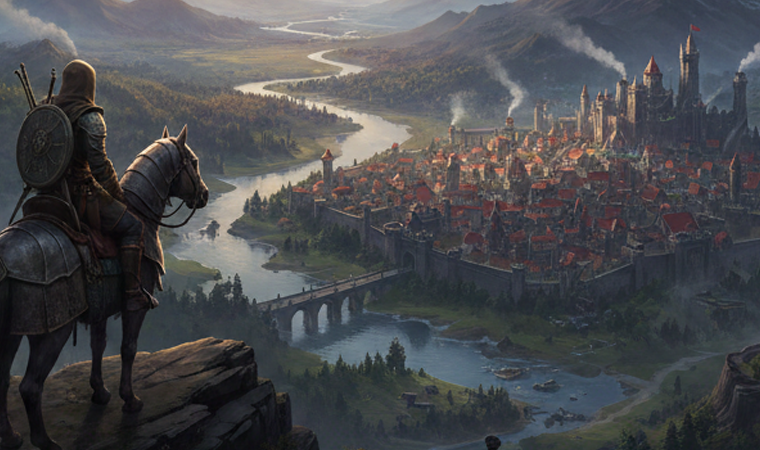
What Makes Open World Games So Irresistible?
There’s something magical about loading into a game and realizing the entire horizon is yours to explore. No invisible walls forcing you down predetermined paths. No arbitrary restrictions on where you can go or what you can do. Just you, a vast world, and infinite possibilities stretching in every direction. This is the intoxicating promise of open-world games, and in 2026, that promise has never been more spectacularly delivered.
Open-world games tap into something fundamental in human psychology—our drive to explore, discover, and create our own stories. They’re the digital equivalent of getting dropped in a fascinating new city with a full tank of gas and no schedule. Every building might contain a story. Every NPC might offer a quest. Every mountain peak might hide treasure. The beauty isn’t just in what the developers created, but in how you choose to experience it.
In 2026, the best open-world games have reached new heights of immersion, freedom, and technical achievement. Whether you’re into the best sandbox games that let you build and create, adventure games with epic narratives, or just want to wander gorgeous virtual landscapes, this year’s lineup offers something extraordinary. Let’s explore the top sandbox adventures and immersive open-world gaming experiences you absolutely cannot miss.
The Freedom to Create Your Own Story
The magic of open-world games lies in emergent storytelling. Sure, developers craft main storylines and side quests, but the most memorable moments are the ones you create yourself. Remember that time you accidentally started a war between two factions? Or when you decided to climb that mountain just because it was there? These organic, player-driven moments are what make open-world games special.
In 2026’s best open-world games, this freedom has been amplified through smarter AI, more reactive worlds, and systems that interact in surprising ways. You’re not just following a script—you’re improvising your own adventure within rich, responsive worlds that react to your presence.
Exploration as the Core Experience
At their heart, open-world games are about exploration. That’s why “open world” and “adventure games” overlap so naturally. The best titles understand that exploration needs rewards—not just loot and experience points, but visual splendor, environmental storytelling, and the simple joy of discovering something unexpected.
Modern open-world design has moved beyond the Ubisoft tower model (climb tower, unlock map icons, check off list). The best sandbox games of 2026 respect your intelligence, trusting you to find interesting things through curiosity rather than quest markers. They reward wandering. They hide secrets that require attention and exploration to discover. They make the journey as rewarding as the destination.
The Evolution of Open-World Gaming
From Early Sandboxes to Modern Masterpieces
Open-world gaming has come a long way from Grand Theft Auto III’s Liberty City or The Elder Scrolls III: Morrowind’s Vvardenfell. Those games were revolutionary in their time, offering unprecedented freedom. But they were also empty in ways modern players wouldn’t tolerate—sparse worlds with long stretches of nothing, limited NPC behaviors, and minimal environmental interaction.
Fast forward to 2026, and the best open-world games create living ecosystems. NPCs have daily routines. Weather affects gameplay. Wildlife interacts with the environment. Cities feel genuinely populated. The difference between 2001’s open worlds and 2026’s is like comparing a cardboard theater set to a bustling real city.
How Technology Has Expanded Virtual Worlds
Current-generation hardware has been a game-changer for open-world design. SSDs eliminate loading screens, creating truly seamless worlds. Increased RAM allows more detailed environments with better draw distances. Advanced rendering techniques like ray tracing make worlds more visually believable. And improved AI makes NPCs behave less like robots following scripts and more like inhabitants of living worlds.
The result? Worlds that feel real in ways that previous generations could only dream of. You can see details on distant mountains. You can enter every building without loading screens. You can interact with environments in meaningful ways. Technology hasn’t just made open-world games prettier—it’s made them fundamentally more immersive.
Best Open-World Games 2026: The Must-Play Titles
Grand Theft Auto VI – Vice City Returns

What Makes GTA VI Revolutionary
After over a decade of waiting, Grand Theft Auto VI has finally arrived, and it’s everything fans hoped for and more. Returning to Vice City (Rockstar’s fictionalized Miami), GTA VI delivers the most detailed open world ever created in gaming. The map isn’t just big—it’s impossibly dense, with every block containing secrets, activities, and stories.
What makes GTA VI revolutionary isn’t just the technical achievement (though it’s staggering), but how Rockstar has refined the formula. The game features dual protagonists—Jason and Lucia—whose stories interweave throughout the campaign. You can switch between them at almost any time, experiencing the story from multiple perspectives.
The Living, Breathing World
GTA VI’s Vice City feels genuinely alive. NPCs have routines, relationships, and purposes beyond being background decoration. The economy actually functions—businesses open and close, prices fluctuate based on your actions, and your criminal empire meaningfully affects the world. The weather system is the most advanced in gaming, with hurricanes actually affecting gameplay and the city’s response.
But it’s the small details that sell the illusion: reflections in puddles, wind affecting vegetation, realistic crowds that react to commotion, and a day-night cycle that transforms the city’s vibe. This is immersive open-world gaming at its finest—a world that doesn’t just look real but feels real.
The Elder Scrolls VI – A Decade-Long Wait Ends

Bethesda’s follow-up to Skyrim is finally here (yes, we’re assuming a 2026 release, because hope springs eternal). The Elder Scrolls VI promises to return to the high fantasy roots that made Skyrim beloved while leveraging modern technology to create a more reactive, detailed world.
Early indications suggest a setting in Hammerfell, bringing desert landscapes, political intrigue, and Redguard culture to the forefront. What’s most exciting is Bethesda’s promise of a more dynamic world where your choices have lasting consequences—not just in dialogue trees, but in how factions, cities, and the landscape itself evolves.
For fans of fantasy adventure games, The Elder Scrolls VI represents the genre’s pinnacle. The modding community will ensure this game lives for decades, just as Skyrim has. If you’re looking for a world to lose yourself in for hundreds of hours, this is it.
Star Wars Outlaws – Scoundrel’s Paradise
Ubisoft’s Star Wars Outlaws offers something the franchise has desperately needed—a game about being a scoundrel in the Star Wars universe. No Jedi powers. No chosen one narrative. Just you, your blaster, and the criminal underworld of the galaxy.
The game takes place between Empire Strikes Back and Return of the Jedi, letting you explore multiple planets, each with distinct biomes and cities. The seamless transition from ground exploration to space travel captures the feeling of being a smuggler navigating the Outer Rim.
What makes Outlaws special among 2026’s open-world games is its focus on reputation systems. Your actions affect how different syndicates view you, opening or closing opportunities. Be a loyal partner to the Hutt Cartel, and the Pykes might refuse to work with you. It’s the kind of meaningful choice system that makes replays worthwhile.
Ghost of Tsushima 2 – Samurai Legends Continue
Sucker Punch’s sequel to one of the PS4’s finest games expands beyond Tsushima island, potentially exploring mainland Japan or other islands during the Mongol invasions. The original perfected samurai combat and created one of gaming’s most beautiful open worlds. The sequel promises to build on that foundation.
What made Ghost of Tsushima special was its environmental storytelling and the way exploration felt rewarding without cluttering your map with icons. Following the wind to objectives, discovering hidden shrines, and stumbling upon environmental stories made exploration feel organic. Expect the sequel to refine these systems while expanding the world dramatically.
Top Sandbox Adventures That Redefine Freedom
No Man’s Sky – The Universe in Your Hands
No Man’s Sky’s redemption arc is complete. What launched as a disappointment in 2016 has become one of the best sandbox games available in 2026 through years of free updates. The game now delivers on its original promise: a procedurally generated universe with billions of planets to explore.
What makes No Man’s Sky remarkable is the scale paired with meaningful activities. You can build bases, establish trade routes, document flora and fauna, engage in space combat, complete narrative missions, or just explore. The freedom is staggering. And with continual updates adding features like settlements, capital ships, and improved multiplayer, it keeps getting better.
Minecraft – Timeless Creativity
Does Minecraft still count as a “new” recommendation in 2026? When the game continues evolving and attracting new players a decade and a half after release, absolutely. Minecraft remains the ultimate sandbox game—a world limited only by your creativity and patience.
The beauty of Minecraft is its simplicity masking depth. Surface-level, it’s blocks you arrange. Deeper, it’s complex redstone circuitry, massive building projects, intricate survival challenges, and multiplayer servers hosting thousands. Whether you prefer peaceful creative building or hardcore survival, Minecraft accommodates.
Palworld – Pokemon Meets Survival
Palworld burst onto the scene and has maintained momentum through 2026. The “Pokemon with guns” description sells it short—this is a deep survival crafting game where your captured creatures (Pals) serve functional roles in base building, automation, and combat.
What makes Palworld addictive is the loop: explore to find new Pals, capture them, assign them to base tasks, use the automated production to craft better gear, explore further. The multiplayer adds another dimension, enabling cooperation or PvP competition. It’s rough around edges but intensely fun.
Enshrouded – Dark Fantasy Exploration
Enshrouded combines survival crafting with dark fantasy aesthetics and voxel-based building. The world is covered in a mysterious shroud that limits how long you can explore dangerous areas, creating natural tension and progression gates.
What sets Enshrouded apart in the crowded survival crafting genre is its handcrafted world. Unlike fully procedural games, Enshrouded’s world is intentionally designed, with secrets, dungeons, and environmental storytelling. It’s the best of both worlds: sandbox freedom with curated content.
Immersive Open-World Gaming Experiences
Red Dead Redemption 2 – Still the Gold Standard
Yes, Red Dead Redemption 2 released in 2018, but in 2026 it remains the benchmark for immersive open-world gaming. Rockstar’s attention to detail is unmatched: animal behaviors, realistic hunting, camp interactions, NPC routines, and a world that feels genuinely lived-in.
The game demands patience—this isn’t a fast-paced shooter. It’s a slower, more contemplative experience about the death of the Wild West and men struggling against inevitable change. If you haven’t experienced Arthur Morgan’s story, 2026 is as good a time as any.
The Witcher 3: Wild Hunt – Complete Edition
The Witcher 3 continues aging gracefully, and the Complete Edition with next-gen updates ensures it still looks gorgeous in 2026. What makes The Witcher 3 endure is its quest quality. Side quests feel like main quests in other games, with real consequences and moral complexity.
The world-building is exceptional. The Continent feels like a place with history, politics, and cultures beyond your involvement. You’re not the center of the universe—you’re a witcher trying to find your adopted daughter while the world goes on around you.
Elden Ring – Dark Souls Goes Open World
FromSoftware’s open-world experiment succeeded spectacularly. Elden Ring took the studio’s formula—challenging combat, mysterious lore, intricate level design—and applied it to open-world format. The result is one of the best open-world games of recent years.
What makes Elden Ring special is exploration that matters. Wandering isn’t just sightseeing—it’s finding new weapons, spells, bosses, and areas that significantly impact your build and capabilities. The world respects your curiosity and rewards thorough exploration.
Horizon Forbidden West – Complete Edition
Guerrilla Games’ sequel to Horizon Zero Dawn expands the post-apocalyptic world where machines dominate. The Complete Edition includes the excellent Burning Shores expansion, adding even more content to an already massive game.
Horizon’s strength is its combination of gorgeous visuals, engaging combat, and interesting world-building. The mystery of what happened to the old world and how this new one functions provides compelling narrative drive. Plus, fighting robot dinosaurs never gets old.
Adventure Games with Expansive Worlds
Zelda: Tears of the Kingdom – Nintendo’s Masterclass
Nintendo’s sequel to Breath of the Wild expands on everything that made the original special while adding sky islands and underground depths. The new building mechanics transform gameplay, letting you create vehicles, contraptions, and weapons from materials you find.
What makes Tears of the Kingdom a top sandbox adventure is how it respects player creativity. There’s usually multiple solutions to any problem, and the game lets you solve them your way. It’s open-world design that trusts player intelligence and rewards experimentation.
Assassin’s Creed Shadows – Feudal Japan Awaits
After years of fans begging for an Assassin’s Creed set in Japan, Ubisoft finally delivers. Shadows features dual protagonists—Naoe, a shinobi, and Yasuke, a samurai—offering stealth and combat-focused playstyles.
The game capitalizes on one of gaming’s most requested settings. Feudal Japan’s castles, cherry blossoms, and samurai culture provide fresh environments after years of Assassin’s Creed exploring other historical periods. If Ubisoft nails this, it could be the series’ revival.
Dragon’s Dogma 2 – Fantasy Adventure Perfected
Capcom’s sequel to the cult classic Dragon’s Dogma refines the original’s best ideas: pawn companions that learn from players, intense combat against massive monsters, and a fantasy world that feels genuinely dangerous.
What makes Dragon’s Dogma 2 stand out is its approach to adventure. This isn’t a game with quest markers guiding you everywhere. It’s a game where you need to prepare for journeys, where night is genuinely dangerous, and where discovery feels earned. For fans of classic adventure games, this scratches that itch.
Best Sandbox Games for Creative Players
Valheim – Viking Survival Done Right
Valheim proves you don’t need cutting-edge graphics to create compelling sandbox experiences. This Viking-themed survival game nails the progression loop: explore, gather resources, build bases, defeat bosses, unlock new biomes, repeat.
What makes Valheim special is how satisfying the building feels. Creating a longhouse, defensive walls, and functional bases provides genuine pride of creation. The cooperative multiplayer enhances the experience—building Viking settlements with friends is incredibly fun.
Terraria – 2D Sandbox Mastery
Terraria is Minecraft’s 2D cousin, but that sells it short. This is one of gaming’s most content-rich experiences, with hundreds of items, bosses, biomes, and building possibilities. The 2D perspective allows for precision and detail impossible in 3D sandbox games.
Even in 2026, Terraria receives updates, adding new content and refining systems. If you’ve never played, you’re in for a treat. If you have, there’s probably new content since you last visited.
Satisfactory – Industrial Sandbox Heaven
Satisfactory is about building factories on an alien planet. If that sounds dry, you haven’t experienced the satisfaction (pun intended) of creating efficient production chains, watching resources flow through conveyor belts, and gradually industrializing an entire world.
The game scratches the optimization itch—there’s always a more efficient layout, a better production ratio, a cleaner design. For players who love systems and efficiency, Satisfactory is digital crack.
Multiplayer Open-World Experiences
Sea of Thieves – Pirate Adventures
Rare’s pirate sandbox has matured into one of gaming’s best multiplayer experiences. The lack of traditional progression means every session starts fresh—it’s about the adventures you have, not the loot you grind.
What makes Sea of Thieves magical is emergent multiplayer storytelling. Every session creates stories: the time you barely escaped a larger crew, the alliance that turned into betrayal, the perfect storm that sank your ship just before reaching the outpost. These are the moments that make Sea of Thieves memorable.
Rust – Survival Sandbox Intensity
Rust isn’t for the faint of heart. This brutal survival game drops you naked on an island where you must gather resources, build bases, and survive against both the environment and other players. Trust no one. Betrayal is common. Progress can be wiped overnight.
But that intensity creates compelling gameplay. Every encounter with other players is charged with tension. Every successful raid or successful defense creates rush of adrenaline. If you want comfort, play something else. If you want intensity, Rust delivers.
ARK: Survival Ascended – Dinosaur Taming
ARK’s remaster, Survival Ascended, updates the dinosaur survival game with Unreal Engine 5. The premise remains: survive on an island full of dinosaurs and prehistoric creatures, taming them to create your own prehistoric army.
ARK’s appeal is the power fantasy of riding a T-Rex you’ve raised from an egg while your tame pteranodon scouts ahead. The progression from punching rocks to commanding dinosaur armies is deeply satisfying.
What to Look for in Open-World Games
World Density vs. World Size
Bigger isn’t always better. A smaller, densely packed world beats a massive empty one every time. The best open-world games 2026 offers understand this—they fill their worlds with interesting content rather than just increasing map size.
When evaluating open-world games, consider density. Are there meaningful activities every few minutes of exploration? Or is it just running through empty fields? Quality open-world design respects your time by ensuring exploration yields rewards.
Meaningful Activities and Side Content
Side content should be more than busywork. The best open-world games create side activities that feel worthwhile—either through engaging gameplay, interesting stories, or meaningful rewards. When side content feels like obligation rather than opportunity, something’s wrong.
Look for games where side content enhances the world rather than cluttering it. Quality over quantity.
Emergent Gameplay Opportunities
The best sandbox games create systems that interact in interesting ways, leading to emergent gameplay—situations the developers didn’t explicitly script but arise naturally from game mechanics interacting.
These moments—when fire spreads from your campfire to dry grass, alerting enemies; when you accidentally start a faction war; when weather changes your strategy—are what make open-world games memorable.
The Technical Side of Open-World Gaming
Hardware Requirements in 2026
Open-world games are demanding. Current-gen consoles (PS5, Xbox Series X) handle them well, but PC requirements vary. For best experience, you’ll want:
- Mid-to-high-end GPU (RTX 4070 or better)
- Modern CPU (i7 or Ryzen 7 minimum)
- 16GB RAM minimum, 32GB recommended
- SSD for loading times
- Good internet for multiplayer titles
Performance vs. Visual Fidelity
Many open-world games offer performance and quality modes. Performance prioritizes frame rate (60fps+), quality prioritizes visual fidelity (4K, ray tracing). For most players, performance mode feels better—smooth frame rates improve gameplay more than resolution.
Loading Times and Seamless Worlds
SSDs have nearly eliminated loading screens in modern open-world games. Seamless worlds enhance immersion dramatically—you’re never pulled out of the experience waiting for areas to load.
Future Trends in Open-World Gaming
AI-Generated Content
AI will increasingly generate content—quests, dungeons, NPCs—allowing for infinite variety. Early implementations show promise for creating unique experiences for each player.
Procedural Generation Evolution
Procedural generation has improved dramatically. Instead of creating random nonsense, modern procedural systems generate structured, interesting content that feels handcrafted.
Cross-Platform Seamless Play
Cross-platform play is becoming standard. Play on PC, continue on console, join friends regardless of platform—this flexibility will define multiplayer open-world games going forward.
Tips for Getting the Most from Open-World Games
Pace Yourself
Don’t rush. Open-world games are marathons, not sprints. Trying to complete everything quickly leads to burnout.
Embrace Exploration
Ignore quest markers occasionally. Just wander. The best moments in open-world games often come from curiosity-driven exploration.
Don’t Rush the Main Story
Main stories end. Take time enjoying side content, building, exploring. The main quest will wait.
Conclusion
The best open-world games 2026 offers represent the pinnacle of what gaming can achieve—vast, detailed worlds that respect player freedom while providing engaging content. From the criminal empire-building of GTA VI to the creative freedom of Minecraft, from the fantasy adventures of The Elder Scrolls VI to the survival challenges of Palworld, this year’s top sandbox adventures deliver experiences that can consume hundreds of hours while remaining fresh and engaging.
What makes these immersive open-world gaming experiences special isn’t just technical achievement or map size—it’s how they respect player agency, reward curiosity, and create emergent stories unique to each player. Whether you prefer structured narratives, complete sandbox freedom, or something in between, 2026’s lineup has something extraordinary waiting.
The beauty of open-world games is they meet you where you are. Want epic adventures? They’ve got them. Prefer quiet exploration? Available. Interested in building and creating? Go for it. These worlds are playgrounds for your imagination, canvases for your stories, and escapes into places limited only by developer vision and technical capability. In 2026, both are reaching unprecedented heights. So pick your world, dive in, and start exploring—hundreds of hours of adventure await.
FAQs
1. What are the best open-world games 2026 for someone new to the genre?
For newcomers, start with games that balance accessibility with depth. Ghost of Tsushima 2 offers gorgeous visuals, intuitive combat, and guided exploration that won’t overwhelm. Star Wars Outlaws provides a familiar universe with straightforward mechanics. The Witcher 3: Wild Hunt Complete Edition remains an excellent entry point with adjustable difficulty and exceptional storytelling. Minecraft in creative mode removes survival pressure while teaching open-world exploration. Sea of Thieves is perfect for multiplayer beginners—simple core mechanics with depth to discover. Avoid starting with punishing games like Rust or extremely complex ones like Dwarf Fortress. Begin with games that guide without restricting, letting you develop open-world literacy before tackling more demanding titles.
2. How do top sandbox adventures differ from traditional open-world games?
Sandbox games emphasize player agency and creation over structured narratives. While open-world games like GTA VI or The Witcher 3 have defined stories, sandbox games like Minecraft, Valheim, or Satisfactory provide tools and systems, letting you create your own goals. Think of open-world games as novels you explore at your own pace—the story exists, you just control how you experience it. Sandbox games are blank canvases—you decide what to paint. Many modern games blur these lines. Palworld is sandbox-focused but has progression. Elden Ring is narrative-driven but incredibly open. The best games combine both: meaningful stories within systems that reward creativity and experimentation. Choose based on preference—do you want guided epic adventures or complete freedom to define your own objectives?
3. What makes immersive open-world gaming experiences in 2026 better than previous years?
Several technological and design improvements create unprecedented immersion. SSDs eliminate loading screens, making worlds truly seamless—you never break immersion waiting for areas to load. Advanced AI makes NPCs behave more realistically with routines, relationships, and reactions. Improved physics and environmental interaction let you affect worlds in meaningful ways—fire spreads realistically, weather impacts gameplay, destruction persists. Ray tracing creates lifelike lighting and reflections. Higher draw distances let you see further without pop-in. Better writing and voice acting make characters more believable. Perhaps most importantly, design philosophy has evolved—developers now understand that quality beats quantity. Instead of enormous empty maps, 2026’s games create dense, detailed worlds where every area contains interesting content. The combination creates worlds that feel genuinely alive rather than static game levels.
4. Are open-world games worth playing solo, or are they better with friends?
Both offer distinct pleasures. Solo play lets you experience narratives at your own pace, explore without coordination, and immerse yourself without distraction. Games like Red Dead Redemption 2, The Witcher 3, or Elden Ring are designed for solo play and deliver some of gaming’s best storytelling. Multiplayer transforms exploration into shared adventure, turns challenges into team efforts, and creates emergent stories from player interaction. Sea of Thieves, Valheim, or Palworld are fundamentally more fun cooperatively. Some games like Minecraft or No Man’s Sky offer both—complete solo experiences that become different (not necessarily better or worse) with friends. Consider your preference: Do you want intimate, story-driven experiences? Go solo. Want social fun and shared adventures? Play with friends. Many players do both—solo for narrative-rich games, multiplayer for sandbox adventures.
5. How much time should I expect to invest in the best open-world games 2026?
Time investment varies dramatically by game and playstyle. Minimum viable experiences (main story only): 20-40 hours for most games. Thorough playthroughs (main story plus significant side content): 60-100 hours. Completionist runs (everything): 100-300+ hours for massive games like The Elder Scrolls VI or GTA VI. Ongoing games like Minecraft, No Man’s Sky, or Rust have no endpoint—you play until you’re done, which could be dozens or thousands of hours. Don’t feel pressured to complete everything—open-world games are about your experience, not checklists. Play until you’re satisfied, then move on. Many players return months later for new content or different playstyles. The beauty of open-world games is they accommodate both 20-hour visitors and 500-hour residents. Invest what feels right for you.

5 Comments
xbaji
[2213]xbaji Official Login | সেরা অনলাইন ক্যাসিনো এবং স্লট গেম,xbaji-তে আজই যোগ দিন। আমাদের অ্যাপ ডাউনলোড করে সেরা অনলাইন স্লট গেমের নিয়ম জানুন এবং বিকাশ দিয়ে সহজে টাকা জমা করে খেলা শুরু করুন। visit: xbaji
ojol77
[8470]ojol77 Login Resmi | Slot Gacor Hari Ini Deposit Dana,ojol77 menyediakan akses login resmi dan download apk untuk kemudahan bermain. Nikmati casino deposit dana serta panduan cara main baccarat. Daftar sekarang juga! visit: ojol77
casinoskrill
Finally found a place where the deposits and withdrawals are actually quick. Using Skrill here makes everything so much easier. Give casinoskrill a shot if you hate waiting for your money.
ppc88login
Quick deposits and even quicker withdrawals. That is all I care about in a gaming site. Keep up the good work ppc88login.
jjwingamelogin
Logging in is seamless and the game loading speeds are impressive. I love how organized the lobby is. I’ll be sticking with jjwingamelogin for a while.