
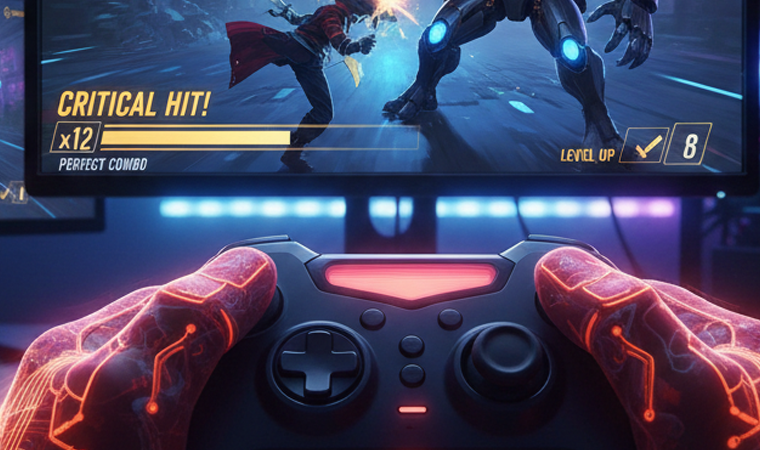
The Mindset of Improvement
Want to know the biggest secret to getting better at games? It’s not mechanical skill, game knowledge, or hours played—it’s your mindset. The difference between players who plateau and those who continuously improve comes down to how they think about gaming. If you believe your abilities are fixed and improvement is about discovering some magic trick, you’ll struggle. But if you embrace the fact that gaming skills are learned through deliberate effort, you’ll unlock rapid improvement.
Think of gaming improvement like learning an instrument. Nobody picks up a guitar and immediately plays like Jimi Hendrix. They practice scales, learn chords, make mistakes, and gradually improve. Gaming works exactly the same way. The players dominating lobbies didn’t get there through talent alone—they got there through smart, focused practice combined with the right mental approach.
This comprehensive gaming skill improvement guide will transform how you approach getting better. We’ll cover everything from mindset and fundamentals to genre-specific gaming tips and optimization strategies. Whether you’re stuck in Bronze, trying to break into Diamond, or aiming to go pro, these tips to become a pro gamer will accelerate your improvement dramatically. Let’s dive into how to get better at video games faster than you ever thought possible.
Growth Mindset vs. Fixed Mindset
Carol Dweck’s research on mindset applies perfectly to gaming. Players with fixed mindsets believe their abilities are innate—they’re either “naturally good” or not. When they lose, they attribute it to lack of talent. When they win, they credit natural ability. This mindset prevents improvement because it discourages the effort required to grow.
Players with growth mindsets believe abilities develop through practice. They see losses as learning opportunities and wins as validation of their training. When someone beats them, they ask “what can I learn from this?” instead of “why am I so bad?” This simple mental shift transforms frustration into motivation.
Developing a growth mindset means reframing how you think about gaming. “I’m bad at this game” becomes “I’m still learning this game.” “I can’t aim” becomes “I haven’t practiced aim enough yet.” These subtle language changes rewire your brain for improvement.
Embracing Failure as Learning
Every pro gamer has lost thousands of matches. The difference between them and stuck players isn’t win rate—it’s how they respond to losses. Great players extract lessons from defeats, treating each loss as a free coaching session showing exactly what they need to improve.
After losing, resist the urge to immediately queue another game. Take two minutes asking yourself: Why did I lose? What mistakes did I repeat? What could I have done differently? This reflection transforms random gameplay into deliberate practice. Without it, you’re just grinding hours without actually improving.
The most valuable losses are the ones where you got completely destroyed. These painful defeats expose fundamental weaknesses that comfortable wins never reveal. Embrace them as opportunities to identify gaps in your game sense, mechanics, or decision-making.
Understanding the Fundamentals
Game Mechanics and Systems
Every game has fundamental mechanics—the core systems that everything else builds upon. In shooters, it’s aim and movement. In MOBAs, it’s farming and trading. In fighting games, it’s spacing and frame advantage. Mastering these fundamentals creates the foundation for advanced techniques.
Many players skip fundamentals, rushing toward flashy plays they’ve seen pros make. This is like trying to run before learning to walk. You might occasionally pull off impressive moments, but your inconsistency will hold you back. Pro gaming isn’t about highlight reels—it’s about executing fundamentals reliably under pressure.
Spend time genuinely understanding your game’s mechanics. Read patch notes. Watch tutorial videos. Experiment in practice modes. The investment in learning how things actually work pays dividends throughout your gaming journey.
Learning Core Controls
Muscle memory is the foundation of mechanical skill. Your hands need to execute actions automatically, freeing your brain to focus on strategy and decision-making. This automation only comes through repetition.
Customize your controls for comfort and efficiency. Don’t stick with defaults just because that’s what came preset. Experiment with different keybinds, sensitivities, and button layouts. Small tweaks that feel natural to you create massive improvements over time.
Practice controls in low-pressure environments first. Training modes, bot matches, or casual games let you drill mechanics without competitive stress. Once movements feel automatic, you can apply them effectively in ranked matches.
Map Knowledge and Awareness
Map knowledge separates good players from great ones. Knowing every angle, hiding spot, rotation path, and timing gives you constant advantages. You’re making better decisions because you understand the environment completely.
Study maps methodically. Spend time in custom games walking through every area. Learn callout names so you can communicate effectively with teammates. Understand timing—how long rotations take, when spawns occur, where players will likely be at different game stages.
Map awareness—constantly tracking where enemies probably are based on information—compounds your knowledge advantage. You’re not just reacting to what you see; you’re predicting what you don’t see based on game sense.
How to Get Better at Video Games Through Deliberate Practice
Quality Over Quantity
Ten hours of focused practice beats a hundred hours of mindless grinding. Deliberate practice—working on specific weaknesses with full concentration—creates improvement. Autopilot gameplay—playing without thinking while watching Netflix—creates nothing but wasted time.
Treat practice like athletes treat training. You’re not just playing for fun; you’re working on specific aspects of your game. This doesn’t mean gaming stops being enjoyable—it means your enjoyment comes from seeing measurable improvement rather than just passing time.
Track your practice focus. “I played for three hours” is meaningless. “I spent forty minutes drilling crosshair placement, then played ranked focusing on positioning” is actionable information showing where your time went.
Focused Practice Sessions
Structure practice sessions around specific goals. One session focuses on aim training. Another on game sense. Another on learning a new agent or character. This focused approach improves specific skills faster than generic “just playing.”
Before each session, identify your objective. “Today I’m working on not overextending” or “I’m focusing on utilizing cover better.” Keep this objective in mind throughout the session. After the session, evaluate honestly whether you made progress.
Focused practice feels harder than mindless grinding—and it should. You’re actively concentrating, analyzing, and pushing yourself outside your comfort zone. This difficulty is what drives improvement.
Drilling Specific Skills
Aim Training for Shooters
Aim is the foundation of FPS games, and it’s trainable. Use aim trainers like Aim Lab or Kovaak’s for 15-30 minutes before ranked sessions. These tools isolate aim from other variables, letting you train pure mouse control.
Focus on different aspects separately. Tracking (following moving targets), flicking (quick snaps to targets), and target switching each require different practice. Drill your weakest area rather than what feels comfortable.
Transfer aim training into games by practicing in deathmatch or arena modes. The goal isn’t winning these modes—it’s applying trained mechanics in realistic scenarios with unpredictable enemy movement.
Combo Practice for Fighting Games
Fighting games demand precise inputs executed under pressure. Training mode is your gym. Spend time drilling combos until they’re muscle memory. Start slowly, focusing on accuracy, then gradually increase speed.
Don’t just practice your combos—practice recognizing when to use them. Set training dummy to random block and practice hit-confirming (starting a combo only when you land a hit). This simulates real match situations better than endless combo repetition against standing opponents.
Practice both sides of the screen. Many players develop a “strong side” where combos are easy and a “weak side” where they struggle. Tournament matches won’t always put you on your preferred side—train both equally.
Last-Hitting for MOBAs
Last-hitting (delivering killing blows to minions) is a MOBA fundamental that separates good players from great ones. The gold difference between perfect and mediocre farming determines early game advantage.
Practice last-hitting in custom games with no opponents. Can you hit every single minion? Once you can, practice with an opponent harassing you. Then practice while harassing them back. Gradually add complexity until it mimics real matches.
Understand minion health breakpoints—how much damage it takes to kill them at different game stages. This knowledge lets you predict when to attack without constantly calculating, freeing mental bandwidth for other aspects of laning.
Gaming Skill Improvement Guide: Analyzing Your Gameplay
Recording and Reviewing Sessions
Recording your gameplay is the single most powerful improvement tool. What you think happened during a match often differs dramatically from what actually happened. Recording lets you see truth, not emotion-colored memory.
Review your losses more than your wins. Wins often hide mistakes—you won despite them, not because you played perfectly. Losses expose flaws that need addressing. Watch your recordings asking “what could I have done better?” at every significant moment.
Don’t just watch aimlessly. Have a specific focus for each review. One viewing focuses on positioning mistakes. Another on missed opportunities. Another on deaths and what led to them. This structured review identifies actionable improvement areas.
Identifying Patterns in Mistakes
Everyone makes mistakes, but most players repeat the same mistakes endlessly. The key to improvement is identifying these patterns and consciously working to break them.
Common patterns include: Always peeking the same angle, overextending after winning fights, poor resource management, panicking under pressure, or tunnel-visioning on kills. Once you identify your personal patterns, you can actively work against them.
Create specific practice goals addressing your patterns. If you overextend, make your focus “play conservatively and survive” for several sessions. Track whether you’re breaking the pattern. Awareness alone helps, but deliberate practice targeting the habit is what creates lasting change.
Using Analytics and Stats
Most competitive games provide detailed statistics. Don’t just glance at your K/D ratio—dive deep into the data. Where are you dying? What weapons/abilities are most effective for you? How do your stats compare to players at higher ranks?
Third-party sites like Tracker Network provide even more detailed analytics. They show performance trends over time, compare you to others playing the same characters or roles, and identify specific weaknesses in your gameplay.
Use data to validate feelings. You might feel like you’re improving but stats show stagnation. Or you might feel stuck but data shows steady improvement. Objective information prevents biased self-assessment.
Learning from the Best
Watching Professional Players
Professional players are living textbooks. Watching them provides insights that hundreds of hours of solo play never would. But watching effectively requires active observation, not passive entertainment.
Don’t just watch for flashy plays. Focus on fundamentals—positioning, decision-making, timing, and preparation. These transferable skills apply to your games far more than mechanical highlights you can’t yet execute.
Watch players who play your role or characters. If you main support, watching a pro DPS player provides less applicable insight than watching a pro support. Match the content to your specific needs.
Understanding Decision-Making
Mechanics separate good players from decent ones. Decision-making separates great players from good ones. The best players don’t necessarily have the best aim—they make better decisions leading to easier mechanical situations.
When watching pros, constantly ask “why did they do that?” Why did they rotate here? Why didn’t they take that fight? Why did they use their ultimate now instead of saving it? This questioning develops your game sense.
Many pro players stream and explain their thought processes. These streams are gold mines of strategic knowledge. Hearing them vocalize decisions helps you understand the “why” behind actions.
Copying Techniques and Adapting
Deliberately copy techniques you see pros using. If a pro uses a specific movement pattern, practice it. If they position themselves uniquely, try it. Copying shortcuts learning—you’re borrowing thousands of hours of their experimentation.
However, understand why techniques work before copying blindly. Something that works for a pro with perfect aim might not work for you yet. Adapt techniques to your skill level, gradually working toward the “proper” version as your mechanics improve.
Create a notebook or document of techniques you want to learn. Each session, pick one to focus on. This systematic approach to learning from pros accelerates improvement dramatically.
Tips to Become a Pro Gamer: Game Sense Development
Reading Opponents
Game sense—understanding what’s happening beyond what you can see—is what separates okay players from great ones. It’s predicting enemy positions, anticipating strategies, and making decisions based on incomplete information.
Reading opponents means identifying their patterns. Does this player always peek aggressively after reloading? Does this jungler gank early or farm first? Players are creatures of habit. Recognizing these habits lets you predict and counter them.
Low-rank players have obvious patterns. High-rank players have subtle patterns. But everyone has patterns. Train yourself to recognize them quickly through active observation rather than passive reaction.
Predicting Patterns
At low levels, players are unpredictable because they’re chaotic. At high levels, players are predictable because they’re optimal. This predictability isn’t a weakness—it’s a sign of good play. But it does create opportunities for those who recognize patterns.
If you know an enemy will be in one of three positions, you’ve already narrowed your focus dramatically. If you know their ability is on cooldown, you know they can’t counter your play. This predictive thinking lets you act confidently rather than reactively.
Develop your prediction skills by verbalizing expectations. “I think they’re rotating top” or “They probably have ultimate ready.” Then verify whether you were right. This conscious prediction practice trains your subconscious game sense.
Strategic Thinking
Strategy means thinking multiple steps ahead like chess. You’re not just reacting to what’s happening now—you’re setting up future situations that favor you. This long-term thinking creates consistent advantages.
Ask yourself “what am I setting up?” before actions. You’re not randomly wandering—you’re positioning for the next objective. You’re not randomly using abilities—you’re managing cooldowns for an upcoming fight. Every action should serve a strategic purpose.
Watch how pros manage resources and tempo. They’re constantly thinking ahead, creating favorable situations through patient, methodical play. This strategic thinking is what makes them seem impossibly good—they’re not just mechanically superior; they’re fighting battles they’ve already won through positioning and timing.
Timing and Patience
Timing is everything in competitive gaming. Engaging two seconds too early or too late often determines outcomes. Patience means waiting for the right moment rather than forcing suboptimal plays.
Many players lose because of impatience. They know waiting is correct but can’t resist pushing for action. This impatience creates disadvantageous fights, wasted resources, and throwable leads. Learning patience is a skill like aim—it requires conscious practice.
Set rules forcing patience. “I will not engage unless I have numbers advantage” or “I will not use ultimate unless two enemies are grouped.” These rules prevent impatient mistakes while you develop natural timing sense.
Communication and Teamwork
Effective Callouts
In team games, communication is a skill separate from gameplay. Clear, concise callouts provide teammates critical information without cluttering comms.
Good callouts are specific and actionable. “Enemy low” is useless. “Reyna one-shot, backsite” tells teammates exactly what they need to know. Location, enemy identity, and status—these are the critical information points.
Don’t overcomm. Constant talking drowns out important callouts. Save voice for information teammates need to act on. You don’t need to narrate every action you take.
Positive Team Dynamics
Team atmosphere dramatically affects performance. Positive, encouraging teams perform better than toxic, blame-heavy teams even with identical skill levels. Your attitude influences this atmosphere.
Never flame teammates mid-game. It achieves nothing except tilting them and yourself. If you can’t say something constructive, say nothing. Save feedback for post-game if necessary.
Compliment good plays. “Nice shot” or “good call” costs you nothing and boosts team morale. Positive reinforcement creates teammates who want to play well for each other, not just themselves.
Playing Different Roles
Understanding other roles makes you better at your main role. If you only play DPS, you don’t understand what supports need from you. Playing support occasionally teaches you how to enable your supports when you return to DPS.
This cross-role knowledge creates empathy and strategic understanding. You make better decisions because you understand your teammates’ perspectives, limitations, and win conditions.
You don’t need to master every role—just understand them well enough to know how they complement yours.
Physical and Mental Optimization
Sleep and Recovery
Sleep directly affects reaction time, decision-making, and emotional regulation—three pillars of gaming performance. Playing on 4 hours of sleep is like playing drunk. You might not feel impaired, but your performance measurably suffers.
Prioritize 7-9 hours of quality sleep. This isn’t optional if you’re serious about improvement. The mechanical skill you practiced while sleep-deprived won’t transfer to long-term memory as effectively as practice with adequate rest.
Exercise and Nutrition
Physical fitness directly improves gaming performance. Exercise increases blood flow to the brain, improving focus and reaction time. Good nutrition stabilizes energy levels, preventing mid-session crashes that tank performance.
You don’t need to become a gym rat, but 20-30 minutes of exercise daily—even just walking—provides measurable cognitive benefits. Stay hydrated. Eat regular, balanced meals rather than junk food marathons.
Think of your body as your gaming hardware. You wouldn’t run games on a overheating, underpowered PC. Don’t expect peak performance from an overheating, underpowered body.
Managing Tilt and Frustration
Tilt—emotional frustration affecting play—is every gamer’s enemy. When tilted, your decision-making deteriorates, mechanics suffer, and you enter a loss spiral. Learning to manage tilt is crucial for consistent performance.
Recognize tilt signs: blaming teammates, making aggressive plays, feeling warm/tense, or thinking “this is unfair.” Once you notice these, take action immediately. Don’t try to “play through” tilt—it doesn’t work.
The best anti-tilt strategy is prevention. Take breaks between games. Do breathing exercises. Maintain perspective—it’s a game, not life or death. Losses are learning opportunities, not personal failures.
Taking Strategic Breaks
Continuous grinding creates diminishing returns. After 2-3 hours, fatigue sets in—your reaction time slows, focus wavers, and mistakes multiply. Strategic breaks prevent this deterioration.
Use the Pomodoro Technique adapted for gaming: 90 minutes focused practice, 15-minute break. During breaks, physically move—walk, stretch, look at distant objects. This resets your focus and prevents physical strain.
Long-term breaks matter too. Taking a day off weekly prevents burnout. Your brain consolidates learning during rest—you often return from breaks performing better than before.
Gaming Tips for Different Genres
First-Person Shooters (FPS)
Crosshair Placement
Crosshair placement—keeping your crosshair where enemies will appear—is the most impactful FPS fundamental. Good crosshair placement means you’re already aiming at enemies when you see them. Bad placement requires a correction flick before firing.
Pre-aim common angles at head height. When turning corners, position your crosshair where enemies likely are. This single adjustment improves your effective reaction time by 100+ milliseconds—a massive advantage in gunfights.
Watch your crosshair placement in VOD reviews. You’ll notice patterns—like aiming at the ground while running or floating above head level. Consciously correcting these habits transforms your fragging ability.
Movement and Positioning
Movement in FPS games isn’t just transportation—it’s a skill determining how often you die. Good movement makes you harder to hit while maintaining your accuracy. Bad movement gets you killed in disadvantageous positions.
Learn counter-strafing (briefly tapping the opposite movement key to stop momentum instantly). This technique lets you shoot accurately immediately after moving. Without it, you’re inaccurate for crucial milliseconds.
Position yourself near cover, giving you escape routes when fights go badly. Fight from angles where you can see enemies before they see you. These positioning advantages often matter more than pure aim.
Multiplayer Online Battle Arenas (MOBAs)
Farming Efficiency
Gold wins MOBA games. Farming efficiently—maximizing gold per minute—creates the item advantages that snowball into victory. Yet many players treat farming as a chore, focusing on kills while neglecting the primary gold source.
Practice farming patterns. Clear waves efficiently, then take jungle camps during downtime. The small efficiency gains—getting two extra camps per rotation—accumulate into massive gold leads over a match.
Balance farming with map presence. Don’t miss opportunities helping teammates because you’re farming, but don’t abandon farming to randomly roam either. Efficiency means maximizing both.
Role Understanding
Every MOBA role has specific responsibilities. Carries need gold and protection. Supports need to enable carries and control vision. Understanding your role’s win conditions prevents doing the wrong things well.
Don’t try to carry as support or support as carry. Play your role. Many losses come from players doing jobs that aren’t theirs, leaving actual responsibilities unfulfilled.
Fighting Games
Frame Data Basics
Frame data—how many frames each move takes—is fighting game math. Understanding it lets you know what’s safe, what’s punishable, and what beats what. This knowledge transforms fighting games from button mashing to strategic combat.
You don’t need to memorize every number, but know your character’s key moves—which are safe, which leave you vulnerable, which start combos. This focused knowledge dramatically improves decision-making.
Defense and Patience
New fighting game players mash buttons frantically. Good players are patient, blocking and waiting for opportunities. Defense is harder to learn than offense, but it’s what separates button mashers from real competitors.
Practice blocking correctly. Many players know they should block but do it too late, panic block, or drop blocking to press buttons. Disciplined defense requires conscious practice.
Battle Royales
Drop Location Strategy
Battle royales begin with drop choice. Hot drops (popular, contested areas) teach fighting but offer low win probability. Edge drops teach looting and positioning but provide limited combat practice. Balance both depending on your practice focus.
Learn several drop locations thoroughly. Know the loot spawns, rotation routes, and common enemy positions. This knowledge creates advantages in early game where many players are eliminated.
Survival vs. Aggression Balance
Battle royales reward both aggression (killing opponents for their loot) and survival (avoiding fights to reach endgame). Finding your balance depends on skill level and improvement goals.
For improvement, favor aggression early in your practice. More fights mean faster mechanical improvement. Once mechanics are solid, practice survival and positioning. The best players excel at both.
Setting Realistic Goals
Short-Term Milestones
Break big goals into small milestones. “Reach Grandmaster” is overwhelming. “Improve win rate by 2% this month” is achievable. Small wins create momentum and motivation.
Track milestones in a journal or spreadsheet. Seeing progress visualized—even if gradual—prevents the discouragement that makes players quit during improvement plateaus.
Celebrate milestones. Improvement is hard work deserving recognition. Reached your rank goal? Great! Set a new one and continue climbing.
Long-Term Vision
Long-term goals provide direction. Do you want to go pro? Reach the top rank? Compete in tournaments? Your long-term vision determines what short-term goals to pursue.
Be realistic about timelines. Reaching pro level takes years of dedicated practice, not months. Unrealistic expectations create disappointment. Better to aim for steady improvement than crash and burn chasing impossible timelines.
Tracking Progress
Objective tracking prevents biased self-assessment. You might feel like you’re not improving while stats show steady gains. Or you might feel great while data shows stagnation. Track metrics specific to your goals—win rate, average rank, specific stats, or tournament placements.
Review progress monthly. Are you improving? Stagnating? Regressing? Adjust your practice based on results, not feelings.
Building a Consistent Practice Routine
Creating a Schedule
Consistency beats intensity. Practicing three hours daily is better than twenty hours on weekends. Your brain learns better with consistent exposure than cramming.
Schedule practice like any important commitment. “I practice Mon/Wed/Fri from 7-9pm” creates accountability and routine. You’re not practicing when you feel like it—you’re practicing on schedule regardless of motivation.
Warm-Up Routines
Never jump straight into ranked. Warm up with 15-30 minutes of practice drills, casual games, or aim training. This primes your mechanics and gets you in the gaming headspace.
Create a consistent warm-up routine. The repetition primes your brain for peak performance. Athletes have pre-game rituals; gamers need them too.
Balance Between Practice and Play
Practice drills specific skills. Playing applies them in real scenarios. You need both. Too much drilling without playing and you’ll struggle applying skills. Too much playing without drilling and you’ll reinforce bad habits.
A good split is 70% playing, 30% drilling. Adjust based on what you need—if mechanics need work, increase drilling. If game sense needs work, play more while consciously focusing on decision-making.
Equipment and Setup Optimization
Hardware Basics
You don’t need the best gear to improve, but terrible gear creates unnecessary handicaps. At minimum, get a decent gaming mouse (400+ DPI, 1000Hz polling rate), mechanical keyboard, and stable internet.
Your monitor matters too. High refresh rate displays (144Hz+) provide smoother gameplay and competitive advantages. If you’re serious about competitive gaming, this upgrade is worthwhile.
Settings and Sensitivity
Spend time finding optimal settings. Sensitivity particularly matters—too high and you can’t aim precisely; too low and you can’t turn fast enough. Most pros use surprisingly low sensitivities (400-800 DPI, low in-game sense).
Don’t constantly change settings. Pick something reasonable and stick with it. Muscle memory requires consistency. Changing sensitivity weekly prevents your hands from automating.
Ergonomics
Bad posture creates pain limiting practice time and affecting performance. Set up your gaming space ergonomically—monitor at eye level, chair supporting your back, keyboard and mouse at comfortable heights.
Take care of your hands and wrists. Carpal tunnel and repetitive strain injuries are real risks. Stretch regularly, maintain neutral wrist positions, and use proper form.
Finding Mentors and Communities
Coaching Resources
Coaching accelerates improvement by providing personalized feedback. Paid coaches identify specific weaknesses and create custom improvement plans. Services like Gamer Sensei or Metafy connect you with experienced coaches.
Free coaching exists too. Many communities have volunteer coaches or higher-ranked players willing to review VODs. Discord servers dedicated to your game often have coaching channels.
Discord and Forums
Game-specific Discord servers and forums are improvement gold mines. Ask questions, get advice, find practice partners, and learn from experienced players. Active participation in these communities compounds learning.
Don’t just lurk—engage. Share your VODs for feedback. Offer to practice with others. Help newer players. These interactions build relationships while improving your own understanding.
Scrim Partners and Practice Groups
Solo queue teaches fundamentals but serious improvement requires coordinated practice. Find consistent practice partners or teams to scrim against. This structured practice develops teamwork and lets you experiment with strategies.
Scrims should feel different from ranked games. Use them to practice new techniques, test strategies, or drill specific scenarios. Winning scrims is less important than using them for focused improvement.
Common Mistakes That Slow Improvement
Blaming Others
Blaming teammates accomplishes nothing except absolving yourself of responsibility. Even in team games, focus on your performance. There’s always something you could’ve done better.
The only constant in your games is you. If you’re stuck at a rank, it’s because your skill matches that rank. Accept this, focus on improvement, and you’ll climb.
Playing on Autopilot
Mindless grinding doesn’t create improvement—it creates bad habits. If you’re not actively thinking about what you’re doing and why, you’re wasting time.
Every game should have a focus. Every death should trigger reflection. If you can’t remember specific moments from your last session, you were on autopilot.
Ignoring Fundamentals
Advanced techniques are sexy. Fundamentals are boring. But fundamentals win games. Players who master basics beat players with flashy techniques but weak foundations.
If you’re struggling to improve, return to fundamentals. Your mechanics, positioning, or decision-making probably need work. Shoring up these basics creates more improvement than learning advanced tricks.
Inconsistent Practice
You can’t practice intensely for two weeks, take a month off, and expect improvement. Gaming skills require consistent maintenance. Taking long breaks means relearning fundamentals before progressing.
If you can’t commit to consistent practice, that’s fine—just adjust your expectations accordingly. Improvement requires consistency.
Conclusion
Improving your gaming skills fast isn’t about discovering some secret trick—it’s about applying proven principles consistently. Adopt a growth mindset that embraces failure as learning. Master fundamentals before chasing advanced techniques. Practice deliberately with specific goals rather than grinding mindlessly. Analyze your gameplay objectively, learn from better players, and develop the game sense that separates good players from great ones.
Remember that improvement isn’t linear. You’ll plateau, you’ll regress, and you’ll have breakthrough moments. This is normal. What matters is staying consistent with your practice routine, maintaining your mental and physical health, and continuously analyzing and adapting your approach.
These gaming tips, combined with the right mindset and consistent effort, will transform you from a stuck player into one who continuously improves. Whether your goal is reaching the next rank, competing in tournaments, or eventually becoming a pro gamer, the gaming skill improvement guide laid out here provides your roadmap. The difference between players who succeed and those who don’t isn’t talent—it’s approach. Apply these principles, stay patient, and watch your skills soar beyond what you thought possible. Now stop reading and start practicing!
FAQs
1. How long does it actually take to get better at video games?
Improvement timelines vary dramatically based on starting skill, practice quality, game complexity, and time invested. For noticeable improvement in competitive games, expect 1-3 months of consistent daily practice (1-2 hours) to move up one or two rank tiers. Reaching high ranks from beginner typically requires 6-12 months of dedicated practice. Going pro requires years—most professional gamers practiced 4-6+ years before reaching that level. The key is focusing on quality practice with specific improvement goals rather than just grinding hours. A player practicing deliberately for one hour will improve faster than someone mindlessly playing for five hours. Track your progress monthly to maintain realistic expectations and motivation through improvement plateaus.
2. What are the most important gaming tips for complete beginners?
Start with fundamentals: learn controls thoroughly, understand core game mechanics, and develop map knowledge. Focus on survival and consistency before pursuing flashy plays—staying alive while contributing steadily beats dying while attempting highlights. Find a role or character and master it rather than constantly switching. Watch tutorial videos and beginner guides specific to your game. Most importantly, embrace losses as learning opportunities rather than personal failures. Record and review your gameplay to identify repeated mistakes. Join beginner-friendly communities where you can ask questions without judgment. Set realistic short-term goals like “learn this character’s abilities” or “understand this map” rather than “reach high rank immediately.” Improvement compounds—master basics and everything else becomes easier.
3. Can you really become a pro gamer, or is it all talent?
Becoming a pro gamer is achievable but extremely difficult, requiring far more than talent. The path demands years of deliberate practice (typically 4-8+ hours daily), natural aptitude in reaction time and pattern recognition, mental resilience to handle pressure and setbacks, strategic understanding of your game, excellent communication skills for team games, and often some luck with networking and opportunities. Most pros started young (teens or early twenties) when they could dedicate time before major life responsibilities. However, talent alone isn’t enough—countless talented players never go pro due to inconsistent practice or poor mindset. Conversely, less naturally talented players reach pro level through superior work ethic and smart practice. If you’re serious about pro gaming, start by reaching top 1% ranks, joining amateur teams or tournaments, building your brand through streaming/content, and networking within the competitive scene. Understand that most who attempt it don’t succeed financially, so have backup plans.
4. How do I practice gaming skills effectively without getting bored?
Maintain practice engagement by varying your approach. Alternate between deliberate practice drills (aim training, combo practice, specific skill drills) and actual gameplay where you apply learned skills. Set specific micro-goals for each session—”today I’m focusing on crosshair placement”—giving purpose to your practice. Use practice tools and modes designed for skill development rather than only playing ranked. Mix solo practice with playing with friends or finding practice partners to keep social engagement high. Track progress visually through spreadsheets or apps showing improvement over time—seeing concrete results motivates continued effort. Take breaks between sessions preventing burnout. Remember that some practice should challenge you outside your comfort zone (this feels hardest but creates most improvement), while some can be more relaxed application of skills. If practice feels like meaningless grinding, you’re not focused enough on specific improvement goals.
5. What’s the difference between gaming tips that work and those that don’t?
Effective gaming tips focus on fundamentals, are backed by pro player consensus, address specific skills with measurable improvement, and apply universally within a genre. Examples: “improve crosshair placement by pre-aiming common angles” (specific, measurable) or “master last-hitting before worrying about trading in lane” (fundamental). Ineffective tips are vague (“just focus more”), game-specific tricks that don’t transfer, and marketing for gaming products claiming instant improvement, or advice from low-skill players who don’t understand why they struggle. Be skeptical of advice claiming “one weird trick” shortcuts—improvement comes from consistent application of proven principles, not life hacks. Verify tips by checking whether high-level players actually use them. If a tip requires you to buy something to work, it’s probably ineffective. The best gaming skill improvement guide focuses on things within your control: practice quality, mindset, analysis, and consistency. Equipment and settings matter but are secondary to these factors.
3 Comments
betakibet
Everything feels very intuitive here. I didn’t even need a tutorial to get started. Simple and effective gaming at betakibet
56wgame
Really enjoying the vibe here. Everything is easy to navigate and the customer support is actually helpful. Highly recommend 56wgame for anyone starting out.
nogad88
[6032]nogad88 login করুন – বিকাশ দিয়ে অনলাইন স্লট গেম খেলুন,nogad88 app download করে লাইভ ক্যাসিনো বোনাস অফার উপভোগ করুন। বিকাশ দিয়ে ক্যাসিনো গেম খেলার সহজ উপায় জানতে আজই জয়েন করুন। visit: nogad88