
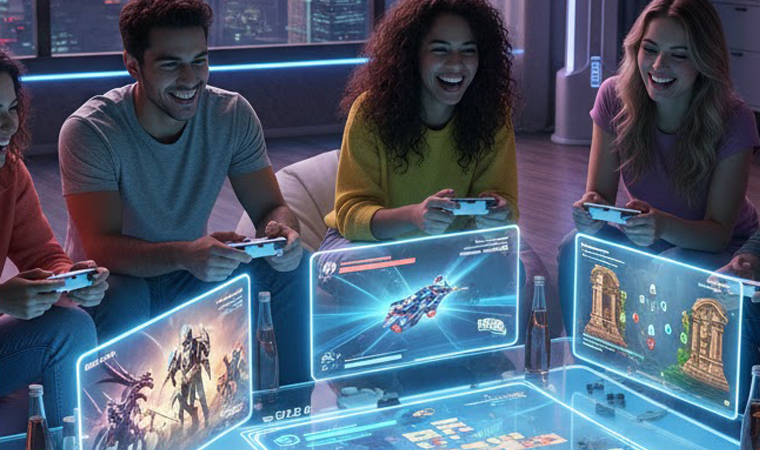
Why Multiplayer Gaming Matters More Than Ever
There’s something magical about sharing a gaming experience with friends. Whether you’re coordinating tactics in a heated battle, laughing at chaotic moments gone wrong, or celebrating hard-earned victories together, multiplayer games create memories that solo experiences simply can’t match. In 2026, with gaming technology more accessible than ever and cross-platform play becoming the norm, connecting with friends through games has never been easier—or more important.
The pandemic years taught us something valuable: digital connections matter. While we’ve returned to in-person gatherings, the friendships maintained and formed through online gaming remain strong. Gaming sessions have become our generation’s equivalent of hanging out at the arcade or playing board games—except your friends can join from anywhere in the world. The best multiplayer games 2026 offers aren’t just about gameplay mechanics; they’re about creating shared experiences that strengthen friendships.
This guide explores the top multiplayer games you need to play with your friends right now. From intense co-op challenges to relaxing building experiences, from competitive shooters to narrative-driven adventures, we’ve got something for every friend group. Let’s dive into the best online games for friends that are dominating 2026.
What Makes a Great Multiplayer Game?
Accessibility and Cross-Platform Play
The best multiplayer games eliminate barriers between players. Cross-platform play means your PC gaming friends can play with console players without anyone feeling left out. Accessibility features ensure players of different skill levels can enjoy games together. Great multiplayer games don’t gate content behind skill checks that leave casual players frustrated while their competitive friends speed ahead.
In 2026, we’re seeing more games embrace these principles. The days of “PC master race” elitism are fading as developers recognize that fun matters more than platform. When choosing games for friend groups, prioritize titles that everyone can access regardless of their gaming setup.
Replayability and Content Updates
Games maintaining active player bases provide consistent content updates, seasonal events, and new features keeping experiences fresh. The fun co-op games for PC that dominate have either endless procedural content or developers committed to regular updates. There’s nothing worse than finding a great multiplayer game, getting your friends invested, then watching it die from lack of support.
Replayability also comes from emergent gameplay—situations where player creativity and unexpected interactions create unique moments every session. The best multiplayer games facilitate these memorable moments rather than forcing scripted experiences.
Communication and Teamwork Elements
Great multiplayer games encourage communication without requiring it. Built-in ping systems, intuitive controls, and smart design let players coordinate even without voice chat. However, they’re even better when friends do communicate, creating opportunities for strategy, banter, and shared laughter.
The sweet spot is games challenging enough to require cooperation but forgiving enough that mistakes become funny stories rather than frustration. This balance keeps friend groups engaged without causing the rage-quits that destroy game nights.
Best Multiplayer Games 2026: Our Top 5 Picks
We’ve evaluated dozens of multiplayer games based on fun factor, accessibility, active player bases, and how well they facilitate friend group bonding. These five represent the absolute best online games for friends in 2026, each offering something unique.
#5: Helldivers 2 – Chaotic Co-op Excellence

What Makes Helldivers 2 Special
Helldivers 2 takes the “friendly fire always on” philosophy and builds an entire game around it. This third-person shooter drops you and up to three friends onto hostile alien planets with one mission: spread managed democracy through overwhelming firepower. The twist? Your weapons can hurt teammates as easily as enemies, creating hilariously chaotic situations where your biggest threat might be your friend’s poorly aimed orbital strike.
What makes Helldivers 2 brilliant is how it turns friendly fire from frustrating mechanic into comedy generator. When someone accidentally calls down a supply drop on your head, you can’t help but laugh. The game creates “you had to be there” moments constantly—last-minute extractions under overwhelming enemy fire, accidental teammate launches from explosions, and desperate scrambles when someone triggers every alarm on the map.
Gameplay Mechanics and Features
The gameplay loop is satisfying and straightforward. You select a mission, customize your loadout with weapons and “stratagems” (support abilities like airstrikes, turrets, and supply drops), then drop into action. Missions involve completing objectives—destroying bug nests, activating terminals, defending locations—while managing swarms of enemies and limited ammunition.
The stratagem system creates depth. Learning to call in precise airstrikes, position defensive turrets effectively, and coordinate resupplies with teammates separates good squads from great ones. The game rewards communication and planning while remaining accessible to new players learning the ropes.
Why Your Friends Will Love It
Helldivers 2 works for friend groups because failure is fun. When missions go sideways—and they will—the chaos creates legendary moments. The game’s difficulty creates genuine challenges requiring teamwork without punishing players so harshly they rage-quit. Sessions are bite-sized (15-30 minutes per mission), fitting into busy schedules while allowing marathon sessions through multiple planets.
The progression system gives everyone goals to work toward—unlocking new weapons, armor, and stratagems—while never creating power gaps making new players useless. Everyone contributes meaningfully regardless of how many hours they’ve invested.
Tips for New Players
Start on lower difficulties learning mechanics before tackling harder missions. Communication is crucial—call out where you’re deploying stratagems to avoid friendly fire incidents. Don’t bunch up; spread out reducing friendly fire risks and preventing area-of-effect attacks from wiping the entire team. Learn stratagem codes for quick deployment—fumbling inputs while enemies swarm you leads to hilarious (and deadly) mistakes.
Most importantly, embrace the chaos. Helldivers 2 isn’t about perfect runs; it’s about surviving catastrophes together and laughing at the disasters you create along the way.
#4: Minecraft – The Timeless Building Phenomenon

Why Minecraft Still Dominates in 2026
Minecraft needs no introduction, but its staying power is worth examining. Fifteen years after release, it remains one of the best multiplayer games 2026 offers. Why? Because Minecraft is whatever you and your friends want it to be. Building elaborate structures? Check. Survival adventures? Absolutely. Chaotic minigames? You got it. Red stone engineering projects that’d make NASA jealous? Somehow, yes.
The game’s simplicity is its genius. The blocky aesthetic that seemed primitive in 2011 has become iconic, and the straightforward mechanics create a low skill floor welcoming new players. Yet the skill ceiling is limitless—players have created functioning computers, elaborate adventure maps, and cities rivaling real-world metropolises.
Co-op Building and Survival
Playing Minecraft with friends transforms the experience. Survival mode becomes collaborative—dividing labor between mining, farming, building, and exploration. Someone’s naturally good at organizing storage systems; another friend loves mining; someone else designs beautiful buildings. These complementary playstyles create efficient, productive servers where everyone contributes to shared goals.
The satisfaction of completing major projects together—a massive castle, working railway network, or automated farm complex—creates genuine pride. Watching your shared world evolve from primitive shelters to thriving civilization is rewarding in ways few games match.
Modded Servers and Custom Experiences
Minecraft’s modding community is unparalleled. Modpacks like Create, Vault Hunters, or All the Mods transform Minecraft into entirely different games. Technical mods add complex machinery and automation. Adventure mods create RPG-like progression systems. Quality-of-life mods improve inventory management and crafting.
Custom minigame servers host everything from murder mystery games to parkour challenges to full-scale battle royales. If your friend group gets bored with vanilla Minecraft, thousands of community-created experiences await.
Getting Started Together
Starting a Minecraft server with friends is straightforward. Services like Aternos offer free hosting for small groups, while paid hosts like Apex Hosting provide better performance. Decide whether you want vanilla Minecraft or a modpack, set spawn protection to prevent accidental griefing, and establish basic ground rules about PvP and shared resources.
Consider setting communal goals—defeating the Ender Dragon, filling a museum with one of every item, building a massive city. These shared objectives give purpose beyond aimless wandering.
#3: Fortnite – Battle Royale Evolved

Beyond the Battle Royale
Fortnite’s cultural dominance isn’t accidental. While it’s known for battle royale, reducing Fortnite to just that misses the bigger picture. In 2026, Fortnite has evolved into a gaming platform hosting multiple experiences under one umbrella. Yes, the battle royale that launched the phenomenon remains popular, but Creative mode, limited-time modes, and Zero Build have created something more diverse.
The game’s accessibility is remarkable—free-to-play, available on every platform, with cross-play and cross-progression. Your friend group can include mobile players, console gamers, and PC enthusiasts all playing together seamlessly. This accessibility makes Fortnite the easiest answer to “what should we play tonight?” when your group includes players on different platforms.
Creative Mode and Custom Games
Fortnite Creative Mode lets players build custom maps and game modes, spawning an entire ecosystem of community-created content. From horror maps to racing tracks to social hangout spaces, Creative offers endless variety. Your friend group can spend one night in a custom deathrun, the next in a hide-and-seek map, then try someone’s recreation of a classic game.
The social aspect matters too. Fortnite has become a virtual hangout space where people gather to chat as much as to play. It’s gaming’s equivalent of meeting at the mall—you’re ostensibly there for one purpose but really just want to hang out with friends.
Zero Build Mode for Tactical Players
Zero Build mode addresses the biggest criticism of Fortnite—the building mechanic creating skill gaps between casual and dedicated players. By removing building, Zero Build emphasizes gunplay, positioning, and strategy. For friend groups intimidated by veteran builders constructing five-story towers in seconds, Zero Build levels the playing field.
This mode has revitalized Fortnite for lapsed players who loved the game before building became so dominant. It’s brought back millions of players who wanted tactical battle royale action without the frantic construction meta.
Seasonal Content Keeping It Fresh
Fortnite’s seasonal model keeps content fresh. Every few months brings new themes, map changes, weapons, and limited-time modes. Crossovers with pop culture franchises—Marvel, Star Wars, anime—create unique experiences and draw in diverse player bases. Your friend group always has something new to explore, preventing the staleness that kills other multiplayer games.
The battle pass system provides progression goals without being mandatory. Free players enjoy full gameplay; paying players get cosmetics and faster progression. It’s a fair model keeping everyone engaged.
#2: Palworld – The Unexpected Multiplayer Hit

Survival Meets Monster Collection
Palworld came out of nowhere in early 2024 and has maintained momentum through 2026. Described as “Pokémon with guns,” that reductive description misses what makes Palworld special. Yes, you catch creatures called Pals and use them in battle, but the game combines this with survival mechanics, base building, automation, and multiplayer that creates something unique.
The gameplay loop is addictive: explore the world catching new Pals, assign them to your base for automation and production, craft better equipment, tackle tougher challenges, and repeat. With friends, this loop becomes collaborative—someone focuses on exploration and catching, another on base optimization, a third on combat and dungeons. Complementary playstyles create efficient operations.
Base Building and Automation
Palworld’s base building and automation systems create satisfying progression. Pals aren’t just combat partners—they’re workers. Assign a fire-type Pal to your furnace; it smelts ore automatically. Put a farming Pal in your berry plantation; it harvests and plants. Set up conveyor systems moving resources between stations, and watch your base become an efficient factory.
Playing with friends lets you specialize bases. One player runs a mining and smelting operation. Another focuses on farming and cooking. Someone else builds a breeding facility creating perfect Pals. Then you trade resources supporting each other’s specializations. It’s cooperation emerging organically from game systems.
PvE and PvP Multiplayer Modes
Palworld offers both cooperative PvE and competitive PvP. In PvE, you and friends explore together, tackle bosses, and build adjacent bases supporting each other. PvP servers introduce base raiding and territorial control for groups wanting competition. Most friend groups appreciate the option—cooperate most of the time, occasionally settle disputes through Pal battles.
The flexibility in multiplayer approaches means Palworld adapts to your group’s preferences. Want purely cooperative experiences? PvE servers deliver. Prefer some friendly competition? PvP adds spice without requiring constant conflict.
Why It’s Perfect for Friend Groups
Palworld works for friend groups because it offers something for everyone. Combat enthusiasts enjoy boss fights and dungeons. Builders create elaborate bases. Collectors chase rare Pals and breeding combinations. Automation fans optimize production chains. These different interests coexist harmoniously in one game.
The game also finds balance between challenging and approachable. Death penalties are forgiving enough to not frustrate casual players, but progression requires effort preventing boredom. It’s the Goldilocks zone of difficulty for mixed-skill friend groups.
#1: Baldur’s Gate 3 – Co-op RPG Perfection

D&D Brought to Life
Baldur’s Gate 3 isn’t just the best multiplayer game of 2026—it’s one of the greatest RPGs ever created, and experiencing it cooperatively elevates it further. Larian Studios’ masterpiece brings Dungeons & Dragons 5th Edition to life with unparalleled fidelity, reactive storytelling, and co-op integration that feels natural rather than tacked on.
The game’s scope is staggering. A single playthrough requires 80-100 hours, and the choices you make dramatically alter the narrative. In multiplayer, those choices become group decisions, debates, and compromises creating unique stories for each friend group. Your experience won’t match anyone else’s because the branching paths and consequences create personalized narratives.
Four-Player Co-op Campaign
Up to four players control custom characters or origin characters (pre-made protagonists with personal storylines) through the campaign. Unlike many co-op RPGs where players feel like sidekicks to the main character, Baldur’s Gate 3 treats everyone as protagonists with agency. You can split the party exploring different areas simultaneously, or stick together for major story moments.
The turn-based combat shines in multiplayer. Planning tactics, coordinating abilities, and executing strategies together creates satisfying synergy. A well-executed plan where everyone’s actions combine perfectly feels incredible. Even failures are entertaining—miscommunications leading to hilarious disasters become inside jokes.
Player Choice and Consequences
What makes Baldur’s Gate 3 extraordinary is how player choices create consequences rippling throughout the game. Decisions made in Act 1 affect Act 3 outcomes in surprising ways. In multiplayer, these choices become group decisions requiring discussion and compromise. Do you trust this suspicious character? Help this faction or that one? Solve problems through violence or diplomacy?
These moral dilemmas don’t have clear answers. Your friend group will debate, disagree, and eventually decide together. Those discussions and the resulting consequences create investment in the story impossible in solo play. You’re collectively authoring your adventure.
Epic Moments You’ll Remember Forever
Baldur’s Gate 3 creates moments your friend group will reference for years. Successfully sneaking through an impossible situation through teamwork and creativity. Clutch victories in seemingly hopeless battles. Shocking plot twists and character revelations experienced together. Hilarious failures when plans go catastrophically wrong.
The game’s production values enhance these moments. Fully voiced dialogue, motion-captured performances, and cinematic presentation make story beats land with impact. Sharing these moments with friends amplifies them—you’re not just watching a great story, you’re creating one together.
Fun Co-op Games for PC: Genre Breakdown
First-Person Shooters
Call of Duty: Modern Warfare III
Modern Warfare III’s multiplayer remains a staple for competitive friend groups. The gunplay is polished, maps are well-designed, and the variety of modes ensures something for every mood. Whether you’re playing standard team deathmatch, objective-based modes, or the extraction-based DMZ mode, MW3 delivers solid shooter experiences. The learning curve is steeper than casual games, but for friends wanting competitive challenges, it’s excellent.
Counter-Strike 2
CS2 represents tactical shooter perfection. The skill ceiling is sky-high, but the core gameplay is straightforward enough for beginners to grasp. Playing with a consistent five-player squad creates incredible synergy as you learn strategies, execute coordinated plays, and improve together. The competitive nature can be intense, so it works best for friend groups who handle competition maturely.
Survival and Crafting Games
Valheim
Valheim’s Viking survival sandbox creates epic co-op adventures. You and up to nine friends explore procedurally generated worlds, building bases, sailing seas, and fighting mythological bosses. The progression from barely surviving to conquering the world together is tremendously satisfying. The building system lets creative players construct incredible structures while the combat and exploration engage action-oriented friends.
Enshrouded
Enshrouded launched in early 2024 and has grown into one of 2026’s premier survival co-op experiences. The voxel-based building combined with action RPG combat creates addictive gameplay. Building elaborate bases while exploring dangerous areas for resources creates satisfying risk-reward loops. The 16-player servers support large friend groups collaborating on massive projects.
Party and Casual Games
Among Us
Among Us remains relevant through consistent updates and the timeless appeal of social deduction. For friend groups of 5-10 players, it creates hilarious moments of accusation, betrayal, and detective work. The simple mechanics mean anyone can play, making it perfect for groups with varying gaming experience. Sessions are quick, allowing easy “one more round” loops.
Fall Guys
Fall Guys’ obstacle course mayhem is pure chaotic fun. The game works brilliantly for casual sessions where you just want to laugh at physics-based carnage. Recent updates have added custom levels, squad modes, and crossovers keeping content fresh. It’s perfect for warming up before more serious games or winding down after intense sessions.
Strategy and Tactics
Age of Empires IV
Age of Empires IV brings real-time strategy to modern standards while maintaining the classic AoE feel. Co-op campaigns let you and friends control civilizations together against AI opponents. Competitive multiplayer supports team modes where coordination determines victory. The learning curve is manageable, and the varied civilizations ensure replay value.
Civilization VI
Civ VI’s turn-based strategy is perfect for friend groups who don’t mind sessions stretching across multiple days. Build civilizations from ancient eras to space age, competing or cooperating toward various victory conditions. The asynchronous multiplayer means you can take turns on your own schedule, making it ideal for busy friend groups who can’t synchronize schedules for real-time gaming.
Online Games for Friends: Platform Comparison
PC Gaming Advantages
PC gaming offers the most flexibility for multiplayer. The massive game library includes exclusives and the widest selection of indie multiplayer games. Mod support extends game lifespans indefinitely—Skyrim Together, heavily modded Minecraft, and custom Source engine games demonstrate this. PC also offers superior performance, customization, and typically hosts the most active competitive scenes.
Communication on PC is streamlined through Discord, which has become the default for PC gaming communities. Screen sharing, multiple voice channels, and integration with games make coordination effortless.
Console Multiplayer Benefits
Consoles provide plug-and-play simplicity. No driver issues, compatibility problems, or performance troubleshooting. Everyone with the same console has identical hardware, eliminating “my PC can’t run this” situations. Console communities can be more casual and welcoming, and exclusive titles like Halo Infinite (Xbox) or Spider-Man 2 co-op (PlayStation) provide unique experiences.
Couch co-op remains stronger on consoles. While PC supports local multiplayer, consoles make it easier, and many console-exclusive games emphasize local play.
Mobile Gaming with Friends
Mobile multiplayer has evolved significantly. Games like Call of Duty Mobile, PUBG Mobile, and Among Us deliver quality experiences on smartphones. Mobile gaming’s strength is accessibility—everyone has phones, making it the most inclusive platform. Cross-play titles like Fortnite and Minecraft allow mobile players to join console and PC friends.
The limitations are obvious—smaller screens, touch controls, and weaker hardware. But for friend groups where not everyone owns gaming hardware, mobile ensures no one’s excluded.
Cross-Platform Titles
Cross-platform play has become the expectation rather than exception in 2026. Games like Fortnite, Minecraft, Rocket League, and Fall Guys let friends play together regardless of platform. This inclusivity makes choosing games simpler—you don’t need to consider who owns which console.
Always check cross-platform compatibility when selecting multiplayer games. Platform-exclusive friends shouldn’t limit your options in 2026.
Setting Up the Perfect Multiplayer Session
Voice Chat Solutions
Discord dominates voice chat for good reason—it’s free, reliable, and feature-rich. Create a server for your friend group with dedicated channels for different games or topics. Discord’s screen sharing and Go Live features let you show gameplay, troubleshoot issues, or share funny moments.
In-game voice chat works too, but Discord’s superior quality and persistent connections across games make it preferable. For console players without Discord access, party chat systems work adequately.
Server Hosting Options
For games requiring dedicated servers (Minecraft, Valheim, Palworld), you have options. Free hosting services work for small groups but often have limitations—performance issues, limited uptime, or ads. Paid hosting services ($5-20 monthly) provide better performance, 24/7 uptime, and easier configuration.
Alternatively, one friend can host locally if they have sufficient internet upload speed and a decent computer. This saves money but requires their computer and internet to remain on for others to play.
Mod and Custom Content
Modding extends game lifespans and creates fresh experiences. Services like CurseForge (for Minecraft) simplify mod installation. For games without official mod support, communities often create launchers and tools enabling modded multiplayer.
Before modding multiplayer games, ensure everyone installs identical mods to prevent compatibility issues. Start with small mod lists, testing stability before adding more.
Dealing with Time Zones
Friend groups spanning time zones face scheduling challenges. Tools like World Time Buddy help find overlapping availability. Consider rotating session times accommodating different schedules—one week’s session might favor European friends, the next week favors Americans.
Asynchronous games like Civilization VI or turn-based titles allow participation without simultaneous availability. Choose games matching your group’s scheduling realities.
Free vs. Paid Multiplayer Games
Best Free Multiplayer Options
Free-to-play multiplayer games have evolved from low-quality cash grabs to legitimate experiences. Fortnite, Apex Legends, Warframe, and Destiny 2 offer hundreds of hours of content without spending money. These games fund themselves through cosmetic purchases, allowing everyone to access full gameplay free.
Free games remove financial barriers, making them perfect for friend groups where not everyone can afford new releases regularly. They also let you try games risk-free before deciding if they’re worth investing time.
When Premium Games Are Worth It
Paid multiplayer games often provide more focused, less monetization-focused experiences. Baldur’s Gate 3, Helldivers 2, and Palworld charge upfront but deliver complete games without aggressive monetization. The initial cost is barrier but ensures everyone who buys in gets the full experience.
For friend groups willing to invest, premium games often provide better value long-term. The upfront cost filters players to those committed to the experience, creating more invested communities.
Subscription Services for Multiplayer
Xbox Game Pass and similar services provide access to multiplayer game libraries for monthly fees. For friend groups where everyone subscribes, these services offer incredible value—access to hundreds of games without individual purchases. Games regularly join and leave, providing constant rotation of new experiences.
The catch is everyone needs subscriptions, and games leaving the service can disrupt long-term plans. But for discovering new multiplayer games, subscriptions are excellent.
Building Your Gaming Friend Group
Finding Like-Minded Players
If you’re building a gaming friend group from scratch, start with existing connections—work colleagues, school friends, or online communities you’re part of. Many friendships form through gaming communities on Reddit, Discord servers dedicated to specific games, or through in-game guilds and clans.
Look for players with compatible schedules, similar skill levels, and complementary personalities. One toxic player ruins group dynamics, so prioritize positive attitudes over pure skill.
Discord Communities and Servers
Discord servers dedicated to specific games often have “looking for group” channels where you can find players. These servers range from massive communities to small, tight-knit groups. Participate actively, be friendly, and you’ll naturally connect with potential gaming friends.
Creating your own Discord server gives you control over the environment and lets your friend group grow organically as people invite compatible players.
Managing Group Dynamics
Every friend group develops dynamics—inside jokes, roles people naturally fill, and unspoken rules. Healthy groups communicate openly, address conflicts directly, and ensure everyone feels included. Rotating game choices prevents one person dominating selections.
Watch for signs of toxicity—excessive criticism, blame-shifting, or exclusionary behavior. Address these quickly or they’ll poison group dynamics. Gaming should be fun; if someone consistently makes sessions unpleasant, have honest conversations or reconsider their inclusion.
Scheduling Regular Game Nights
Consistency builds strong gaming communities. Establishing regular game nights—even if not everyone attends every session—creates reliable social occasions people plan around. Weekly sessions work well, though biweekly or monthly might suit busy schedules better.
Use scheduling tools like When2Meet finding times working for most people. Understand not everyone will make every session, and that’s okay. The regularity matters more than perfect attendance.
Technical Requirements for Smooth Multiplayer
Internet Connection Needs
Multiplayer gaming requires stable internet more than pure speed. Minimum recommendations: 10-25 Mbps download, 3-5 Mbps upload for most games. Latency (ping) matters enormously—under 50ms is ideal, 50-100ms is acceptable, over 100ms creates noticeable lag.
Wired Ethernet connections provide more stability than WiFi. If WiFi is necessary, position yourself close to the router and use 5GHz bands when possible.
Hardware Recommendations
Hardware requirements vary by game. For modern titles like Baldur’s Gate 3 or Helldivers 2, aim for at least mid-range gaming PCs (RTX 3060/RX 6600 level GPUs, modern CPUs, 16GB RAM). Less demanding games like Minecraft or Fortnite run on modest hardware.
Consoles standardize hardware, ensuring everyone with the same console has identical performance. This eliminates “my computer can’t handle this” situations fragmenting friend groups.
Optimizing Network Performance
Close bandwidth-heavy background applications—streaming, downloads, uploads—during gaming sessions. Quality of Service (QoS) settings in routers can prioritize gaming traffic. Avoid peak internet usage times in your area when possible.
If multiple household members use internet simultaneously, bandwidth becomes constrained. Coordinate with roommates or family ensuring your gaming sessions don’t compete with heavy bandwidth activities.
Multiplayer Gaming Etiquette
Communication Best Practices
Effective communication improves multiplayer experiences dramatically. Call out important information concisely. Listen to teammates. Avoid backseat gaming—unsolicited constant advice frustrates players. Compliment good plays; everyone appreciates recognition.
Adjust communication style to your group. Some friends prefer constant chatter; others want focused, game-relevant information only. Find your group’s preferred balance.
Handling Competitive Moments
Competition brings out strong emotions. Some friendly rivalry enhances fun, but excessive competitiveness creates tension. If competitive games cause genuine anger or hurt feelings, switch to cooperative games or address underlying issues.
Learn to lose gracefully and win humbly. Gloating or blaming teammates damages friendships. Remember: you’re playing to have fun with friends, not training for professional esports.
Inclusivity and Welcoming New Players
When introducing new players to your group, be patient and welcoming. Explain mechanics without condescension. Choose beginner-friendly games or modes. Accept that new players will make mistakes—everyone did when they started.
Avoid insider jokes or references that exclude newcomers. Make effort ensuring new players feel included in conversations and decision-making. Strong communities grow by welcoming new members warmly.
Upcoming Multiplayer Games to Watch
Late 2026 Releases
Several promising multiplayer games launch in late 2026. Keep eyes on Fable (Xbox exclusive featuring co-op in the rebooted franchise), Suicide Squad: Kill the Justice League receiving major content updates, and indie co-op games emerging from early access into full releases.
Always approach upcoming games with cautious optimism. Marketing promises don’t always match reality, and multiplayer games often need time post-launch to find their footing.
Early 2027 Anticipation
Looking ahead to early 2027, anticipated multiplayer experiences include potential new entries in established franchises and innovative indie projects pushing multiplayer boundaries. The multiplayer gaming landscape evolves constantly—what’s hot today might be forgotten tomorrow, while unexpected hits emerge from nowhere.
Stay connected to gaming communities, follow industry news, and be willing to try new experiences. The next game your friend group obsesses over might not even be on your radar yet.
Conclusion
The best multiplayer games 2026 offers create more than entertainment—they build connections, create memories, and strengthen friendships. From the chaotic co-op of Helldivers 2 to the timeless creativity of Minecraft, from Fortnite’s accessibility to Palworld’s surprising depth, and crowned by Baldur’s Gate 3’s co-op RPG perfection, these games represent the pinnacle of playing with friends.
The beauty of modern multiplayer gaming is the variety. Whether your group prefers competitive shooters, cooperative survival, casual party games, or deep narrative experiences, incredible options exist. The technical barriers that once separated friends—different platforms, geographic distance, time zones—have largely disappeared thanks to cross-platform play and persistent online connections.
Building a gaming friend group requires effort—scheduling sessions, managing group dynamics, and finding games everyone enjoys. But the reward is a reliable social circle providing regular entertainment and genuine connection. In our increasingly digital world, these virtual hangouts matter. They’re how we maintain long-distance friendships, decompress after stressful days, and create shared experiences.
So gather your friends, pick a game from this list, and dive in. The memories you create—the clutch victories, hilarious failures, and everything between—will last far longer than any single gaming session. Here’s to the best multiplayer games 2026 and the friendships they strengthen. See you online!
FAQs
1. What are the best multiplayer games 2026 for friend groups with different skill levels?
For mixed-skill friend groups, prioritize games with adjustable difficulty or role flexibility. Minecraft excels here—everyone contributes meaningfully regardless of skill. Helldivers 2 offers difficulty settings letting you match challenge to your group’s abilities. Fortnite’s Zero Build mode levels the playing field between veterans and newcomers. Baldur’s Gate 3 accommodates different skill levels through difficulty options and complementary character builds. Avoid heavily competitive games like Counter-Strike 2 where skill gaps create frustration. Look for cooperative games where different playstyles contribute to shared success rather than competitive games where only the best players shine.
2. Are there good fun co-op games for PC that are completely free?
Absolutely! Several excellent free co-op PC games exist. Warframe offers hundreds of hours of cooperative space ninja action with deep progression systems. Destiny 2 provides FPS co-op with raids and strikes (though expansions are paid). Apex Legends features squad-based battle royale with exceptional teamwork mechanics. Among Us delivers social deduction fun for 4-10 players. Fall Guys went free-to-play and offers chaotic party game action. Fortnite’s various modes provide endless free entertainment. Path of Exile gives hardcore ARPG fans deep cooperative gameplay. These games fund themselves through cosmetics, allowing full gameplay access without spending money—perfect for budget-conscious friend groups.
3. Which online games for friends support cross-platform play in 2026?
Cross-platform support has become standard in 2026. All five of our top picks support cross-play: Helldivers 2, Minecraft, Fortnite, Palworld, and Baldur’s Gate 3 work across PC, PlayStation, and Xbox (with some Nintendo Switch support). Other cross-platform titles include Rocket League, Fall Guys, Among Us, Call of Duty: Warzone and Modern Warfare III, Apex Legends, and Overwatch 2. Before buying multiplayer games, verify current cross-platform status—developers sometimes add it post-launch. Cross-platform gaming eliminates “which console should I buy?” debates, letting friend groups play together regardless of preferred platforms.
4. How many players do I need for a good multiplayer gaming session?
The ideal player count depends entirely on the game. Some games shine with specific numbers: Baldur’s Gate 3 supports 2-4 players with sweet spot at 3-4. Helldivers 2 works solo but shines with 4 players. Minecraft scales from 2 to dozens. Among Us requires 4-10 players (best with 7-10). Many competitive games need specific team sizes—Counter-Strike 2 wants 5v5, Overwatch 2 is 5v5. For consistent gaming groups, aim for 4-6 core members—enough that someone’s usually available but small enough to coordinate schedules. Larger groups can split into teams or choose games supporting more players.
5. What’s the best way to find new multiplayer games my friend group will enjoy?
Start by analyzing what your group currently enjoys—do you prefer competition or cooperation? Action or strategy? Quick sessions or long campaigns? Use that understanding to explore similar games. Watch gameplay videos together on YouTube or Twitch before committing. Try free weekends or demos when available. Ask for recommendations in gaming communities describing your group’s preferences. Services like Xbox Game Pass let you try many games affordably. Rotate who chooses games ensuring everyone’s preferences get represented. Don’t be afraid to try genres outside your comfort zone—some of the best discoveries come from unexpected places. The worst that happens is you spend one session on something that doesn’t click, then you try something else.
6 Comments
naga1001
[5781]naga1001 | Login Link Alternatif Resmi Slot Gacor Terpercaya,naga1001 menyediakan akses login resmi dan link alternatif terbaru. Temukan daftar slot gacor hari ini dengan proses deposit dana casino yang cepat. Daftar sekarang! visit: naga1001
appgamdom
Loved downloading the mobile version because it makes playing on my commute so much easier. Transactions are quick and I have never dealt with a smoother deposit process. Definitely worth exploring if you want reliable gameplay on the go. Visit appgamdom
iccwin
[1968]iccwin Official Login | সেরা স্লট গেম ও বিকাশ পেমেন্ট সুবিধা,iccwin অ্যাপ ডাউনলোড করে সেরা অনলাইন ক্যাসিনো বোনাস লুফে নিন। বিকাশ দিয়ে দ্রুত টাকা জমা করে আপনার প্রিয় গেম খেলা শুরু করতে আজই যোগ দিন। visit: iccwin
ph69jili
Best gaming experience I have had in a long time. The bonuses are actually helpful and not just for show. Definitely try ph69jili if you want real action.
333ok
[9254]333ok লগইন ও অ্যাপ ডাউনলোড | বিকাশ ক্যাসিনো ডিপোজিট,333ok লগইন করুন এবং সহজ নিয়মে অনলাইন স্লট গেম খেলুন। বিকাশ দিয়ে ক্যাসিনো ডিপোজিট করে লাইভ ক্যাসিনো বোনাস অফার লুফে নিন। আজই জয়েন করুন। visit: 333ok
betfalconsbet
The odds here are way better than the other sites I’ve used. Great for sports fans who actually know their stuff. Give betfalconsbet a try.