
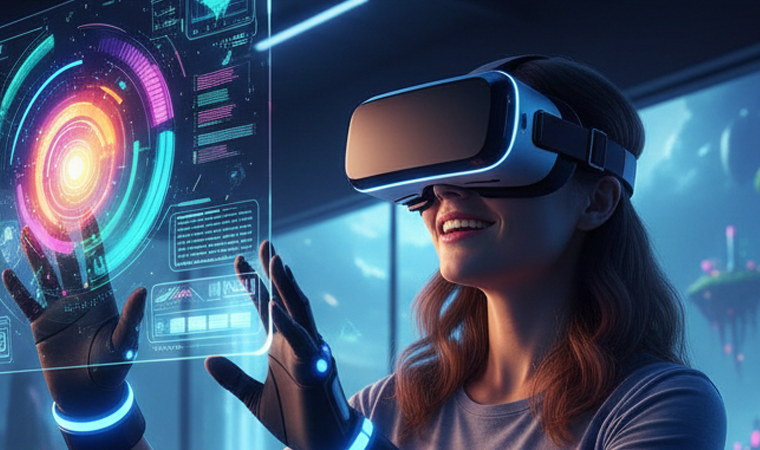
Welcome to the Virtual Reality Revolution
Ever wondered what it’s like to step inside a video game? Not just control a character on a screen, but actually be there—dodging bullets in slow motion, exploring alien worlds, or swinging a lightsaber with your own hands? That’s the promise of VR gaming, and in 2026, that promise has finally become reality for millions of players worldwide.
Virtual reality gaming has transformed from a futuristic fantasy into an accessible, thrilling form of entertainment that’s redefining what it means to play. Gone are the days when VR was clunky, expensive, and limited to tech demos. Today’s VR games deliver experiences so immersive and captivating that they fundamentally change how we think about gaming itself.
Let’s dive into why VR gaming represents the future of immersive play and how you can be part of this incredible revolution.
What Is VR Gaming?
Understanding Virtual Reality Technology
VR gaming uses headset-mounted displays to create three-dimensional environments that respond to your movements in real-time. When you put on a VR headset, you’re transported into digital worlds that surround you completely. Look up, and you see the sky. Turn around, and you see what’s behind you. Reach out your hand, and you can interact with objects that feel real even though they’re purely digital.
This magic happens through a combination of technologies working in harmony. High-resolution displays positioned inches from your eyes create the visual experience. Motion sensors track your head movements with incredible precision, updating what you see accordingly. Controllers in your hands become tools, weapons, or hands themselves in the virtual world. The result? Your brain accepts the illusion, making virtual experiences feel surprisingly real.
How VR Gaming Differs from Traditional Gaming
Traditional gaming asks you to look at a screen and use controllers to manipulate a character. VR gaming makes you the character. Instead of pressing a button to swing a sword, you physically swing your arm. Instead of using an analog stick to look around, you simply turn your head. This fundamental difference creates emotional connections to games that flat-screen gaming can’t match.
The physicality of VR games means you’re not just mentally engaged—you’re physically active. After an hour of VR gaming, you might find yourself genuinely tired from dodging, ducking, swinging, and moving. It’s gaming that gets you off the couch, gaming that makes your heart race not just from excitement but actual physical exertion.
The Evolution of VR Games
From Science Fiction to Living Rooms
Virtual reality has been a staple of science fiction for decades. From Star Trek’s holodeck to The Matrix’s simulations, we’ve dreamed of entering digital worlds. Early attempts at VR gaming in the 1990s failed spectacularly—the technology simply wasn’t ready. Those early headsets were heavy, expensive, had terrible graphics, and made people nauseous within minutes.
Fast forward to 2012 when Palmer Luckey’s Oculus Rift Kickstarter campaign reignited interest in VR. The technology had finally caught up to the dream. Smartphone screens provided cheap, high-resolution displays. Accelerometers and gyroscopes from mobile devices enabled precise motion tracking. Suddenly, consumer VR seemed possible again, and this time it worked.
Key Milestones in VR Gaming History
The modern VR gaming era began in 2016 with the simultaneous release of Oculus Rift, HTC Vive, and PlayStation VR. These first-generation headsets proved VR gaming could work, delivering experiences that genuinely wowed players. Games like Beat Saber showed that simple concepts executed perfectly in VR could be addictively fun.
2019’s Oculus Quest revolutionized accessibility by eliminating the need for expensive gaming PCs or consoles. Suddenly, VR gaming required just a headset—nothing more. Half-Life: Alyx in 2020 proved AAA developers could create full-length, premium VR experiences. By 2023, VR had gone mainstream, with millions of headsets sold worldwide. Now in 2026, we’re seeing the technology mature into something truly special.
Why 2026 Is VR Gaming’s Breakthrough Year
Technological Leaps Forward
The best VR games 2026 offers benefit from multiple technological advances happening simultaneously. Headset resolution has increased dramatically—modern VR headsets deliver clarity approaching real vision, eliminating the “screen door effect” that plagued early devices. Field of view has expanded, making virtual worlds feel more natural and less like looking through binoculars.
Processing power has improved too. Standalone headsets now pack computing power that rivaled gaming PCs just a few years ago. This means better graphics, more complex physics, and richer game worlds—all without cables tethering you to a computer. Eye-tracking technology has become standard, enabling foveated rendering that dramatically improves performance by rendering only what you’re looking at in full detail.
More Affordable VR Headsets
Price was always VR gaming’s biggest barrier. Early systems cost $800-1000 for the headset alone, plus another $1000+ for a capable PC. That’s a tough sell for most gamers. In 2026, excellent VR headsets start at $250-300 for standalone models, with premium options around $500-700. That’s comparable to game consoles, making VR accessible to mainstream audiences.
This affordability extends beyond just headsets. VR games typically cost $20-40, similar to traditional games. Subscription services offer libraries of VR games for monthly fees. The overall investment to get into quality VR gaming has dropped to reasonable levels, removing the biggest obstacle to widespread adoption.
Expanding Game Libraries
Remember when VR’s biggest criticism was “but there aren’t enough games”? That problem has completely disappeared. In 2026, the best VR games span every genre imaginable. Shooters, puzzle games, rhythm games, RPGs, simulators, horror games, social experiences, fitness games—if you can imagine it, someone’s made it in VR.
Major publishers now routinely release VR versions of popular franchises. Indie developers have embraced VR enthusiastically, creating innovative experiences that push the medium forward. The library of quality VR games has grown from dozens to thousands, ensuring every type of gamer can find experiences they’ll love.
Best VR Games 2026: Must-Play Experiences
Action and Adventure VR Games
Action games in VR are unlike anything you’ve experienced. Imagine physically ducking behind cover as bullets whiz past your head, or climbing a mountain by actually reaching up and grabbing handholds. These aren’t abstract button presses—they’re actions you perform with your body, making victories feel genuinely earned.
The best VR games 2026 in the action genre blend physicality with smart design that prevents exhaustion. They understand you can’t sprint continuously like in traditional games, so they build in natural pacing. Exploration sections let you catch your breath between intense combat sequences. The result is action gaming that’s thrilling without being overwhelming.
Horror VR Games That Will Terrify You
Horror in VR hits differently. When a monster lurches from the darkness, you can’t just lean back from your screen—it’s right there in your face. When you hear footsteps behind you, you have to physically turn around to look, knowing something terrible might be there. This direct confrontation with fear makes VR horror extraordinarily effective—and absolutely terrifying.
The best horror VR games understand this power and use it masterfully. They build tension through atmosphere and sound design, making you dread what’s coming next. They force you to make difficult choices: do you hide and hope the monster passes, or do you make a run for it? These aren’t decisions made behind the safety of a screen—they feel immediate and real.
Social and Multiplayer VR Experiences
VR’s social dimension might be its most surprising strength. Playing games with friends in VR creates shared experiences that feel genuinely social in ways online gaming typically doesn’t. You see avatars of your friends making natural gestures, hear their voices with spatial audio that makes it clear where everyone is, and share reactions to events happening around you.
Popular social VR games range from cooperative adventures where teamwork is essential to casual hangout spaces where you just chat and play mini-games. The presence you feel with other people in VR is remarkable—your brain accepts that you’re sharing space with others, creating social bonds through shared virtual experiences.
Fitness and Exercise VR Games
Who knew exercise could be this fun? Fitness VR games disguise workouts as gameplay, making you forget you’re exercising while you play. Boxing games have you throwing hundreds of punches per session. Rhythm games get you squatting, dodging, and dancing. Adventure games have you swinging swords and climbing obstacles.
The best fitness VR games track your movement and calories burned, providing fitness metrics alongside entertainment. Many players have lost significant weight and improved their cardiovascular health through regular VR gaming sessions. It’s exercise that doesn’t feel like exercise—it feels like play.
Choosing Your VR Headset
Standalone VR Headsets vs. PC-Powered Options
Your first major decision is whether to go standalone or PC-powered. Standalone VR headsets like the Meta Quest series are self-contained systems—everything you need is in the headset itself. They’re wireless, easy to set up, and work anywhere. The trade-off is slightly less powerful graphics since all processing happens in the headset.
PC VR headsets connect to gaming computers, leveraging that greater processing power for enhanced graphics and more complex games. They deliver the absolute best visual quality but require capable PCs (usually $1000+) and deal with cables, though wireless adapters exist. Your choice depends on whether you prioritize convenience or maximum fidelity.
Meta Quest 3 and Quest Pro
Meta’s Quest headsets dominate the standalone VR market for good reason. The Quest 3, released in late 2023, offers incredible value at $500. It features excellent resolution, comfortable design, extensive game library, and the ability to connect to gaming PCs for PCVR gaming when desired. It’s the most versatile option available.
The Quest Pro targets professional and enthusiast users with premium features like face and eye tracking, better comfort, and enhanced passthrough for mixed reality experiences. At $1000, it’s pricier, but these advanced features enable new types of experiences and applications beyond gaming.
PlayStation VR2
For PlayStation 5 owners, PSVR2 is an excellent choice. Sony’s second-generation VR headset features stunning OLED displays, adaptive triggers matching the PS5 controller, and seamless integration with PlayStation’s ecosystem. The game library includes both exclusive titles and popular multi-platform releases.
PSVR2’s biggest advantage is simplicity for PlayStation owners—one cable connects headset to console, and you’re ready to play. The disadvantage is exclusivity to PS5; you can’t use it with PCs or other platforms. If you already own a PS5, PSVR2 delivers premium VR experiences with minimal hassle.
PC VR Headsets: Valve Index, HTC Vive, and More
PC VR enthusiasts have multiple excellent options. The Valve Index remains popular for its incredible refresh rate, precise tracking, and the best controllers in the business. HTC’s Vive lineup caters to premium users wanting the absolute best visuals. Pimax headsets offer ultra-wide fields of view for maximum immersion.
These PC VR headsets deliver cutting-edge experiences but require investment in both the headset and a powerful gaming PC. They’re for players who want the absolute best VR has to offer and are willing to pay for it. The visual quality and performance ceiling is higher than standalone headsets can achieve.
Virtual Reality Games for PC: The Premium Experience
Why PC VR Offers the Best Graphics
Virtual reality games for PC leverage desktop graphics cards that pack far more processing power than standalone headsets. This translates to higher resolution textures, more complex lighting, larger environments, and better physics simulation. The difference is noticeable—PC VR games simply look better, with richer detail and smoother performance.
Modern gaming PCs can push VR headsets to their maximum refresh rates (90-144Hz) while maintaining high visual quality. This smoothness dramatically improves immersion and reduces motion sickness. For players with capable PCs, PC VR represents the pinnacle of what virtual reality can deliver right now.
Top Virtual Reality Games for PC
The best virtual reality games for PC span incredible variety. Half-Life: Alyx remains the gold standard for narrative VR experiences, showcasing what’s possible when AAA developers fully commit to VR. Microsoft Flight Simulator in VR puts you in cockpits with stunning realism. Racing simulators like Assetto Corsa Competizione deliver authentic motorsport experiences.
Boneworks and its successor Bonelab provide physics playgrounds where everything behaves realistically. No Man’s Sky’s VR mode lets you explore an entire universe in first person. These PC VR experiences push boundaries in ways that wouldn’t be possible on less powerful hardware, justifying the investment for enthusiasts.
System Requirements for PC VR Gaming
What does PC VR gaming require? At minimum, you’ll need a mid-range gaming PC with at least an NVIDIA RTX 3060 or AMD RX 6600 XT graphics card, a modern CPU (Intel i5-12400 or AMD Ryzen 5 5600 minimum), and 16GB RAM. This gets you acceptable VR performance with some compromises on visual settings.
For optimal experiences with modern VR games at high settings, consider RTX 4070 or better graphics cards, faster CPUs, and 32GB RAM. VR is demanding—it’s rendering two screens simultaneously at high refresh rates. Your investment in PC hardware directly translates to better-looking, smoother-running VR experiences.
VR Gaming Tips for Beginners
Setting Up Your Play Space
Before diving into VR gaming, prepare your physical space. You’ll need an area at least 6.5 feet by 6.5 feet for comfortable roomscale VR, though some games work in smaller spaces. Clear the area of furniture, decorations, and anything you might hit while moving around. Consider foam floor mats for comfort during long sessions.
Set up your guardian or boundary system carefully—this virtual fence warns you when approaching play space edges. Make it slightly smaller than your actual space to provide safety buffer. Ensure good lighting for headset tracking (though not so bright it causes glare). A ceiling fan can help with cooling but make sure it’s high enough you won’t hit it when reaching up.
Managing Motion Sickness
Motion sickness affects many new VR users. It happens when what you see doesn’t match what your inner ear feels, causing nausea and discomfort. The good news? Most people build tolerance with gradual exposure. Start with stationary experiences or games with teleport movement rather than smooth locomotion.
Take breaks at the first sign of discomfort—pushing through makes it worse. Some players find ginger candy or ginger tea helps. Stay hydrated and well-rested; fatigue makes motion sickness worse. Gradually work up to more intense movement over days or weeks. Most players who persist build complete tolerance within a few sessions.
Starting with Comfortable Experiences
Don’t jump straight into intense experiences. Begin with VR gaming tips for beginners include starting with comfortable, stationary games. Beat Saber is perfect—you stand in one place while slicing blocks to music. Job Simulator keeps you in a small area doing funny tasks. These games let you acclimate to VR without triggering motion sickness.
After you’re comfortable with stationary experiences, try games with teleport movement where you point and instantly appear in new locations. This eliminates the motion sickness caused by smooth walking. Only after you’re completely comfortable should you attempt games with full smooth locomotion. Patience in building tolerance prevents bad experiences that might sour you on VR entirely.
Building Your VR Tolerance
Building VR tolerance is like building any physical tolerance—gradual exposure is key. Start with 15-20 minute sessions, taking breaks before you feel uncomfortable. Gradually extend sessions as you feel ready. Some players reach full tolerance after a few hours total; others need longer.
Pay attention to your body. If you feel warm, sweaty, nauseous, or dizzy, stop immediately and remove the headset. Rest until symptoms completely pass before trying again. Never push through significant discomfort. Most players find that within a week of regular short sessions, they can play comfortably for hours without any motion sickness.
The Social Dimension of VR Gaming
Meeting People in Virtual Worlds
VR’s social experiences are surprisingly powerful. When you meet someone in VR, you don’t just see a gamertag and hear a voice—you see their avatar making natural gestures, pointing at things, expressing themselves through body language. This presence makes interactions feel more genuine than traditional online gaming.
Many players report forming real friendships in VR social spaces. The shared immersion creates bonds, and the novelty of the medium provides endless conversation topics. Whether you’re playing cooperative games, exploring virtual worlds together, or just hanging out in social hubs, VR makes online socialization feel significantly more personal.
VR Chat Rooms and Hangout Spaces
VR social platforms like VRChat and Rec Room have become virtual meeting places where thousands gather daily. These spaces offer everything from comedy clubs to art galleries, from dance parties to quiet reading rooms. You can attend virtual concerts, participate in game shows, or just explore user-created worlds with friends.
The creativity in these social spaces is astounding. Users create entire worlds, from faithful recreations of real places to fantastical environments impossible in reality. You might hang out in a cozy café one moment and explore a sci-fi space station the next. These social VR experiences represent a glimpse of what the metaverse might actually become.
Multiplayer VR Games Building Communities
Competitive and cooperative multiplayer VR games have built dedicated communities. Games like Contractors (VR’s answer to Call of Duty) and Population: One (battle royale in VR) host regular tournaments and leagues. Cooperative games like After the Fall and Arizona Sunshine unite players against zombie hordes.
These communities often extend beyond the games themselves. Discord servers organize events, share strategies, and facilitate friendships. The physicality of VR gaming creates shared experiences that bond communities differently than traditional gaming. Surviving an intense raid or winning a close match feels more memorable when you physically participated.
VR Gaming Beyond Entertainment
Fitness and Health Applications
VR’s fitness applications have become surprisingly legitimate. Studies show VR exercise games can burn as many calories as traditional cardio workouts. Games like Supernatural and FitXR offer structured workout programs with trainers, while Beat Saber and other rhythm games provide intense exercise disguised as fun.
The advantage VR has over traditional exercise is consistency—people stick with it because it’s entertaining. Players don’t dread workout sessions; they look forward to beating new levels or improving scores. This psychological shift makes VR potentially revolutionary for public health, offering exercise that doesn’t feel like exercise.
Education and Training Simulations
VR’s educational potential extends far beyond gaming. Medical students practice surgeries in VR, making mistakes without consequences. Pilots train in realistic flight simulations. Mechanics learn repairs on virtual engines. History students visit historical sites recreated in meticulous detail. These applications prove VR’s value beyond entertainment.
Training in VR provides experience traditional methods can’t match. You can repeatedly practice dangerous procedures safely, explore inaccessible locations, or experience historical events firsthand. The immersive nature improves retention—people remember experiences more vividly than information from textbooks or videos.
Therapy and Mental Health Uses
Therapists increasingly use VR for exposure therapy, treating phobias by gradually exposing patients to fears in controlled virtual environments. Someone with fear of heights can practice in VR, slowly building tolerance. Social anxiety can be addressed through simulated social situations.
VR also offers therapeutic relaxation experiences. Guided meditation in beautiful virtual environments provides mental health benefits. Some PTSD treatments incorporate VR for controlled exposure therapy. While not replacing traditional therapy, VR provides powerful tools for mental health professionals to help patients in new ways.
The Technology Behind VR Games
Inside-Out Tracking Explained
Modern VR headsets use inside-out tracking, meaning cameras on the headset track your position in space. Previous systems required external sensors mounted around your room. Inside-out tracking is simpler—just put on the headset and play. The cameras observe your environment and calculate your position and orientation.
This technology works remarkably well, tracking your movements with millimeter precision and near-zero latency. It’s what enables roomscale VR where you naturally walk around virtual spaces. The technology has become so reliable that most users never think about it—it just works, making virtual experiences feel responsive and natural.
Hand Tracking and Controllers
VR controllers have evolved dramatically. Modern controllers feature precise button placement, trigger pressure sensitivity, and haptic feedback that makes interactions feel tangible. Some headsets now support hand tracking, letting you use your actual hands in VR without controllers at all.
Hand tracking opens new possibilities. You can naturally point at things, give thumbs up, or make any hand gesture. Games designed for hand tracking feel magical—manipulating objects with your bare hands rather than controllers. While controllers remain more precise for action games, hand tracking excels for social experiences and casual gaming.
Haptic Feedback and Immersion
Haptic feedback—physical sensations transmitted through controllers—greatly enhances immersion. When you shoot a gun in VR, the controller vibrates with recoil. When you draw a bowstring, you feel increasing resistance. These tactile sensations complete the illusion, making virtual interactions feel tangible.
Next-generation haptics are even more sophisticated, providing nuanced feedback that simulates textures, impacts, and environmental effects. Combined with spatial audio that places sounds accurately in 3D space, these technologies work together creating the convincing illusion that you’re somewhere else entirely.
Challenges Still Facing VR Gaming
The Cost Barrier
While VR has become more affordable, cost remains an obstacle for many. Quality VR headsets start around $300, but that’s still a significant investment compared to traditional gaming where you might already own the necessary hardware. PC VR compounds this with gaming computer requirements adding $1000+ to the total cost.
For VR gaming to truly go mainstream, prices need to continue dropping. Some analysts predict sub-$200 capable VR headsets within a few years. As manufacturing scales up and technology matures, costs will decrease, but we’re not quite there yet for mass-market adoption.
Physical Space Requirements
Not everyone has room for roomscale VR. Small apartments, cluttered rooms, or shared living spaces make VR gaming challenging. While seated VR experiences exist, they sacrifice much of what makes VR special. The physicality and movement are key parts of the experience.
Developers increasingly design games to work in smaller spaces, and standing-in-place experiences can work well. But the ideal VR experience requires dedicated space that not all potential players have available. This spatial requirement limits who can fully enjoy VR gaming.
Content Library Gaps
While VR’s game library has grown tremendously, gaps remain. Certain genres haven’t translated well to VR, and some popular franchises still lack VR versions. Players expecting VR equivalents of every traditional game genre will find some types underrepresented.
The industry is filling these gaps, but it takes time. As VR’s install base grows, more developers commit resources to creating VR content. The library improves monthly, but new VR players sometimes feel disappointed by what’s available compared to decades of traditional gaming.
Motion Sickness Concerns
Despite improvements, motion sickness remains a concern. Some people never develop tolerance, limiting VR’s appeal. Game developers have learned techniques to minimize sickness—comfort settings, alternative movement options, and careful design—but the issue hasn’t disappeared entirely.
Research continues into solving motion sickness. Some solutions involve better hardware (higher refresh rates, lower latency), while others focus on software techniques. Eventually, motion sickness might become a relic of early VR, but it currently affects enough people to limit mainstream adoption.
The Future of VR Gaming
Wireless Technology Improvements
While many VR headsets are already wireless, PC VR still typically requires cables. Wireless adapters exist but add latency and cost. Future VR will likely see low-latency wireless connections becoming standard even for high-end PC VR, eliminating cables entirely without compromising performance.
Wireless freedom dramatically improves VR experiences. You can turn completely around without tangling cables. You can move more naturally without subconsciously tracking your cable’s position. As wireless technology improves and becomes standard, VR will feel even more freeing and immersive.
Mixed Reality Integration
The line between VR and AR (augmented reality) is blurring into mixed reality (MR). Future headsets will seamlessly blend virtual objects into your real environment. Imagine playing a strategy game where virtual units move across your actual table, or decorating your real room with virtual posters that only you see.
Mixed reality opens applications beyond gaming—virtual monitors for productivity, virtual pets in your living room, or fitness trainers demonstrating exercises in your space. The technology is already emerging in current headsets; future iterations will make it seamless and compelling.
Full-Body Tracking and Haptics
Current VR tracks your head and hands. Future VR will track your entire body—feet, legs, torso—enabling more natural movement and representation in virtual spaces. Combined with advanced haptic suits that provide physical feedback across your body, future VR will be extraordinarily convincing.
Imagine feeling rain on your shoulders, wind on your face, or the impact of virtual objects. These sensations will complete the illusion of presence in virtual worlds. While full-body haptics remain expensive and experimental, they represent VR’s ultimate destination.
VR Esports and Competitive Gaming
Competitive VR gaming is growing, with tournaments offering significant prizes and attracting dedicated fan bases. VR esports face unique challenges—spectating is harder since viewers can’t see what players see as naturally—but solutions are emerging. Watching players physically move while seeing their in-game actions creates compelling viewing experiences.
As VR gaming matures, competitive scenes will grow around skill-based titles. VR could reinvent esports by emphasizing physical skill alongside mental acuity, creating competitions that value both gaming ability and athletic performance. The potential for VR esports to become mainstream entertainment is significant.
How to Get Started with VR Gaming Today
Choosing Your First VR Headset
For most people, the Meta Quest 3 represents the best entry point into VR gaming. At $500, it’s reasonably priced, requires no additional hardware, offers a massive game library, and can connect to gaming PCs if you later want to explore PC VR. It’s the most versatile option available.
PlayStation 5 owners should seriously consider PSVR2, which offers premium experiences with easy setup. PC gamers with powerful rigs might prefer PC VR headsets like Valve Index for maximum fidelity. Consider your budget, existing gaming hardware, and space available when choosing your first headset.
Essential Accessories
Beyond the headset itself, a few accessories enhance the experience. A comfortable head strap dramatically improves comfort during long sessions—most headsets offer upgraded strap options. Prescription lens inserts eliminate the need to wear glasses in VR, improving both comfort and visual quality.
Battery packs extend playtime for standalone headsets, while carrying cases protect your investment during travel or storage. Some players invest in VR-specific headphones for better audio, though most headsets include adequate built-in audio. Start with just the headset, then add accessories as you identify what would improve your specific experience.
Where to Find VR Games
Each VR platform has its storefront. Meta Quest uses the Quest Store. PSVR2 games are in the PlayStation Store. PC VR games are available through Steam, which hosts the largest VR game library. Some games are exclusive to specific platforms, while many release across multiple systems.
Subscription services provide value. Meta Quest+ offers monthly free games for subscribers. PlayStation Plus includes VR games in its library. These subscriptions let you try many games affordably, helping you discover what VR gaming styles you enjoy most before investing in specific titles.
VR Gaming Safety and Best Practices
Protecting Your Physical Space
Safety in VR gaming starts with properly configuring your play space. Remove fragile items, furniture, and anything you might hit while playing. Consider the ceiling too—I’ve seen players punch ceiling fans while reaching up in VR. Wall-mounted TVs and decorations should be far from your play area.
Use your headset’s guardian system religiously. These virtual boundaries warn when you’re approaching edges. Don’t disable safety features just because they occasionally interrupt gameplay—broken TVs and injured hands aren’t worth the slightly increased immersion. Respect the boundaries you’ve set.
Taking Regular Breaks
VR gaming is physically demanding, and the immersion can make you lose track of time. Set timers to remind yourself to take breaks every 30-60 minutes. Remove the headset, rest your eyes, hydrate, and let your body recover. These breaks prevent fatigue, reduce motion sickness risk, and protect your vision.
Pay attention to your body. Discomfort, excessive sweating, dizziness, or eye strain signal you need a break. Unlike traditional gaming where you might push through minor discomfort, VR demands you listen to your body. Regular breaks keep VR gaming enjoyable rather than exhausting.
Eye Care and VR Usage
Concerns about VR damaging eyes are largely unfounded—research suggests VR is no more harmful than traditional screens. However, the intensity of the experience can cause eye strain. Take breaks, ensure the headset is properly adjusted to minimize eye strain, and follow the 20-20-20 rule: every 20 minutes, look at something 20 feet away for 20 seconds.
If you wear glasses, use prescription lens inserts rather than wearing glasses under the headset. This improves both comfort and visual clarity. Keep headset lenses clean—smudges cause eye strain as your eyes struggle to focus through dirty lenses.
Conclusion
VR gaming has arrived. It’s no longer a futuristic promise or an interesting curiosity—it’s a mature, accessible form of entertainment delivering experiences impossible in traditional gaming. The best VR games 2026 showcases prove that virtual reality can be thrilling, emotional, social, and transformative all at once.
Whether you’re dodging bullets in action games, breaking a sweat in fitness experiences, exploring alien worlds, or just hanging out with friends in virtual spaces, VR offers something genuinely special. The technology has overcome early limitations, game libraries have expanded dramatically, and prices have become reasonable for mainstream audiences.
For anyone curious about the future of immersive play, now is the perfect time to jump into VR gaming. The hardware is ready, the software is there, and the experiences waiting for you are unlike anything traditional gaming can provide. Put on a VR headset, and discover why millions of players believe virtual reality represents gaming’s future—a future that’s already here.
The virtual worlds are waiting. Are you ready to step inside?
FAQs
1. What are the best VR games 2026 for beginners?
The best VR games for beginners prioritize comfort and ease of control. Beat Saber is perfect—you stand in place slicing blocks to music, making it intuitive and unlikely to cause motion sickness. Superhot VR provides an innovative time-manipulation shooter with minimal movement. Job Simulator and Vacation Simulator offer funny, relaxed experiences with simple interactions. For adventure, Moss features a third-person perspective that’s comfortable for new players. These games let you acclimate to VR without overwhelming intensity or complex controls, building your tolerance gradually.
2. Do I need a powerful gaming PC for VR gaming?
Not necessarily. Standalone VR headsets like Meta Quest 3 don’t require PCs at all—everything runs on the headset itself, making them the easiest entry point. However, for the absolute best graphics and most demanding virtual reality games for PC, you’ll need a gaming computer with at least an RTX 3060 graphics card, modern CPU, and 16GB RAM minimum. Many people start with standalone VR, then later add PC connectivity if they want enhanced visual quality. Your choice depends on whether you prioritize convenience or maximum fidelity.
3. How can I prevent motion sickness in VR?
Preventing VR motion sickness requires building tolerance gradually. Start with stationary games or those using teleport movement rather than smooth walking. Play in short 15-20 minute sessions initially, stopping immediately if you feel uncomfortable. Ensure your headset is properly adjusted and achieving its full refresh rate. Stay hydrated, well-rested, and consider ginger supplements which help some people. Most importantly, be patient—the majority of players develop complete tolerance within a week of regular short sessions. Never push through significant discomfort as it makes the problem worse.
4. What VR headset should I buy in 2026?
For most people, Meta Quest 3 ($500) offers the best value—it’s wireless, standalone, has the largest game library, and can connect to PCs for enhanced experiences. PlayStation 5 owners should consider PSVR2 ($550) for seamless console integration and exclusive titles. PC gaming enthusiasts with powerful computers might prefer Valve Index ($999) or HTC Vive Pro 2 for maximum visual fidelity. Budget-conscious buyers can still find Quest 2 units for around $250. Consider your existing gaming setup, budget, and whether you prioritize convenience or graphics when choosing.
5. Are VR gaming tips for beginners really necessary, or can I just start playing?
VR gaming tips for beginners are genuinely valuable because VR differs fundamentally from traditional gaming. Starting with comfortable games prevents motion sickness that could sour your entire VR experience. Properly setting up your play space prevents injuries to yourself and damage to your belongings. Understanding how to build tolerance gradually means you’ll enjoy VR rather than fighting nausea. Learning safety practices protects your equipment investment. While you could certainly just start playing, taking time to follow beginner tips makes your introduction to VR significantly more enjoyable and sustainable long-term.
5 Comments
preman68
[5203]Preman68: Link Alternatif Resmi | Slot Gacor Terpercaya Hari Ini,Preman68 menyediakan akses login resmi dan link alternatif terbaru. Nikmati daftar casino online terpercaya dengan kemudahan deposit via Dana. Gabung sekarang juga! visit: preman68
wazamba
[4682]Wazamba | Link Vào Chính Thức – Casino Trực Tuyến Uy Tín,Wazamba cung cấp trải nghiệm casino trực tuyến đẳng cấp với hướng dẫn tải app APK nhanh chóng và nạp tiền qua ví điện tử tiện lợi. Tham gia ngay để khám phá! visit: wazamba
jili356login
Super easy to get started and the welcome offer was a nice touch. I am really enjoying my time on jili356login.
ph20jili
The graphics on these slots are top notch. It feels much more immersive than other sites I’ve tried. ph20jili is definitely my new favorite spot.
777nycasino
The vibe here is amazing and the game selection is top notch. I love how easy it is to navigate the site. 777nycasino really knows how to treat their players.